
Written by: Edward Mwanisa, Guest Contributor

Introduction
It is very encouraging that the church across Africa is talking about church planting. Not only talking about it but there also are visible evidences of it being involved in the work of church planting. However, if we are to make sure that the gospel is proclaimed in every city, town and village there is need to employ strategies that would encourage sustainable gospel progression even in difficult places.
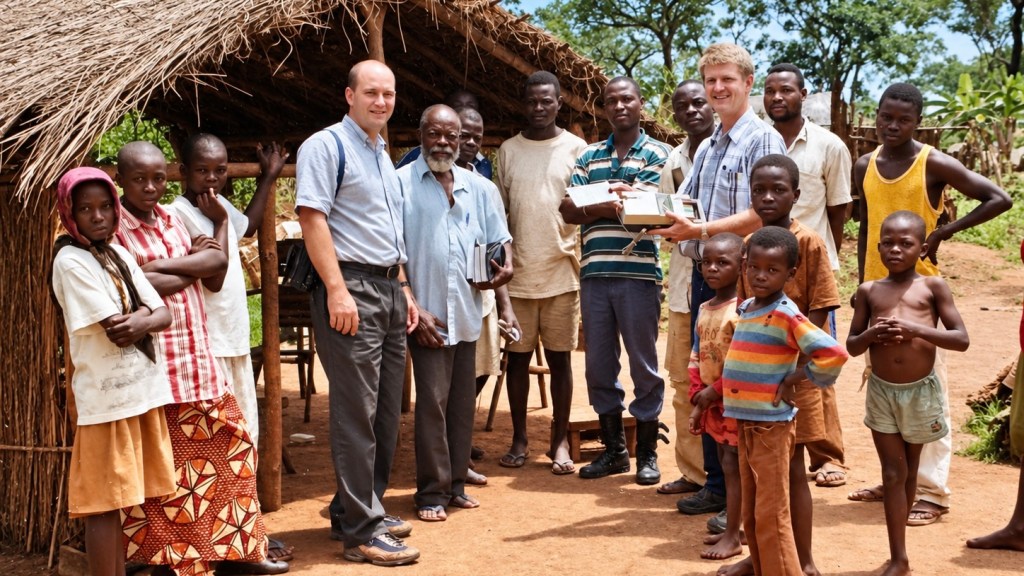
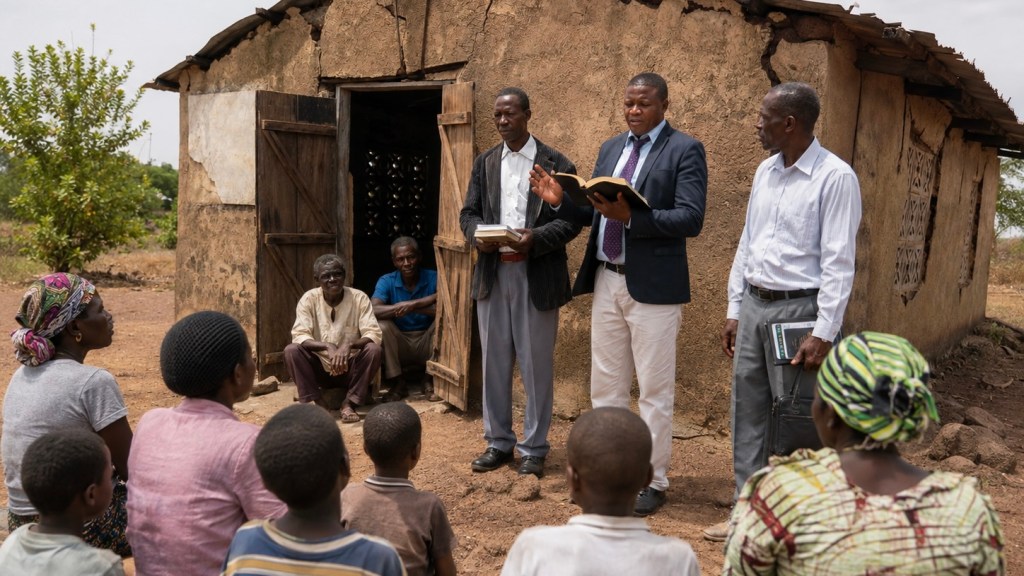
I would classify the rural areas of Africa to be difficult not because most of it is antagonistic to the spread of the gospel but because of the limitations found in these areas. Limitations like good clinics, schools and other social amenities. The rural areas of Africa are somehow like the continent of Africa during the early Western missionary endeavours. Please take note of the word somehow. This shows that I recognise the advancement and progress made by the governments to improve the welfare of their people in these areas and yet they still remain limited. And it is because of these limitations that is why we need to have proper and sustainable strategies to do the work of church planting in rural area.
I would also want to note that I see church planting in rural areas as equally important just like the church planting work being done in urban cities. I will not discuss my defence for my belief, however I will assume that we all agree that the gospel message should be proclaimed in every place without distinction (Matthew 24:13-14)[1]. I am very uncomfortable with the urban area priority strategy of church planting. It has good intentions but I feel that it ignores some of the challenges I will highlight.
Therefore, my presentation is aiming at helping those who see the need of reaching the rural areas with the gospel and providing them with suggestions that would be helpful in their work.
Please also take note that as I talk about strategies of doing rural church planting, I am assuming that we do understand the content of the gospel message. And that those planning to be involved in church planting have already established a mission policy to help them carry out the work of church planting.[2]
I would also want to let you that I will be using the case studies of the two church plants that we have been involved with as a local church. And also some God given experience as one who has been involved in the work in the rural area of Zambia.
Some may argue that Kakolo is not rural. I would say when we moved into Kakolo there were a lot of limitations and we are grateful with the development that has come into the area. And it is my belief that some of the areas that are rural now won’t be for long. But if you were to come to Kakolo even now you would see the traces of limitations that the area provides. Like earlier pointed out the areas I am classifying as rural are areas with no clinic in the radius of 10 to 15 Kilometres, school, and proper roads and other social amenities that could be found in the urban areas.
How should a church burdened with reaching out the people in these areas do it?
Having the Right Person
Even though the church would have a burden about a particular area and people group they need to recognise the need of a person with the burden and desire to serve in church planting.[3] The person may not have the specific burden for the particular area but should be a person who has a desire for pastoral ministry or church planting
Remember God has given gifts to the church. And these gifts are individuals to help the church in its mission. And from this group of gifts we see that God has given the gift of an evangelist who we can equate to the missionary or church planter in our time.[4]
This person should not just be right because of the burden, but he should also be rightly qualified according to the stipulations of scripture. The church planter would eventually be the pastor of the church or would function as a pastor to those God would bring to salvation. Hence the need for him to meet the qualifications for the pastorate or overseer. (1Tim.3:1-7; Titus 1:5-9)
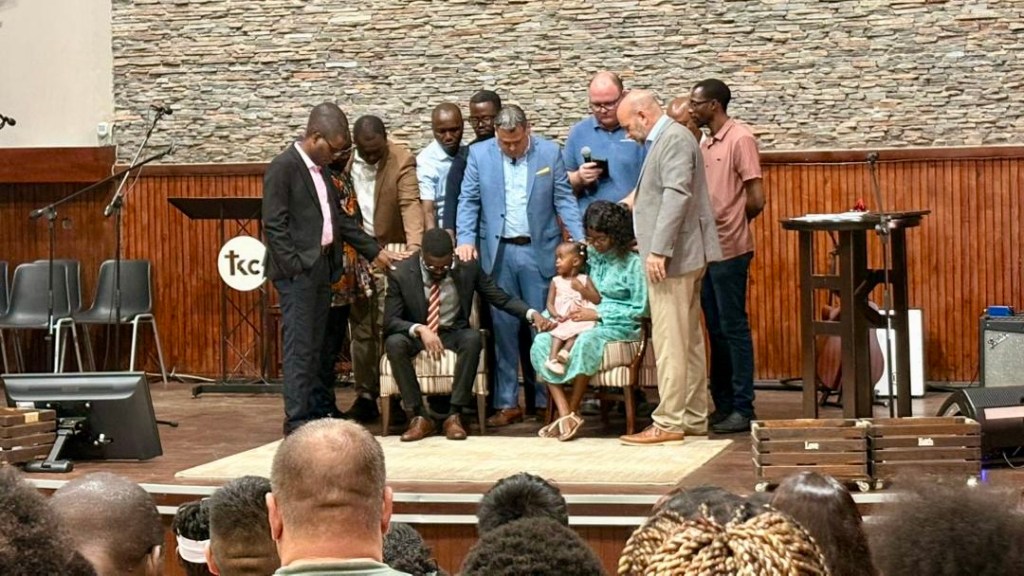
This should be a person that the leaders and the local church have attested to be a person truly with the passion for the work of the gospel and loves the teaching of God’s word.
Illustration: I mentioned of the two church plants that the church at Kakolo has been involved in. One of these two church plants began with the burden of the church but with no recognised church planter. The church recognised the need in a particular area and we would go and evangelise. And those that believed we organised them into a group and we would teach them on Sunday afternoons after we have had our service at our local church. The number of the people who believed increased and even of those who would come to the Sunday afternoon Bible study. And the people wanted to be meeting on a Sunday morning which created a challenge for the ministry team of the church plant because we all had responsibilities at the sending local church. So we just started sending whoever was available. And guess what that did to these new believers?
And we would be praying that God would raise up a leader among those new believers. But there was a problem. There was no one who was intentionally developing leaders in the church plant. There was no consistence as to who would be there for the next three months. The area needed the gospel but we had no man to take up the responsibility for the work. It felt good that the work was for the church but there was no vision carrier in that work, no strategists; no one to evaluate the progress of these new believers.[5]
Thank God we realised our fault and one of the elders volunteered to go and spear head the work. And we had another elder take up the work and long and behold the church plant now is even developing leaders. They have sent a young man they have recognized with the gift of teaching, a young man with a desire to pastor for further training.
Preparing the Man
It is very important that the man be oriented with the environment in which he will minister in and the people he will minister to. Many men have been frustrated because of having unrealistic expectations of the field and the people. The preparation would involve engaging with the man concerning the limitations of the area. It will also demand that you allow the man to suggest of ways he plans to mitigate the challenges of the area.[6]
And this time also the church should make known their commitment to helping the man in adapting to the area or making his stay or ministry in the area comfortable.
If you are planning to plant a church that will be able to influence an area in a God honouring way you would need to send a qualified man. The man who has had proper theological preparation either through his involvement in a local church or theological learning institution and proven by the local church. However, this has not been the case in most of the works done in the rural Zambia.
Some of the works were started by theological students who went for ministry practice with no long term commitment. Other works have been started by believers who have relocated due to retirement or government posting yet they have no burden for pastoral ministry. These start church plants to fill the void of lack of fellowship. In most cases the works started this way lack direction and purpose because the planter himself was not prepared for the work nor did he sense the Lord’s call upon his life. In areas with economic attractiveness a work started by believers burdened with the need for fellowship would flourish because many trained theologians would be attracted to a ministry that is able to sustain them and not to a ministry that they know they would struggle.
It is for this reason that we need to prepare the man. Understanding the challenges, he would face and being committed to stand alongside the man in mitigating those challenges.
In the early missionary endeavours, the sending churches did the best they could to support their missionaries coming to a difficult field. Doing church plant in a rural area is a difficult field.
The Sending Church’s Involvement
- It should have a transferable philosophy of ministry. The sending church’s philosophy of ministry should be simple and biblical such that a church plant in the rural area could adopt it without difficulties.
- The sending church should be actively involved in evangelizing their community. This is something they would want the church plants to pick and value as well.
- The church should set long term goals and should be flexible in their church planting strategy. I have seen churches with unrealistic short term goals. There are challenges with rural church planting.
- The level of literacy in the rural area is diverse. The span is wide. You can have the most educated and those with very little or no formal education. The level of assimilation would also be different.
- The rural church plant would also provide a great challenge to a church planter of learning the local language. This becomes a challenge because probably most of his theological training was done in another language. Now he would be working and breaking down those theological truths into concepts that could be understood in the local language. All this takes time to test and see which one would be very effective for the people.
- The challenge of Christian material. Most of the good theological books to help new believers develop are in a foreign language. And the lack of the readily available Christian books in local languages makes discipleship and leadership development a challenge. It will take time to have theologically sound, grounded believers in the rural areas.
Because of the above mentioned challenges the sending church or churches should be committed to long term goals and they should be flexible in their strategies. They should be engaging their church planter to find out how best they could support them.
The financial challenges: I don’t know about rural areas in other countries but rural ministries in Zambia always have the challenge of finances. It is not that they are complaining about it, but it will take a long time for them to independently support a pastor. And this calls for foresight on the part of the church planter and the sending church. In most rural places in Zambia, people are subsistence farmers who only farm enough to see them through to the next farming season. These are people with humble means to improve themselves. This is not excusing them from their responsibility of supporting their pastors once they become Autonomous but their support in most cases won’t be enough to sustain the pastor. In most of the rural church plants you would hear of pastors who have abandoned their pastorate and have gone to look for work so that they could support their families.[7] It is not a lack of faith but probably a lack of foresight by the church planter and the sending church.
The church planter who would model how the pastors of the churches should survive should be an entrepreneur like Paul was and teach the believers in the church plant that being an entrepreneur is not sinful nor a sign of being a lover of money but it is being responsible and wanting to be a blessing to others.[8] Also the sending church or churches should be looking at ways of setting the church planter up for business. This goes back to the preparation of the man. If he would not have fresh meat, encourage him and support him to keep goats, pigs, chickens. He will need resources because the rural community will provide their support but he needs to be prepared for the worst situations. I believe this philosophy could be passed on to the elders who eventually become pastors. He will do to them like it was done for him. It would be foolish to assume they will survive where he could not. Rural church planters will be for some time what Paul would term “Robbing other churches to minister the gospel”.[9] Reaching the rural areas will require gospel partnerships that understand that we are all participating in God’s agenda and we are not in competition with one another.[10]
If we are going to influence the rural areas with the gospel, resulting in self-propagating and self-theologizing churches, we need to commit ourselves to invest in the rural areas with good solid and sound theologians and that would demand huge investments of finances. It won’t be an open sesame but a long-term commitment to seeing the gospel transform the rural parts of Africa.
Conclusion
Church planting in rural Africa is a need and I believe it should be done simultaneously with the church planting work in the cities. We are called to proclaim the gospel in every town, city and village. We just have to have a strategy that would make those churches sustainable, contextualized, self-theologizing and self-propagating. And even as we think about doing this, we should keep in mind that other churches would be robbed for the gospel to have such an influence in the rural areas.
Bibliography
Chaney, Charles L. Church Planting at the End of the Twentieth Century. Wheaton, Illinois: Tyndale House Publishers, 1984.
Hodges, Melvin. A Guide to Church Planting. Chicago: Moody Press, 1973.
Mbewe, Conrad. Pastoral Preaching: Building a People for God. Carlisle, Cumbria: Langham Preaching Resources, 2017.
Payne, J.D. Discovering Church Planting: An Introduction to the Whats, Whys and Hows of Global Church Planting. Illinois: Intervarsity Press, 2009.
[1] (Chaney 1984) If the church, the people of God is to be composed of persons from all ethnic groupings of mankind, then local congregations must be planted among all of these people. Pg21
(Hodges 1973) Hodges talking about the threefold purposes of the church concludes that if the church does not direct its ministry toward the world it cannot fulfil the purpose of building up and the purpose of being a treasure to God as it seeks to exalt him. Pg16.
(Mbewe 2017) We must not fill the church buildings with truth while error is allowed to multiply unchallenged outside. This will be self-defeating because the darkness outside will soon invade the church, as has often been the case in the western world. Pg12
[2] (Payne 2009)Church planters who fail to base their theological framework on the Bible tread on the shifting sands of contemporary fads, treads and whims. Church planting is missions in actions. Principles of church planting must be drawn from scripture.
[3] The church or its leaders must have assumed evangelistic responsibility for a particular geographical area. The Church leaders should be speaking about reaching that geographical area with the gospel to their congregations and even about reaching out with the gospel to the people in their own community. (Chaney 1984)
[4] (Chaney 1984) The strategy needs a dynamic and creative leader or leaders who think big, who has a genuine compassion for men without Christ and ha a commitment to obey Jesus Christ in his own life. This should be a gifted and anointed person.
Eph.4:11-13 And he gave the apostles, the prophets, the evangelists, the shepherds and teachers, to equip the saints for the work of ministry, for building up the body of Christ, until we all attain to the unity of the faith and of the knowledge of the Son of God, to mature manhood, to the measure of the stature of the fullness of Christ
[5] (Payne 2009) As a strategy church planting offers a paradigm for reaching villages, tribes, urban enclaves and entire cities with the gospel. Biblical church planting focuses on bringing in the harvest, raising up leaders from the harvest and sending leaders to work in the harvest fields. It is in the process of making disciples (evangelization) that new churches (congregationalization) result. Pg.7
[6](Ibid) Biblical church planting is about using contextualized methods in a strategic manner to reach unbeliever, equip them as church leaders and send them as evangelists and church planters throughout the world. Pg.7
[7] 1 Tim.5:8 But if anyone does not provide for his relatives, and especially for members of his household, he has denied the faith and is worse than an unbeliever.
[8] Acts 20:33-35 “I coveted no one’s silver or gold or apparel.You yourselves know that these hands ministered to my necessities and to those who were with me.In all things I have shown you that by working hard in this way we must help the weak and remember the words of the Lord Jesus, how he himself said, ‘It is more blessed to give than to receive.’”
1 Thes.2:9-10 For you remember, brothers, our labor and toil: we worked night and day, that we might not be a burden to any of you, while we proclaimed to you the gospel of God. You are witnesses, and God also, how holy and righteous and blameless was our conduct toward you believers.
[9] 2 Cor.11:7-9 Or did I commit a sin in humbling myself so that you might be exalted, because I preached God’s gospel to you free of charge? I robbed other churches by accepting support from them in order to serve you. And when I was with you and was in need, I did not burden anyone, for the brothers who came from Macedonia supplied my need. So I refrained and will refrain from burdening you in any way.
[10] Phil. 1:3-5 I thank my God in all my remembrance of you, 4 always in every prayer of mine for you all making my prayer with joy, 5 because of your partnership in the gospel from the first day until now.
Phil.4:1-20 Yet it was kind of you to share my trouble. And you Philippians yourselves know that in the beginning of the gospel, when I left Macedonia, no church entered into partnership with me in giving and receiving, except you only. Even in Thessalonica you sent me help for my needs once and again. Not that I seek the gift, but I seek the fruit that increases to your credit. I have received full payment, and more. I am well supplied, having received from Epaphroditus the gifts you sent, a fragrant offering, a sacrifice acceptable and pleasing to God. And my God will supply every need of yours according to his riches in glory in Christ Jesus. To our God and Father be glory forever and ever. Amen.


Leave a comment