
What Romans 15 Teaches About Missions
Paul made it his “ambition to preach the gospel, not where Christ has already been named” (Romans 15:20-21). Paul had not yet visited Rome, not because he lacked interest in the church there, but because his pioneer work in the eastern Mediterranean had repeatedly occupied him. Now that he had “no longer any room for work” in those regions, he looked toward Spain as the next unreached field (Romans 15:22–24).
He understood his particular calling from Christ: as the apostle to the Gentiles, he served as a minister of Christ Jesus in the priestly service of the gospel of God (Romans 11:13; 15:16). Paul’s missionary strategy is built around unreached peoples in places where they have never yet heard of the gospel (Romans 15:21). He is asking Rome to become a sending church for his planned mission to Spain (Romans 15:24).
This “sending” is Paul’s regular term for the material and logistical support that a congregation provides to an outbound missionary. The word Paul uses in Romans 15:24, often translated “helped on my journey” or “sent on my way,” commonly carries the sense of providing practical support for a worker’s next stage of ministry. The same term appears when the church sends Paul and Barnabas on their way from Jerusalem (Acts 15:3) and when believers accompany Paul from Caesarea (Acts 21:5).
Rome, a church Paul didn’t plant, is being recruited as a forward operating base for the next unreached field. Paul anticipated their embrace of his theology of the gospel’s advance, as outlined in Romans 10:14-15. He knows that a clear understanding and buy-in for God’s mission breed an eagerness within the congregation to sacrifice and send the gospel, whatever the cost.
The collection of funds Paul mentions is missions running in reverse (Romans 15:25-28). The Gentile churches in Macedonia and Achaia, churches that themselves existed because the gospel had gone out to the nations, were sending material relief to impoverished Jewish believers in Jerusalem.
Paul presents this gift as a tangible expression of their spiritual indebtedness and of the unity the gospel creates between Jewish and Gentile believers. It demonstrates that the Gentiles’ inclusion in the blessings promised through Israel does not deepen the divide between Jew and Gentile. In Christ, it binds them into one church—a unified body in which mutual obligation, love, and service are ordinary expressions of gospel fellowship.
The church in Philippi, one of the Macedonian churches, was commended by Paul for its material partnership in his missionary work. In fact, when Paul first went out with the gospel to Thessalonica, the church at Philippi was the only one supporting his mission work. The Philippian church was itself the fruit of missionary gospel labor. Yet it understood the gospel so deeply that it insisted on sharing in the work of sending that gospel to people who had not heard (Philippians 4:15-16). Paul expects that planted churches themselves engage in the gospel mission of sending and supporting gospel work.
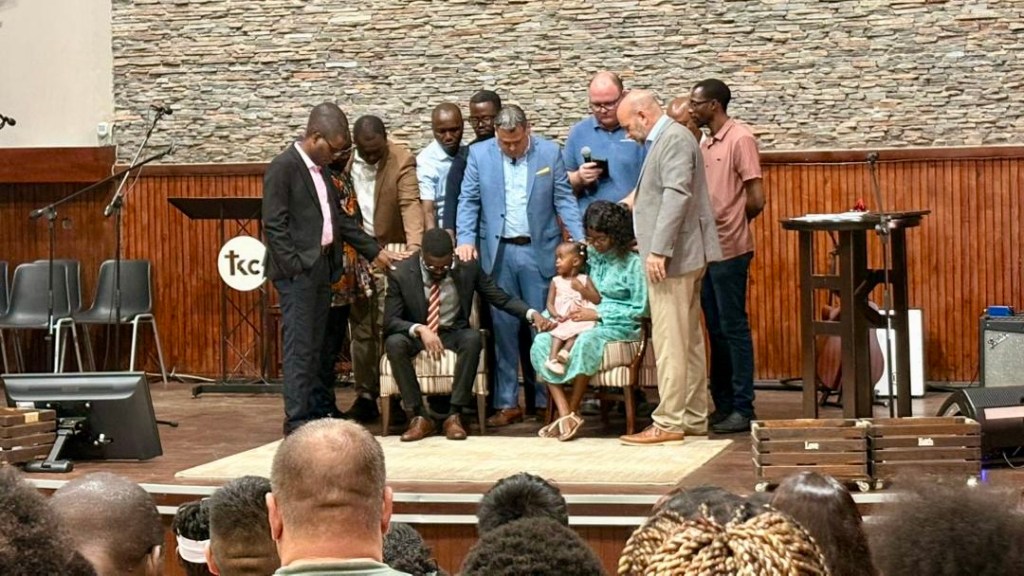
Edward Mwanisa was sent from Faith Baptist Church in Kitwe as part of a church-planting team in Chipata Compound. Several years later, the sending church and the church plant banded together to send Edward across the Kafue River into a rural farming community of Kakolo to plant. In 2022, after years of faithful ministry, FBC Kakolo sent and supported one of its own members, Emmanuel Mfula, to study and prepare for ministry at Central Africa Baptist University. Emmanuel has since been sent by the Kakolo church, under the oversight of its elders, to lead a new church plant in Kamilili. You can watch and hear their story in this short video.
This is the kind of mutuality that healthy missions should produce. It is not a one-way relationship of dependency, nor does it require equal resources on both sides. Rather, churches and believers respond to one another’s needs from hearts shaped by love and gratitude. They see real need, and move with generosity to meet it. Paul used the Macedonians’ generosity to encourage the Corinthian church to respond similarly (2 Corinthians 8:1-4).
Paul’s request for prayer (Romans 15:30-32) shows what mission actually costs: real danger, real uncertainty, and total dependence on God’s will. Paul was relying on the intercession of God’s people, rather than his own competence. The advance of the gospel through missionary labor is a church-wide work: missionaries go, churches send, believers give, and God’s people strive together in prayer. Gospel-driven partners join together in prayer for the missionary, knowing that gospel work is warfare in the spiritual realm. The gospel advances in a world marked by spiritual opposition. Therefore, churches must move forward in humble, persevering prayer.
So here is what cross-cultural mission looks like. Strategic planning for reaching the unreached, church partnership in sending gospel witness, reciprocal generosity between mission church plants and the sending base, and prayer-dependent submission to God’s providential plan.


Leave a comment