20 Years: 2006 – 2025
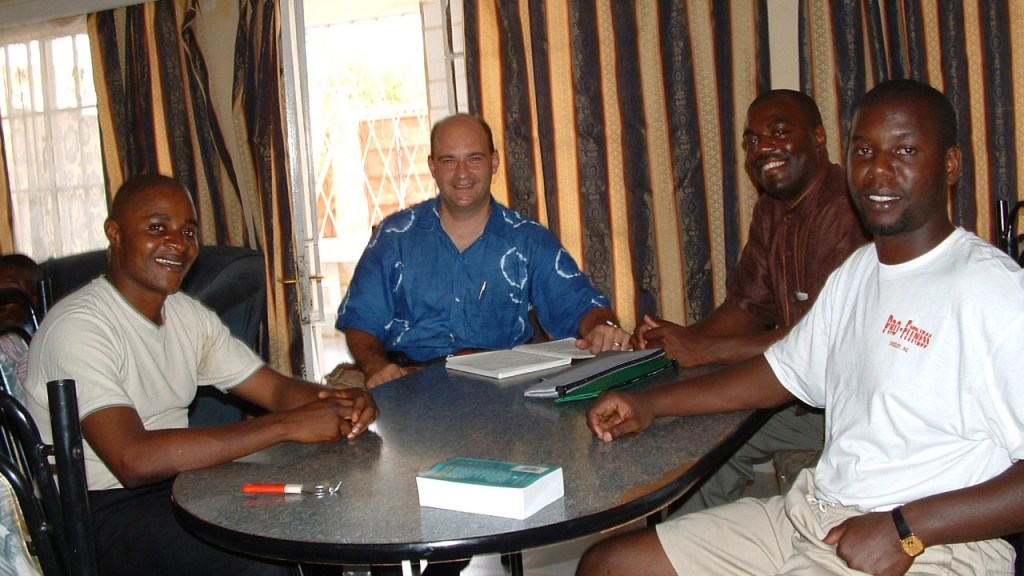
I was asked to provide information on the works of God at CABU over the past 20 years. Every year since the University’s founding, I have written and submitted an annual report to the Board. I have a file full of other original reports, letters, and updates. With the help of claude, I researched and drew out 20 years of highlights – these you will find below. As you read, may your heart be filled with joy at God’s abundant mercies.
Introduction
In February 2006, seven students sat down for the first classes of Central Africa Baptist College in a rented house in Kitwe. Twenty years later, 197 students study on a campus of their own, 1,972 more train through extension classes in thirteen countries, and graduates pastor churches from Nairobi to Wa, Ghana.
None of it was inevitable. The records of these twenty years are full of prayers, deadlines, and dead ends. They are also full of answers no one on the team could have arranged. This report gathers those stories from two decades of annual reports, prayer letters and board reports, so that the people who lived them, and those who come after, can say with the psalmist: “Come and see what God has done” (Psalm 66:5).
In 2004, before there was a single student, the founders wrote down why the college would exist: “Training the next generation of servant-leaders in Africa for Great Commission living.” Every report since has carried those same words. These are the stories of that purpose being kept.
Before the beginning (1993–2003)
CABU’s story starts in a sitting room on Almalik Street, Kitwe. On September 5, 1993, six Zambians came to the first service of what became Faith Baptist Church of Riverside. Philip and Lori Hunt and their co-workers prayed from that first Sunday that God would one day raise up Zambian leaders for the church.
The young men came first, and they wanted to learn. In 1996, Phil wrote: “We have a number of young men who are ready and asking for more instruction in God’s word. It is our prayer that God will raise from this group the future leaders.” In August 1997, the Sunday after the new Riverside building opened, Saidi Chishimba, the first young man surrendered to preach.
On May 27, 1998, Faith Baptist Institute of the Bible began with eight students meeting in the evenings. It was a beginning, but it was not enough. By 2002, Phil was writing of “the urgent need of having a full time College where men and women can prepare for ministry.”
The vision was already wider than one city. That same year FBC Riverside formed its own mission board, praying for “200 missionaries across Zambia and into the seven surrounding countries.” In November 2003, Phil, youth pastor Saidi Chishimba, and deacon David Chama made a survey trip to Lubumbashi in the Democratic Republic of Congo. They called it “the first logical mission point outside of Zambia.” Remember that city; it comes back into this story.
A college is born (2004–2006)
Looking back, Phil wrote that “in 2002 God began to connect various people to the ministry who He would eventually use to help make Central Africa Baptist College a reality.” The connections came one after another:
- Early 2002. Dr. Chuck Phelps of Trinity Baptist Church in Concord, New Hampshire, visited Zambia. Phil shared his burden for a college “that would offer a balanced, biblical, credible education for men training for the gospel ministry in Africa.”
- December 2002. Evangelist Steve Pettit preached in Zambia. Back home, he urged Northland Baptist Bible College to visit Zambia and consider a joint venture.
- June 2003. Phil visited Northland and talked with its president, Dr. Matt Olson, about a branch campus in Zambia.
- March 2004. Dr. Sam Horn, Northland’s Executive Vice President, spent a week in Kitwe. His verdict: a college in Zambia was viable.
On April 5, 2004, the decision was made to found Central Africa Baptist College. Three weeks later, on April 26, a small group met in the Wingate Hotel conference room at the Green Bay airport in Wisconsin. Sam Horn, Chuck Phelps and Phil were joined by Len Dunphy and Lee Peterson, two men still raising support who would become the college’s first teachers. Lee had been a Northland intern in Kitwe in 2000, when Phil wrote: “We are praying that when they finish their last year of school God will lead them to come and minister with us here in Zambia.”
At Green Bay, they chose the long road. A Bible institute could train preachers quickly, but they wanted something deeper: “to educate a generation of servant leaders who have the ability and tools to carry on indigenous work. We may possibly not see the fulfillment of this dream in our lifetime.” Their goal fit in six words: “Train Africans in Africa for Africa.”
The pieces fell into place over the next two years:
- November 2004. The first Central Africa Baptist Leadership Conference drew 150 church leaders from nine Zambian towns, Kenya, and South Africa, “to sensitize the region to the coming of Central Africa Baptist College.” It became an annual gathering.
- 2004. Lakeshore Baptist Church gave the money for a six-room office block. Riverside lent its classrooms. The board of Independent Faith Mission agreed to let the college become “a stand-alone institution with an independent board.”
- April 2005. The board chartered the college at Community Baptist Church in South Bend, Indiana, and appointed Phil as President.
- December 2005. Sam Horn spoke with missionary Steve Hafler about joining the faculty. Steve Pettit, whose word to Northland had started it all, came on as the board’s newest member.
In February 2006, classes opened with seven students, growing in the second semester to twelve from Zambia, Kenya and Zimbabwe. Len Dunphy, Lee Peterson, Nathan Washer, Steve Hafler and Phil were their teachers. Among the students were Saidi Chishimba, Francis Kaunda and Pius Chanda, men discipled in the Riverside churches. Another was Edward Mwanisa, who had come to Christ in 1995. He pastored the church in Kakolo and biked an hour each way to attend class. The prayer of 1996 had become a classroom.
Building on faith (2007–2009)
In March and May 2006, the college bought land next to Copperbelt University and began building. By early 2007, God had provided $126,000 for site work and the first 9,000-square-foot building. The project was built by its own people. The engineer, Danford Banda, headed a department at Copperbelt University and had been saved and discipled at Riverside. The supervisor, Brian Mukuma, was a part-time student. In 2002 Phil had prayed that Brian, then holding a Bible study for miners in Mwinilunga, would come back to Kitwe “to begin to prepare for full-time ministry.”
The Hunts spent April 2007 to May 2008 in the United States raising support for the ministry. Steve Hafler led the college in Zambia. In those thirteen months God provided more than $165,000, and monthly commitments to the college nearly quadrupled.
In 2008, the landlord of the rented house announced she would double the rent. With the full agreement of faculty, staff, and students, the college decided to move into its unfinished building. There was one problem: the building had no electricity. For a year they had prayed that the power company would make the connection. The building was electrified the day before the students moved in.There was no paint, no doors, and no finished floors, but the students “endured the dust, noise and inconvenience with a good spirit.”
November 2008 became the deadline for finishing the building, and the money was not there. “The Lord miraculously supplied the funds needed,” Phil wrote, “and the building was completed in time.” In December 2008, the new campus was dedicated at the fifth Leadership Conference, with nearly 200 church leaders present.
Those years also tested the team. 2008 brought disunity, gossip, and a critical spirit among a young faculty under pressure. One sentence in the May 2009 annual report shows what was at stake: “Whether CABC will continue as a viable theological institution has been a question in the minds of African pastors… Good national men are watching and waiting.”
On December 4, 2009, they saw the answer. Nine men received the Bachelor of Arts in Bible, five from Zambia and four from Kenya, and a tenth received a certificate. Pius Chanda, Francis Kaunda and Edward Mwanisa, three of the 2006 students, were among them, along with Kenyans Ken Mbugua and Phillip Omorocho. Within months, four of the graduates were in internships, two were pastoring in Kitwe, one was serving at a camp and church, and one had joined the CABC staff.
Deep roots (2010–2013)
The next years were less about buildings and more about people. At the end of 2010 Phil reported that “God had answered prayer for unity and a team spirit in the work.” African leaders organized that year’s Leadership Conference, which he called “our best conference to date.” Of the 285 people who attended, nearly half came for the first time.
In September 2010 the radio station received its full broadcast license and went on air with sermons in English and Bemba from the local Baptist churches. Listeners began calling in. One Kitwe woman, Seline Besa, was convicted of her sin while listening to Pastor Edward Mwanisa preach, and gave her life to Christ. A farmer borrowed a neighbor’s phone to ask to speak to the pastor.
The classrooms filled with peoples from the nations. By 2011, there were 34 students from Zambia, Kenya, Ghana, Uganda, Malawi, DR Congo and South Africa. Faculty began taking the classroom to the field: eight weeks of classes in Juba, South Sudan, a week in Kadoma, Zimbabwe, and block courses across Zambia. At the November 2011 Leadership Conference, CABC hosted its first Missions Round-Table, with over 150 African pastors from Zambia, Malawi and Kenya.
The graduates were scattering too. The six men of the class of 2011 went to Nairobi, Wa in Ghana, Swaziland, Lusaka and Kitwe. In December 2012, Sam Horn presented Francis Kaunda with a master’s degree from Northland International University. Francis had been in the first class, and he was the first CABC graduate to earn a master’s through Northland’s program to train African faculty.
In February 2013 a seminary opened in partnership with Piedmont International University, with about ten students. That year also brought the largest new intake yet. At the 2012 Leadership Conference the main sessions were translated for the deaf, and each evening deaf believers gave their testimonies. It was a small sign of a ministry still to come.
Spreading across Africa (2014–2017)
In January 2014 Zambia’s Ministry of Education registered Central Africa Baptist College & Seminary as a Theological University in Zambia. That December the seminary graduated its first five master’s students. One of them was a young youth pastor from Riverside named Chopo Mwanza, who had earned his bachelor’s at CABC in 2011.
In March 2015, Phil travelled to Juba with Emmanuel Juma, CABC’s first degree student from South Sudan. Civil war had divided the country for decades, and in the middle of the recovery fourteen pastors graduated with a one-year Diploma in Bible. South Sudan TV covered the ceremony.
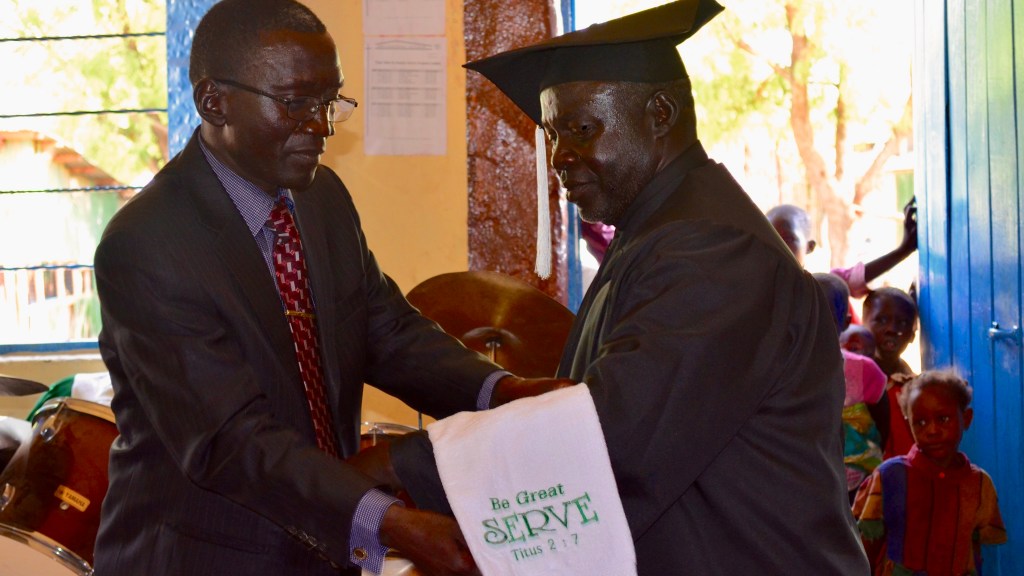
The chaplaincy program had begun in 2010 with fewer than twenty men and women in uniform. Over the next years it reached the Zambia Police, Army, National Service, Prisons and finally the Air Force. By 2017 its classes held 90 to 125 chaplains each. In October 2015 the Mufulira Prison Chapel opened, with CABC among its major donors. It was only the fourth chapel in Zambia’s 54 prisons.
God kept widening the doors:
- Teachers. Four blocks of modular classrooms came from South Africa, and in February 2016 a Diploma in Primary Education opened with twelve students. That November every one of them passed the national exams.
- The deaf. In early 2016 Phil and Lori’s daughter Cherith Hunt announced her call to serve the deaf in Zambia. She arrived that December and built CABC’s Sign Language and Deaf Studies program. Education students soon began signing for deaf worshippers at FBC Riverside each Sunday.
- Funding from Zambia. Link Business Park, a shopping centre built to support the college, opened on October 1, 2016.
- The growing student body. By April 2017 there were 93 students. That December, 65 graduated, the largest class yet.
The college was also learning what it meant to be led by its own graduates. Sandala Mwanje, class of 2010, was appointed Administrative Vice-President in 2014. Chopo Mwanza joined the faculty in 2015 and became Dean of Students in 2016, where he built the mentoring program that pairs every student with a member of faculty or staff. A 2017 count found 64 graduates serving, 40% of them as senior pastors.
A university (2018–2021)
In his 2018 report Phil described the growth with a picture from home. For years Lori’s Cuban palm, planted by their front door, grew only a little taller while its trunk kept widening, until it was “rooted, grounded, and strong.” That, he said, was CABC: “The roots continue to penetrate deep; the base continues to experience significant growth.”
The tree was showing above ground:
- 2017–2018. ACTEA, the Africa-wide accrediting body, granted affiliate status, and the Teaching Council of Zambia accredited the Education program. Government officials sent another college’s leaders to tour CABC as a model of what higher education should look like.
- March 2018. The radio station moved to 92.1 FM with a stronger transmitter. Faith Radio now carries the gospel across the Copperbelt day and night.
- 2018. CABC bought property on Almalik Street for a girls’ dorm, the street where FBC Riverside’s first service was held in 1993.
- February 2019. Eighty-two people graduated, among them forty chaplains returning to the Police, Army, Air Force, Prisons and National Service. The first twelve Education graduates finished, ten with merit and two with distinction.
- 2019. Billy Sichone came as Deputy Vice-Chancellor of Academics, “an answer to over a year of praying,” and led the application to the Higher Education Authority. The new intake rose 81%, the largest since the founding.
In January 2020 the answer came. The Higher Education Authority accredited the Bible and Education programs and granted university status. Central Africa Baptist College became Central Africa Baptist University. That same month CABU bought the house between the main campus and the married-student flats, a property on the board’s prayer list since 2011.
February 2020 brought momentum. A record 133 students enrolled, and for the first time parents came to campus to register their children. Then 108 people graduated, the largest graduation to that point, before 600 guests, including officials from the Ministry of Education, leaders of the military and prison services, and the Mayor and Vice-Mayor of Kitwe.
Weeks later COVID-19 closed the campus. Classes moved online, block classes and the Leadership Conference were cancelled, and the future looked uncertain. Yet 99% of students stayed enrolled. In 2021 a record 152 registered, even though nearly thirty accepted students could not come because of the pandemic. Construction went on, too: the Athanasius Student Centre, which can seat 850, and the Cyprian Discipleship Centre in the former Link Park building. The university named its buildings for the great leaders of the early African church: Athanasius, Augustine, Cyprian, Tertullian, Perpetua and Clement. The library honors Paul Kasonga, Zambia’s first ordained indigenous Baptist pastor, a leper who preached the gospel for nearly thirty years.
In February 2021 two missions graduates from New Life Church in Lubumbashi received their degrees. Lubumbashi was the city Phil and two Riverside leaders had surveyed eighteen years before. Ben Bokwa stayed on as a CABU teaching assistant. Isaac Ilunga became a pastoral intern at Kitwe Church. Another graduate, Theo Kabonga is pastoring New Life.
The twentieth year (2022–2025)
In February 2022 Zambia’s Chaplain General, General Matifeyo, came to graduation as guest of honor and presented certificates to eighteen chaplains. A month later, the CABU executive team was at the Ministry of Defence in Lusaka, presenting an agreement on training the nation’s chaplains. In May 2022 the Higher Education Authority approved the seminary’s Master of Arts in Christian Studies. The Genesis Program, a year of biblical worldview training for young people, enrolled its first sixteen students. The first deaf student enrolled at CABU in 2021, and full-time enrollment for deaf students opened in 2022.
An old dream took a new name. Back in 2013 the strategic plan had called for “a printing department for African writers.” In 2023 the publishing company was registered as Imbila Publishers. Imbila is the Bemba word for “good news.” Christian Book donated two shipping containers of books, and CABU asked Crossway for permission to print its titles in Zambia.
On April 20, 2023, during Thursday chapel, the university family gathered on the building site to dedicate the publishing warehouse and a new theological library. The contractor was Danford Banda, the engineer who had built CABC’s first building sixteen years before. Phil asked the board to pray that over the next eight months the workers “will hear the gospel and come to faith in Jesus Christ” and that God would provide the $500,000 needed.
By late 2024 the Paul Kasonga Theological Library and Seminary building stood finished. Its fundraising campaign brought more than 130 first-time donors. Chopo Mwanza had become Deputy Vice-Chancellor of Advancement.
The twentieth year, 2025, was the fullest yet:
- A record 197 students on campus, up 24%, with 97 new students.
- 1,972 pastors and church leaders in extension classes across thirteen countries. Fifteen new groups formed in six months.
- Deaf Studies reached nearly half of all undergraduates.
- The first Christian Educators Conference drew 213 teachers, and Imbila Publishers held its first Writers Conference for African authors.
- On July 14, 2025, Central Africa Seminary was formally established as CABU’s graduate school, ready for its first students in January 2026.
Twenty years at a glance
| In the beginning | Twenty years on | |
| Students on campus | 12 (2006) | 197 (2025) |
| Where classes met | A rented house and Riverside’s classrooms | A campus whose buildings carry the names of African church leaders, with the Paul Kasonga Theological Library |
| Graduates | First class of 9 BA graduates (2009) | 108 at a single graduation (2020) |
| Extension training | Block classes for pastors on campus | 1,972 students in 13 countries (2025) |
| Leadership Conference | 150 participants (2004) | 530 participants (2016) |
| Chaplains | Fewer than 20 (2010) | 124 active, from every branch of service (2025) |
| Status | A Bible college chartered in 2005 | A university accredited by Zambia’s Higher Education Authority (2020), with a seminary established in 2025 |
| Ministries born from the college | — | Faith Radio 92.1 FM, Imbila Publishers, Sign Language and Deaf Studies |
The thread through it all
Around 2010 the college’s ten-year plan included this goal: “To install a trained Zambian Pastor and CABC Graduate as the Vice-President of CABC.” In 2012 the plan added that Phil would move “to an advisory and board role,” with a caution: “This step must not be rushed.” The plan for the second decade went further: “Board to appoint the next President of the institution.”
No one could have named the man when those words were written. Chopo Mwanza was a youth pastor at Riverside, the church that first met in a sitting room on Almalik Street. His record since then:
- 2011: bachelor’s degree from CABC
- 2014: one of the seminary’s first five master’s graduates
- 2015: joined the faculty
- 2016: Dean of Students
- 2017: senior pastor of Riverside
- 2021: Doctor of Ministry, and acting Dean of the Seminary
- 2024: Deputy Vice-Chancellor of Advancement
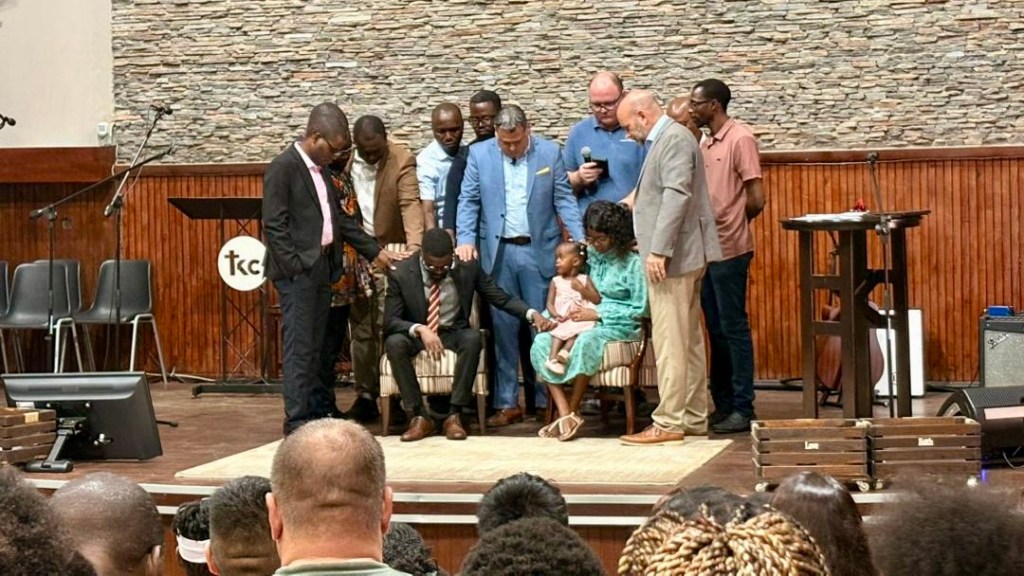
In 2027 he becomes Vice-Chancellor of Central Africa Baptist University, and Phil becomes Chancellor.
That is the pattern of these twenty years. God answered prayers that were written down and sometimes nearly forgotten. Lee Peterson came back to Zambia. Brian Mukuma came back to Kitwe. Power reached the building the day before the students moved in, and the house next door was bought nine years after it went on the prayer list. Men from Lubumbashi came to study in Kitwe. And the founders’ long view at Green Bay has come true: “a generation of servant leaders who have the ability and tools to carry on indigenous work.”
The founders said they might not see the dream fulfilled in their lifetime. Twenty years on, they are seeing its first fruits. The work is far from finished, and the purpose has not changed: training the next generation of servant-leaders in Africa for Great Commission living.
“Now to Him who is able to do exceedingly abundantly above all that we ask or think, according to the power that works in us, to Him be glory in the church by Christ Jesus to all generations, forever and ever. Amen.” (Ephesians 3:20–21)
Sources: Philip and Lori Hunt annual reports (1994–2015) and prayer letters (2016–2017); IFM Africa Report (2010); the 2004 CABC planning report; CABC annual and president’s reports (2007–2017); the CABC ten-year strategic plan; and CABU annual board reports (2018–2025).


Leave a Reply