

One concerning pattern I have observed in modern missions is what I call the “cart-before-the-horse” approach.
A burden or idea for ministry is often born off-continent, in the hearts of sincere and godly people. Perhaps it begins with a businessperson whom God has blessed. After a short visit to Africa – a week or two, their compassion is stirred, and they want to do something. Their hearts were moved; the needs were real, and a desire to respond was genuine.
So an idea takes shape and is prayed over. It is shared with friends and colleagues back home. Pictures circulate, stories are told, and a burden grows. Soon, others buy into that vision, and before long, a “ministry” is born. The newborn ministry often looks unmistakably western, wrapped in western assumptions, shaped by western priorities, and sprinkled with Bible verses.
A website is launched. Funds are raised. The newly formed NGO or foundation begins sending its founder back and forth to “do ministry,” fully funded by the donors who believed in the vision.
The Pressure to Appoint Leaders From Afar
Eventually, especially when significant money is flowing through the charity, the missions entrepreneur realizes that real work requires real people on the ground. A school, an orphan program, a vulnerable-children ministry, or a pastor training effort cannot run remotely; someone must lead locally.
So the founder turns to the handful of people he met during their brief visits and, from afar, entrusts leadership to one of them.
Sometimes the person chosen is a faithful, competent, godly brother. But often, tragically, the person lacks the character, theology, or competencies needed for what has now become a donor-driven, externally defined ministry. And disaster follows.
Funds have been raised. Expectations have been set. Reports must be written. “Results” must be produced, or the funding may evaporate. And worst of all, the founder may have to admit that the original concept was flawed.
Two Possible Next Steps
1. The ministry collapses under its own weight.
Embarrassment sets in. The team withdraws quietly, discouraged and disillusioned. Money has been wasted. Few genuine converts remain. Even fewer people have been discipled. And on both sides of the ocean, the name of Christ suffers.
2. The ministry doubles down with Western leadership.
Because the whole concept was Western to begin with, the solution seems obvious: bring in more Westerners to make the Western idea work. People with business skills, administrative gifting, or general competencies are recruited to “fix” the vision. Some have missionary training, but many do not. They come for a short stint or a term, carrying with them the Western assumptions that launched the ministry in the first place.
Some of these organizations find a form of “success,” at least by their own definition. But many leave a trail of confusion behind them.
The Human Cost
Where money is available, there will always be opportunists willing to pull up a chair. I have watched these ministries appear loudly and disappear quietly. Too often, they leave local brothers and sisters disillusioned, wounded, or left to pick up the pieces.
This sounds negative, and it is. Because so often, the outcome is truly negative. It is the natural result of compassion without knowledge, of conviction without cultural understanding, and of resources used to force an idea that never grew natively from the soil in which it was planted.
What Missions Actually Is
Missions is not a trip.
Missions is not a compassion project.
Missions is not remote-controlled charity from across the ocean.
Biblical missions means:
- Moving to a people
- Learning their language
- Understanding their culture
- Living among them
- Proclaiming the gospel clearly and faithfully
- Biblically discipling new believers
- Planting and strengthening local churches
And only then, through the deep and daily involvement of missionaries and healthy local churches, should we ask how best to demonstrate compassion and mercy in ways that strengthen, not undermine, the work of the gospel.
A Needed Warning
I fear that at times, the well-funded, well-meaning person in the West is unconsciously driven more by self-fulfillment than by a genuine desire to do what is best for the people they want to help. They often bypass credible, faithful local leaders and churches already doing the hard work on the ground.
And in bypassing those local brothers and sisters, they unintentionally bypass wisdom.
A Better Way Forward
There is a better way, a path that is slower, less glamorous, far more demanding, but infinitely more fruitful. It begins with a simple conviction: God already has His people in every nation, and He will build His church through them. In places where there is no church, we must go and seek the “other sheep” that Jesus spoke of in John 10:16. Where healthy local churches exist, our task is not to replace that work but to strengthen it.
Here are a few suggestions for a healthier, more biblical way forward:
1. Start With the Local Church, Not With a Personal Vision
God did not commission NGOs. He commissioned the church. Any mission effort that does not begin with, flow through, and strengthen the local church is already on unstable ground. Before launching initiatives, we must ask:
“What local churches are here, and how can we serve their vision for gospel advance?”
2. Listen Before You Lead
Wisdom requires proximity. It requires listening, learning, and understanding long before starting, teaching, or directing. Local pastors and believers often see needs and dangers that outsiders simply cannot see, even with the best intentions.
3. Partner With Proven, Faithful Leaders
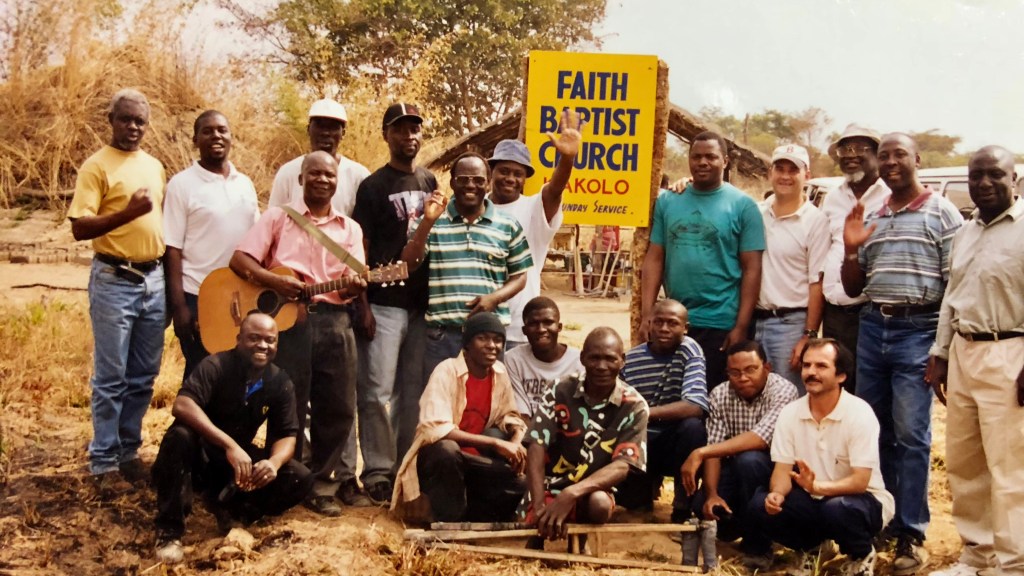
Africa is not waiting for Western saviors. God has raised up faithful, biblically sound, sacrificial leaders in many regions in Africa. These brothers do not need to be replaced; they need to be encouraged and equipped so their ministry can flourish.
Avoid the temptation to appoint leaders you barely know simply because they are the only ones you’ve met. Seek out men with proven character, doctrinal clarity, and the endorsement of their own church. Where no church exists, the real need is church planting not compassion ministry. Don’t get the cart-before-the-horse.
4. Let the Work Grow at a Local Pace
Western resources can artificially accelerate a ministry into existence before the foundation is ready. True mission work often grows slowly, through prayer, discipleship, preaching, and patient investment in people. The pace should be determined by spiritual readiness, not donor expectations.
5. Make the Long-Term Commitment That Missions Requires
Missions in this sense is incarnational. It demands presence. A few short visits cannot replace long-term faithfulness and carefully cultivated relationships:
- Live among the people
- Learn their joys and sorrows
- Walk with them through seasons of life
- Disciples Believers deeply
- Raise leaders who will outlast you
Any vision worth pursuing in missions is worth giving your life to, not only your vacation time.
6. Measure Success Biblically
The question is not, “How many buildings did we fund?” The question is, “Are disciples being made? Are churches being strengthened? Are leaders being raised up?”
That is the fruit that lasts.
Conclusion: Mission Work Must Be Rooted in Humility and Submission to Scripture
The better way forward is not more strategy, more money, or more Western expertise. The better way forward is humble partnership, the kind that honors Christ, strengthens His church, and recognizes that God has been at work in every cultural context long before we arrived.
The Great Commission is not fulfilled when our vision succeeds, but when Christ’s church is strengthened, disciples are made, and local leaders equipped to advance the gospel long after we are gone.



 Zambia Hunt
Leave a reply to joyfulc95c8193ec Cancel reply