
Last evening was significant to me, but only a tiny blip in the vast, unfolding purposes of our great God.
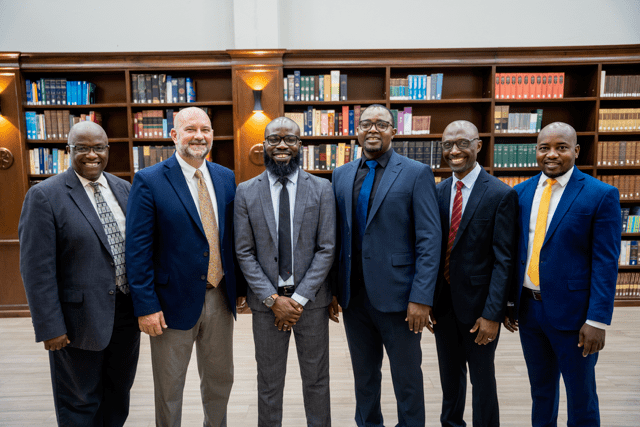
Inside an auditorium on the campus of Central Africa Baptist University during the 2025 Equip Conference, the Chairman of the CABU Board stood to announce that the Board has appointed Dr. Chopo Mwanza as the next Vice-Chancellor of CABU. That moment placed a clear marker on the timeline of God’s gracious work here in Zambia. For twenty-two years, I have labored toward this day.
The work of a missionary is to labor for the gospel through bold proclamation, often over a long period of time. We are called not only to preach Christ but to patiently and intentionally invest the Word into those who believe, teaching them to obey everything Jesus commanded. But a missionary makes a grave mistake in thinking that fulfilling one or even both of those responsibilities completes the missionary mandate. The longer, often quieter work, woven through all the preaching and discipleship, is leadership development. It is our primary task as missionaries to raise up faithful leaders (2 Timothy 2:2).
This is why my heart overflowed with joy last night. I told the conference attendees, “I am a missionary through and through, and missionaries train leaders and step aside so those leaders can lead.”
One of my greatest fears has always been transitioning leadership too soon, for selfish motives or personal convenience. I have seen this happen far too often in Africa. A missionary grows tired, wants to educate their children back in America, or becomes discouraged and simply wants out. So, after three or six years, or whatever, they appoint a leader prematurely and return home.
But I’ve also seen the opposite problem (and brothers in the West—this is not only an Africa issue): the missionary stays in leadership until the ministry is pried from their cold, dead fingers. Godly, competent men rise within the ministry, but they come and go, frustrated by a missionary who believes he alone can do the work, who clings to power because he is the founder, the expert, the one with access to funds. I have also witnessed transitions where the missionary hands over leadership publicly, but continues to control things behind the scenes, treating the national leader like a puppet on a string. It is embarrassing, shameful, and deeply unfair to the brother willing to serve.
True leadership development demands confidence in the gospel and confidence in the Holy Spirit who regenerates and sanctifies. It requires the humility demonstrated by our Lord in His incarnation (Philippians 2:5–8). It requires faith in Christ’s promise: “I will build my church, and the gates of hell shall not prevail against it.” And it requires love, genuine love for Christ and for His people. In ministry, while goals matter, we must never forget that ministry is people.
There is no “five-step secret” to developing leaders. But Scripture gives us principles, a clear vision of the end game, and a calling to sacrifice whatever is necessary to see God glorified in the lives of those He brings near.
This morning, my heart is simply grateful. I often say, “When you see a turtle on a fencepost, you may not know its story, but you know one thing for sure – he didn’t get there by himself.” I am just a turtle on a fencepost. Everything God has done thus far has been all of grace.
Soli Deo Gloria.
 Zambia Hunt
Leave a reply to A Trip to Southern Africa | Tim Challies Cancel reply