
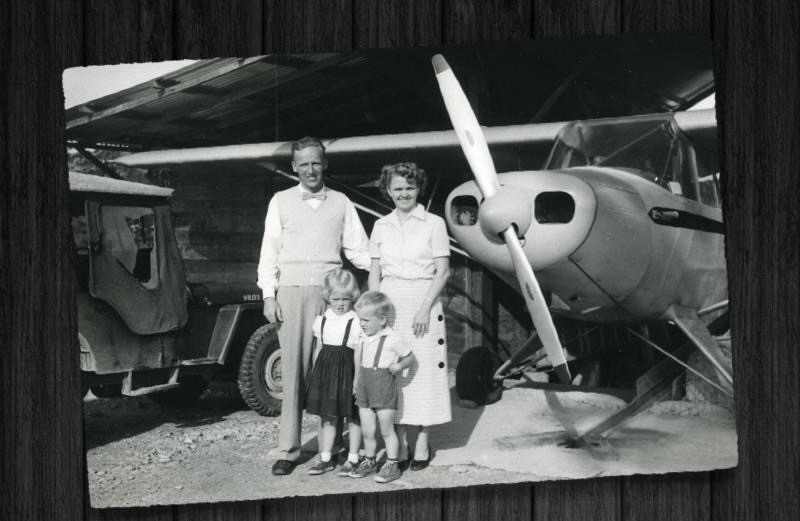
Deep in the jungles of Ecuador, on Sunday, January 8, 1956, five young missionaries gave their lives attempting to reach those who had never heard the gospel. Nate Saint, Jim Elliot, Roger Youdarian, Pete Flemming, and Ed McCully were murdered by Auca Indians at Palm Beach on the Curaray River. Before their deaths, Nate Saint wrote words that would prove prophetic:
“As we weigh the future and seek the will of God, does it seem right that we should hazard our lives for just a few savages? As we ask ourselves this question, we realize that it is not the call of the needy thousands, rather it is the simple intimation of the prophetic Word that there shall be some from every tribe in His presence in that last day and in our hearts we feel that it is pleasing to Him that we should interest ourselves in making an opening into the Auca prison for Christ.”
What appeared to be a devastating tragedy – the loss of five young lives filled with promise – instead became the catalyst that moved thousands to take the gospel to the ends of the earth. Their story exemplifies a pattern that has marked the church’s history from its earliest days: when Satan attempts to stamp out the fire of faith, he often merely scatters the glowing embers, resulting in new fires igniting around the world.
The Pattern of Persecution
Jesus had predicted his followers would receive power and be witnesses “in Jerusalem, and in all Judea and Samaria, and to the ends of the earth” (Acts 1:8). The fulfillment of this prophecy came through persecution. It began the same day as Stephen’s death – his message serving as the final invitation to Israel. The persecution was led by a zealous man named Saul, who created what Acts 8:3 describes as “havoc” in the Jerusalem church – a word used to describe a wild animal tearing apart its prey.
Saul’s campaign was comprehensive and brutal. He:
- Stormed homes, breaking down doors to arrest believers
- Dragged both men and women to prison (Acts 9:2, 22:4)
- Pursued Christians in synagogues, trying to force them to blaspheme (Acts 26:11)
- Chased them even to foreign cities (Acts 26:11, 22:5)
- Voted for and facilitated death sentences (Acts 22:4, 26:10)
Yet this fierce opposition had unexpected results. While the apostles courageously remained in Jerusalem as an example church and base of operations, the persecution scattered believers throughout Judea and Samaria and beyond – exactly as Jesus had predicted. As Charles Spurgeon would later observe, “The church has sometimes been scattered by persecution, but this has only made it take deeper root and spread more widely.”
The Power of Proclamation
The scattered believers didn’t flee in silence. Acts 8:4 tells us that “those who were scattered went everywhere preaching the word.” Consider Philip, who ventured into Samaria – a bold move given the deep hostility between Jews and Samaritans (John 4:9, 8:48).
Samaria’s history made this especially significant. Once the capital of Israel’s Northern Kingdom (1 Kings 16:24), it had been overthrown by Assyria in 722 BC. The Assyrians had forcibly resettled the area with people from other lands (2 Kings 17:24), creating a mixed population with a syncretistic religious system that blended Jewish and pagan practices (2 Kings 17:33). As C.S. Lewis would later observe: “Satan and his demons adapt themselves to whatever world view prevails in a given society. They are equally at home with western materialists and third-world magicians.”
Yet Philip preached there boldly, delivering the same message Peter had proclaimed at Pentecost (Acts 2:38) and Stephen had died for (Acts 7). His preaching was authenticated by powerful demonstrations of God’s power – healing the possessed and paralyzed (Acts 8:7). While such miracles validated the message then, today we have the completed Word of God as our authority (Acts 2:43, 4:30, 5:12-16).
The Product of Persecution
The results were remarkable. These descendants of people who had once “feared God but worshipped the gods of the gentiles” were reconciled to God through Christ. As Paul would later write: “All this newness of life is from God, who brought us back to himself through what Christ did. And God has given us the task of reconciling people to him. For God was in Christ, reconciling the world to himself, no longer counting people’s sins against them. This is the wonderful message he has given us to tell others” (2 Corinthians 5:18-21, NLT).
The city erupted in joy (Acts 8:8) – not just the temporary happiness of relief, but the deep joy Jesus spoke of when He said, “Nevertheless do not rejoice in this, that the spirits are subject to you, but rather rejoice because your names are written in heaven” (Luke 10:20). It was the joy of true deliverance from both sin and Satan’s deception.
The Legacy Continues
Like those five missionaries in Ecuador, we face a choice: will we risk everything to share the gospel? Whether facing violent opposition like the early believers or the subtler persecution many face today at work, home, or school, we have powerful examples to follow. Philip went and preached despite the danger. The Samaritans responded in faith despite their prejudices.
God still cares for all people, still intends His message to reach the whole world, and still often uses persecution as a platform for witness. Sometimes, like those scattered embers that start new fires, opposition is exactly what’s needed to spread the flame of faith to new territories. The question isn’t whether we’ll face opposition – it’s how we’ll respond when it comes. Will we, like those early believers and modern martyrs, allow persecution to push us into new territory for the gospel?



 Zambia Hunt
Leave a reply to Bickson Cancel reply