
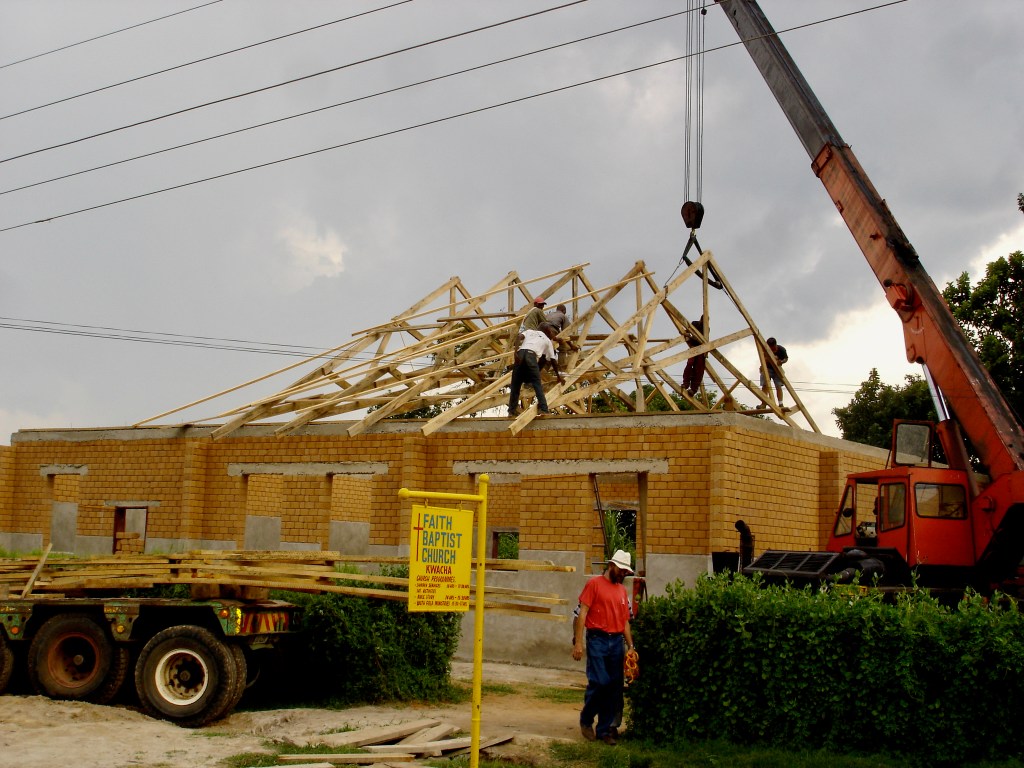
On this date in 2007, I wrote in response to missionary teammates who were uncertian of the direction of the ministry in Zambia, and the decisions being made. It was a time of ministry transition, I had just stepped aside as pastor of Faith Baptist Church of Riverside, and the questions were regarding FBC, and also the ministry of Faith Childrens’ Village, and Central Africa Baptist College (now University).
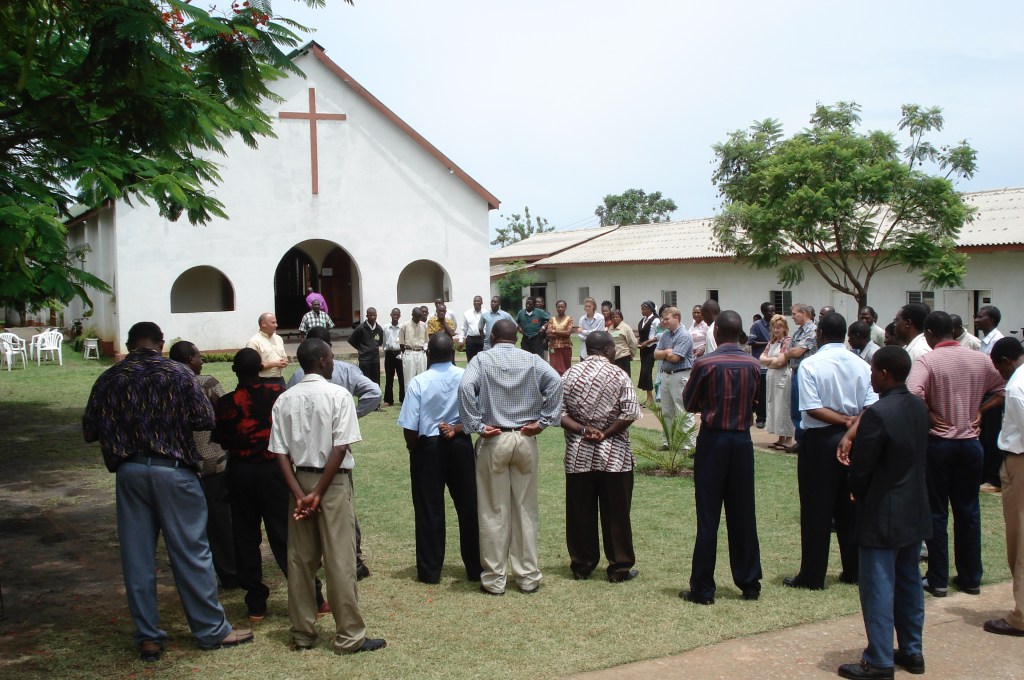
Here is my reply, lightly edited for flow.
October 16, 2007
Dear Brother,
Thank you for your email sharing your questions and concerns. Here is my guiding point of Ministry Philosophy: Develop the ministry only to the degree that the local assembly will be able to handle financially and capably. Programs and equipment that are beyond the means of the mature assembly are, in the end, counter-productive to the goal of a self-supporting church. We dare not establish that which will require continued missionary involvement.
It is this point that has guided our decisions regarding a way forward with both FCV and CABC. If we are to develop a local church plant to maturity where they are able to handle the ministry both financially and capably and not load them with programs and equip them beyond the capacity of the mature assembly, then we must think carefully about how to proceed with other legitimate and needy ministries. Hindsight always seems clearer, but our goal has been to establish church plants in a manner whereby, by the grace of God, they can become truly Indigenous – self-supporting, self-governing, and self-propagating. The final chapter has not been written with all of this. However, this has been the undeniable heartbeat. For instance, the local assembly at Riverside has, for a number of years, been supporting multiple staff and ministries with no financial input from anywhere else. Things get tight at times, but they have done it. Chipata church is the same. Each ministry will take its own unique twists and turns as it works this out for itself, but in the end, that is the goal. Every decision we make is through this prism – we have made mistakes, but God has chosen to bless nonetheless.
It is in this vein that we have, from the very onset, kept the ministry of FCV and CABC separate from any of the church plants. We have spoken about partnership regarding both ministries. This has always been the case, and we have never referred to FCV or CABC as ministries of any of our local churches. We have purposefully kept them separate in documentation and presentation for one reason – these ministries, in our opinion, are beyond the ability of any mature assembly, both financially and in terms of staff requirements (especially on the side of CABC). It has been my concern that though both ministries are legitimate (more on that later), they must not become detrimental to the local church planting movement but rather an encouragement and help to that movement. So, regardless of whether it could or should be done in a different manner (or done at all) – the heart behind what is going on is that these ministries do not become a noose or stumbling block as we pursue what I believe are biblically based goals and philosophy of church planting.
It has been an ongoing effort to explain the relationships of the various ministries to our Zambian Brethren. It has been explained again and again, but often, it is not until steps of growth are taken that the reality of what is being said sinks in. In other words, we have for years taught in our membership class at FBCR that we are an indigenous church and what all that means. It has been taught in every class that one day, there would be an African pastor. It has been explained in every class what it means to be an Indigenous – self-supporting, self-governing, self-propagating church. But when I actually resigned, and they were going through it, there was quite the stir among our good folks. Now, they came face to face with the practical implications of what has been taught all along. Though Riverside has been self-supporting for years, there were key people who voiced the thought that at least if I remained involved, they could be bailed out if there was a crisis someday in the future. This after years of teaching self-supporting… It is no surprise then that we would need to go back and remind our folks again and again of the practical out-workings of the Missionary relationships between the Churches and FCV or CABC. It has been said and documented in church business meetings, but it must be explained again and again until it practically sinks in. The discussion that we are now having is an example of how we all need this patient dialogue. These issues and statements of operation were discussed with you during the new missionary orientation and at our annual Field Councel meetings. But it takes time, life experiences, and continued discussion to grasp it fully. If we need this patience and repetition at the missionary level, how much more is needed with our beloved people?
Great care has been taken through the years when ministries have crossed over each other. Things were carefully explained and brought to FBC Riverside for a vote. Examples: For the guest room at Riverside, a vote was taken to grant the request by IFMZ (mission organization at the time) to outfit the room for a guest room to be used by IFMZ. However, people who have come since then may think that this is Riverside’s guest room. It takes constant coming back and repeating the true situation. Another example was requesting permission to build the CABC office building on the Riverside church property. Clearly delineated in the minutes, discussed by deacons, and approved by the church. All of this clearly indicates a separate ministry from the Riverside church. However, due to the location, it would be easy for someone to show up and assume that FBC Riverside has a Bible College.
We are all going through a time of transition! Riverside is going through a greater transition. Transition is always difficult. This is one reason I am thankful for your letter. We, as missionaries, must understand the course that has been charted by others who have gone before in the providence of God. We must be able to explain to our Zambian Brethren and have confidence in our own hearts both the motivation behind those decisions and that God has directed to this point. If we, as missionaries, appear to be divided or in disagreement, tension, and division will only arise in the greater ministry. I hasten to add that I do not think that because this is the way that it has been done, it is necessarily the best way, or we should not consider a different or better approach in the future. I simply am pressing the issue that the motivation and attempt to handle these things each step of the way came from a genuine heartbeat and motivation for the long-term good of God’s work in Zambia.
I would be happy to address these things once again with the church leadership in Riverside and will be very much in prayer over them.
I think it is also important that we realize that there is a spiritual war going on. Satan would love to discourage and defeat our beloved brethren – this is often done through the infiltration of a critical spirit, of tongues unchecked, of rumors, complaints, and dissatisfactions. We have discipleship opportunities when these things come to the surface to demonstrate the love of God and the unity of the Spirit in the bonds of peace.
Gratefully in Christ,
Phil Hunt

 Zambia Hunt
Leave a reply to Should Churches Be Self-Supporting, or Even Talk About Money? | Between Two Cultures Cancel reply