
Introduction: A Wake-Up Call for the Global Church
Recent statistics from the Joshua Project highlight a sobering reality: there are 987 unreached people groups in Africa alone, amounting to at least 430 million people untouched by the gospel. This staggering number serves as a critical wake-up call, pointing to a significant opportunity in global missions. The failure to actively spread the gospel, disciple believers, and establish healthy churches traces back to a fundamental oversight in our churches and pulpits, revealing a gap in our missionary efforts.
The Church’s Purpose
Why does the church exist? This question demands a clear, uncompromising answer: the church is here to fulfill the mission entrusted by Jesus Christ, resulting in people from all nations giving Him glory for all eternity.
Unfortunately, many congregations have lost sight of this purpose, becoming self-serving entities rather than outward-facing gospel communities. In an era where many churches are caught up in catering to individual needs and desires, the core mission of evangelism – verbal proclamation of the gospel and discipleship – teaching them to obey all things; is often sidelined. The church’s primary focus should be on obeying Christ’s commission, a commitment that will naturally lead to the preparation and sending of missionaries who share the same priorities, understanding, and focus.
Defining Mission and Missions
The Mission of God is to reconcile sinful people to God through Jesus Christ. God’s purpose is deeply rooted in God’s desire to restore fallen man to a relationship with the Father through the finished work of the Son. The Holy Spirit empowers and sustains this mission, assuring its ultimate success.
Missions, on the other hand, refers to the plan of committed Christians to carry out God’s mission through evangelism, discipleship, and church planting.
A missionary is a sent one, an ambassador of Christ, called to cross cultural boundaries to proclaim the gospel and nurture new believers into flourishing gospel communities. This sacred task, given by God to the local church, is beautifully exemplified in Acts 13:1-5, where the church in Antioch sent out its first missionaries with a clear focus on preaching the Word of God.

THE THREE-LEGGED STOOL CALLED MISSIONS
When I first moved to Zambia I spent several months studying the Bemba language at the Ilondola Language Centre in one of the villages outside of Chinsali, Zambia. I noticed in the village that every home had one or more three-legged stools – and they were always being used. One of the villagers heard of my interest and admiration for these little sturdy stools carved from a single block of wood, and brought me four of them to bring home to Kitwe. I keep them in my sitting room, and we use them often.
The thing about a stool with three legs is that if it is to carry out its function, it needs all three legs. A four-legged chair could loose a leg and still function somewhat, but not a three-legged stool. Biblical missions is like that. There are three basic, non-negotiable aspects of biblical missions; without one of them, missions ceases to be missions.
Evangelism: The Heartbeat of Missions
Evangelism stands as the cornerstone of all missionary work, driven by a passion for the glory of God, to see souls saved and disciples made who will join us in the worship of the One who alone is worthy. Evangelism is not only a response to God’s glory, motivated by compassion but also the means through which He will redeem all those who believe the message proclaimed. (Acts 14:21)
Discipleship: The Growth of Missions
The process of making disciples involves more than teaching; it includes life-on-life relationships that strengthen, encourage, and prepare new believers to navigate the challenges of living out their faith (Acts 14:22). This commitment to discipleship ensures that the faith is not only professed but practiced, leading to mature, resilient, reproducing followers of Christ. For every response to our evangelistic efforts there must be an intentional effort to “teach them to obey” everything that Christ commands (Mt. 28:18-20).

Church Planting: The Result of Missions
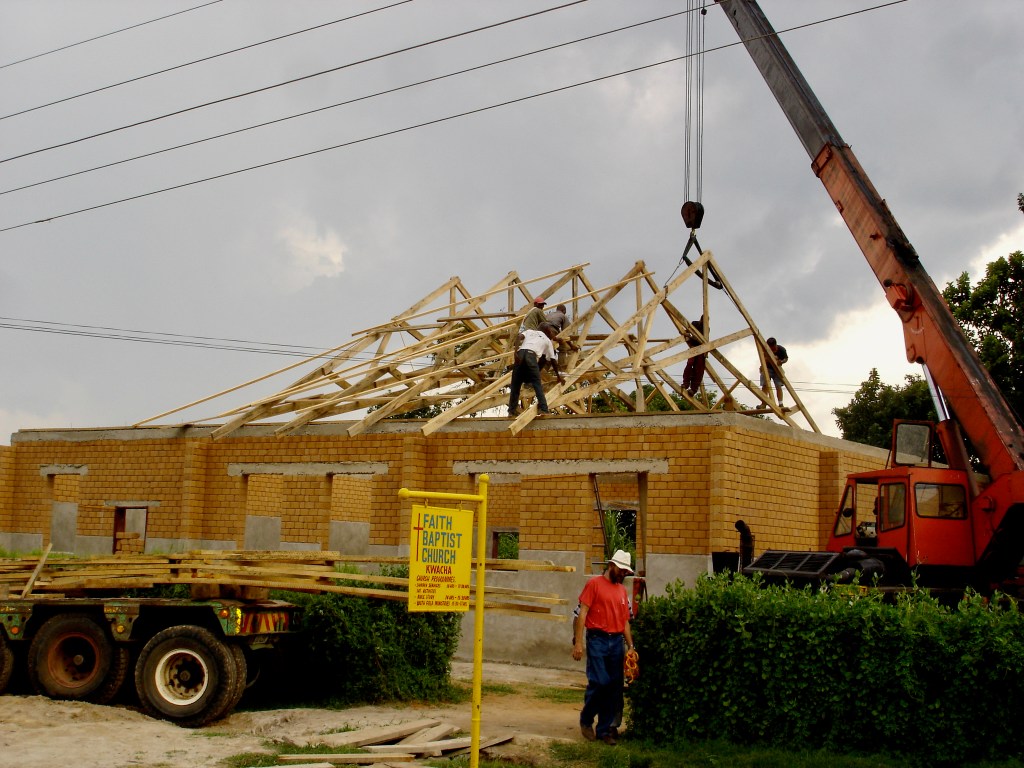
The establishment of indigenous churches is a testament to the self-sustaining, multiplying nature of the gospel (Acts 14:23). As disciples are “made” they are gathered into gospel-proclaiming fellowships. These fellowships of believers are organized according to the principles laid down in the Epistles; they have elders and deacons, administer the ordinances of baptism and the Lord’s Supper, and practice restorative discipline. These gospel communities, with their local leadership, serve as the launchpad for the next generation of mission work.
The foundational challenge facing the African church lies not in a shortage of leaders willing to serve as missionaries or a scarcity of funds to plant churches. Instead, it centers on the need for church leadership to teach and lead the congregation to embrace God’s missions as the essence of their existence. (Mbewe)
Healthy Reproducing Churches: The Outcome of Missions
Every living organism, by its very nature will reproduce after its kind. The Fish Eagle (The Zambia National Bird) produces other fish eagles, a palm tree produces other palm trees, and lions produce lion cubs. The issue is not how quickly the organism reproduces itself, but that it is reproducing. The gestation period for the rats that live around our neighbors chicken run seem to reproduce monthly, while the gestation period for an elephant is 22 months. It is not the length of time that it takes an organism to reproduce, but that it is functioning in the way God intends.
Every living organism, by its very nature will reproduce itself provided two things are true. First, the organism is mature, and second the organism is healthy. The church is not an organization, it is a living organism – the body of Christ. As such it is organized for functioning in the way God intends. For this reason we labor in the word to bring members of the body to maturity. For this reason we labor for spiritual health within the body through biblical church discipline.
A focused commitment to missions is a sign of a healthy church. A healthy church reproduces itself by preaching the gospel and intentionally discipling those who come to Christ, as well as mentoring and training gifted, qualified men within the congregation to serve as the spiritual leaders of the flock.
The primary opportunity for growth in the African church lies in reframing missions not as an optional activity reserved for a few extraordinary, connected churches but as the central purpose of its existence (Mbewe). The result will be the church will unlock its potential for leadership and financial resources dedicated to missionary work.
Practical Considerations for Missionary Work
Identifying and prioritizing missionary activities is crucial. The primary activities of evangelism, discipleship, and church planting must take precedence and be supported by secondary activities that directly contribute to these goals. Every local church must establish a strategic plan, allocate resources wisely, and foster a team-based approach to ensure that missionary efforts are both effective and sustainable (Acts 13:1-5).
The challenge before us is clear: Are we, as the body of Christ, willing to embrace God’s mission? This requires not only understanding our Divine mandate but actively engaging in it—sharing the gospel, making disciples, and planting churches. Let us recommit to the primary purpose of our faith: to glorify God through the fulfillment of His mission on Earth.



 Zambia Hunt
Leave a reply to Jacob Lee Cancel reply