
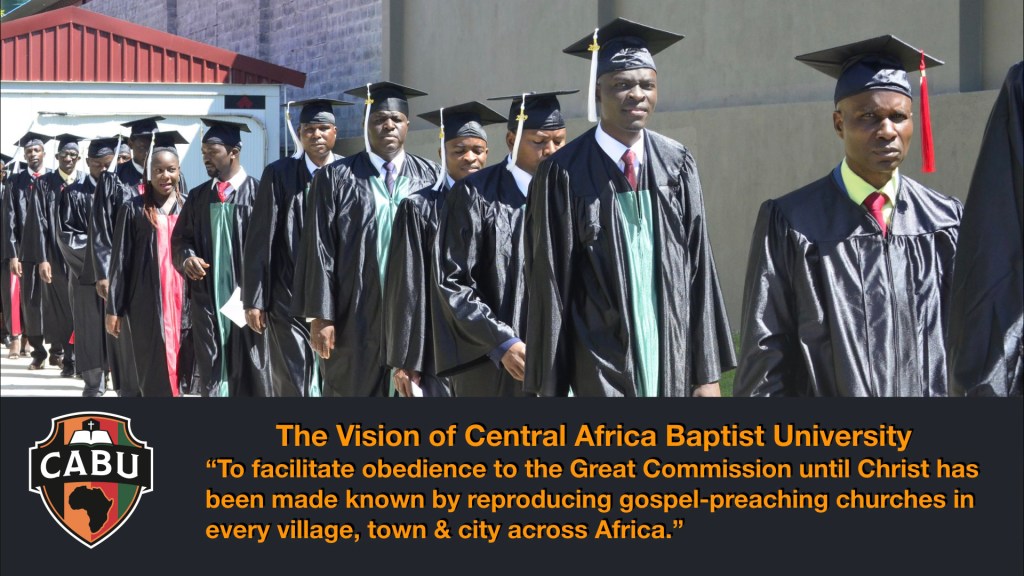
The story of the gospel’s advance has always been the story of God working through His people to reach the nations. From the very beginning, the local church has carried this mandate, rooted in Christ’s command to make disciples of all nations (Matthew 28:18–20). The Book of Acts shows us how this mission unfolds—not in ease, but often through opposition. It was persecution that first scattered believers from Jerusalem, carrying the gospel outward as they returned to their homelands. What seemed like hardship became the means of expansion.
From there, the mission took on a more intentional shape. The church at Antioch sent out the Apostle Paul, marking the beginning of a focused missionary effort to the population centers of the ancient world (Acts 13:1–3). Paul’s ministry was clear and purposeful: he proclaimed the gospel, made disciples, and established local, indigenous churches. These churches were not dependent outposts but living, reproducing communities—self-supporting, self-governing, and self-propagating. They became the foundation for ongoing gospel advance into the surrounding regions.
At the heart of Paul’s ministry was a deep commitment to multiplication. He charged Timothy with these words: “what you have heard from me… entrust to faithful men, who will be able to teach others also” (2 Timothy 2:2). This vision extended beyond a single generation. Men like Timothy, Titus, Apollos, Aquila, and Priscilla were shaped through this process and became instruments in God’s hands. Paul revisited the churches he planted, strengthening believers and grounding them in the truth (Acts 14:22). His letters reveal a shepherd’s heart—concerned not only for doctrine, but for endurance, faithfulness, and maturity.
The result was a church that moved forward with strength and clarity, laying a foundation that has carried through the centuries to our present day.
That same pattern began to unfold again in Central Africa in the early 1990s.
In 1993, the families of Neil Whitwam and Philip Hunt began a team-based church-planting ministry in Kitwe, Zambia. What started as a simple act of obedience—planting a local church in Riverside Extension—quickly grew as men and women came to Christ and were discipled in the Word. As these believers matured, they began to carry a burden for other areas of the city. Outreach efforts emerged, and over time, they became new church plants. It was the natural outworking of the gospel—God’s people responding to God’s Word to build God’s kingdom.
As the ministry expanded, the leadership began to recognize both a need and an opportunity. There was a growing demand for trained leaders—men and women who could faithfully handle the Word of God and lead the next generation of churches. While Bible institutes existed across Africa, there was a clear opportunity to establish a college that combined a strong biblical foundation with a credible, academically rigorous education. Such an institution could serve not just Zambia, but the continent.
By 1998, this vision had become a matter of earnest prayer. The team committed the need to the Lord, waiting on His direction.
In 2002, that vision began to take shape. Philip Hunt shared the burden for a Bible college with a visiting pastor, which led to an invitation for Dr. Steve Pettit to visit Zambia later that year. His encouragement opened the door for further conversations with Northland Baptist Bible College in the United States. In 2003, discussions with President Matt Olson explored the possibility of establishing a branch campus in Zambia. When Dr. Sam Horn visited in 2004 to assess the opportunity, his conclusion was clear: the vision was viable.
With that confirmation, the decision was made to move forward in faith.
On April 5, 2004, Central Africa Baptist College was officially chartered in Kitwe, Zambia. At that inaugural board meeting, a budget was approved, and Philip Hunt was appointed as president. Just under two years later, on February 13, 2006, the first classes were held in a renovated facility in Riverside. Nine students enrolled in that opening semester—a small beginning, but one filled with purpose.
From those early days, God steadily grew the ministry. Property was acquired in 2005, and by 2008 the first phase of campus construction was completed. Additional developments followed, including housing for married students, office space, and a temporary conference center. Plans for future expansion continued to take shape, including additional classrooms, a library, dining facilities, and a multi-purpose conference hall.
In 2013, additional property along Jambo Drive was purchased, and in 2015, plans were approved for a commercial business park designed to generate local income to support the ministry’s ongoing operations. Meanwhile, academic growth continued. The theology program received accreditation through ACTEA in 2017, and an Education Program—fully accredited by the Ministry of Education—was introduced in 2016. Facilities expanded to accommodate this growth, including new classrooms and offices.
The impact extended beyond the campus. Through the Theological Studies by Extension (TSE) program, training was taken directly to local churches across Zambia and into neighboring countries such as Malawi and the Democratic Republic of Congo. In this way, theological education became accessible to those who might otherwise never receive it.
From the original nine students in 2006, the college grew steadily, and by 2025, it had trained hundreds of graduates serving across multiple countries. Each one represented not just a student, but a laborer sent into the harvest.
Through it all, the purpose has remained unchanged: to train the next generation of servant-leaders in Africa for Great Commission living. And the vision continues to press forward—to see Christ made known through reproducing, gospel-preaching churches in every village, town, and city across the continent.
 Zambia Hunt
Leave a comment