
Romans 8:12–17
A Meditation on the Spirit’s Transforming Work
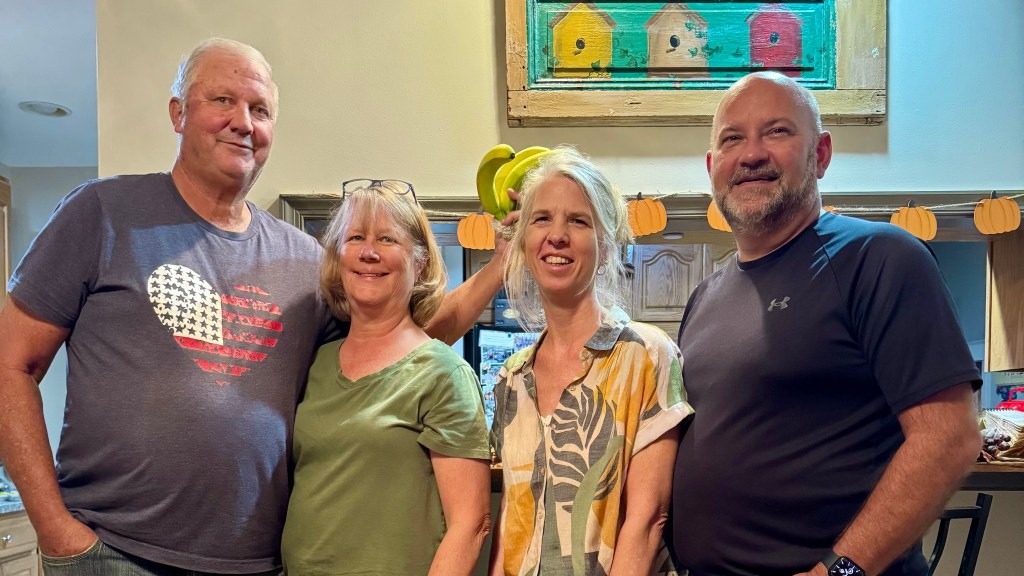
There are debts that cannot be repaid—only carried with gratitude. My wife, Lori, is one such debt. In 1992, she packed her life into what could be carried and followed me to Kenya. A year later, to Zambia. She did not have to. She chose to. And she has stood beside me through seasons bright enough to make you forget the cost and seasons dark enough to make you count it. I would do anything for her—not because I must, but because I am glad to.
A man named Bruce Richards is another such debt. He was my high school teacher, my coach—the kind of man whose voice carried authority in a gymnasium and whose patience outlasted failure on a baseball diamond. He came into my life at a time when my father had been removed from our home because of his violence, and the absence he left was not quiet. It was loud with everything a boy needs and cannot find for himself. Bruce looked at that boy and decided to invest anyway. He gave a sixteen-year-old responsibilities and opportunities that no high school student would normally receive. He became a mentor, then a friend, then the reason I entered ministry at all. After high school, he brought me to New Hampshire to serve alongside him—to lead, to teach, to preach. He handed me a future I had not earned.
I owe Bruce a debt I will never repay. I am glad to carry it.
But there is a greater debt. A debt owed not to a friend or a wife, but to God himself. Paul names it without softening: “So then, brothers, we are debtors” (Romans 8:12). The question the text immediately demands is this—debtors for what? What has God done that places us in his debt?
The answer is in the chapter before. Romans 7 records one of the most honest confessions in all of Scripture. Paul—apostle, church-planter, theologian, a man who had been caught up to the third heaven and seen things he could not repeat—admits to a war he cannot win:
So then, I myself serve the law of God with my mind, but with my flesh I serve the law of sin. —Romans 7:25
His renewed mind wanted to obey God. His flesh dragged him back. He woke with fresh resolve and found it spent by noon. He stood over the same ground he had consecrated, watching his own feet cross the line again. The same sin. The same defeat. The same hollow shame afterward. He thought what he vowed never to think. He did what he swore he would never do again.
This is not a description of an immature believer. This is Paul. And if you are honest, it is you. It is all of us.
His cry in verse 24 is the sound of a man who has exhausted himself trying to be holy in his own strength: “Wretched man that I am! Who will deliver me from this body of death?” It is not the cry of someone who has given up on God. It is the cry of someone who has given up on himself—which is precisely where God can begin to work.
The answer comes in verse 25, and it is not a technique or a strategy. It is a person. “Thanks be to God through Jesus Christ our Lord.” Jesus delivers. That is the declaration.
God’s answer to sin was not a revised moral standard. It was a crucified Son. Picture it plainly: a man who had never thought a sinful thought, never spoken a corrupted word, never acted from a motive less than pure—nailed to a Roman cross under the accumulated weight of every sin ever committed by everyone who would ever believe. Our sin was placed on him. Our condemnation fell on him. Our death was his death. He bore the punishment we deserved to bear, and in bearing it, he satisfied every righteous demand that stood against us. His substitutionary death was not a gesture. It was a verdict: paid in full.
This raises the question that presses on every believer: how does that finished work—accomplished two thousand years ago on a Roman cross—become real and operative in my life today? How does the death of Christ become the defeat of sin in me?
Romans 8 gives the answer: by the Holy Spirit. God applies the work of Christ by sending his Spirit to dwell within his people. The Father ordained salvation. The Son purchased it. The Holy Spirit applies it. And Romans 8:12–17 shows us what that application looks like in practice.
The Spirit does not merely give us life. He transforms our identity. He takes slaves and makes them sons. Read the text:
So then, brothers, we are debtors—not to the flesh, to live according to the flesh. For if you live according to the flesh you will die, but if by the Spirit you put to death the deeds of the body, you will live. For all who are led by the Spirit of God are sons of God. For you did not receive the spirit of slavery to fall back into fear, but you have received the Spirit of adoption as sons, by whom we cry, ‘Abba! Father!’ The Spirit himself bears witness with our spirit that we are children of God, and if children, then heirs—heirs of God and fellow heirs with Christ, provided we suffer with him in order that we may also be glorified with him. —Romans 8:12–17
Three realities emerge from this text. The Spirit frees us from slavery. The Spirit adopts us as sons. The Spirit assures us as heirs. Each is a gift. Each carries a demand.
We begin where Paul begins: with our debt. The phrase “so then” in verse 12 anchors everything that follows to what has already been established in chapter eight. Because the Spirit has delivered us from condemnation and granted us life, we are therefore debtors. The grace we have received is not free in the sense of cheap. It cost the Son of God his life. And it calls us to live accordingly.
THE SPIRIT FREES US FROM SLAVERY
We are empowered by the Spirit
Verse 13 states the terms plainly: “If you live according to the flesh you will die, but if by the Spirit you put to death the deeds of the body, you will live.” Two paths. One ends in death; one ends in life. Paul offers no middle ground, no third option, no gradual drift. There is the flesh, and there is the Spirit. Choose.
The only distinction that ultimately matters is not nationality or denomination or church attendance. It is this: are you living according to the flesh, or by the Spirit? Those are the only two kinds of people in the world.
The death Paul speaks of is not merely physical—though that too is coming for all of us, arriving on a day we have not marked in our calendars. He means spiritual death. Eternal death. The second death. A state in which God’s presence is permanently withdrawn and his wrath permanently sustained. Revelation 21:8 names those who will face it:
But as for the cowardly, the faithless, the detestable, as for murderers, the sexually immoral, sorcerers, idolaters, and all liars, their portion will be in the lake that burns with fire and sulfur, which is the second death.
This is where the flesh leads. Not to satisfaction. Not to freedom. To the lake of fire. The flesh promises what it cannot deliver and delivers what it never promised. It seduces, then destroys.
To live according to the flesh is to move, however slowly, toward two deaths: the body’s death first, and then eternal separation from God. Every compromise with sin is a step in that direction. There is no neutral ground.
The Christian life is a war. Not a border skirmish or a minor inconvenience—a campaign for the soul’s permanent allegiance. Paul says we must put sin to death—actively, deliberately, relentlessly. Not manage it. Not negotiate with it. Kill it.
Verse 13 places this responsibility squarely on the believer: “you put to death the deeds of the body.” This is not passive. This is not something done for you while you wait. But notice the means: by the Spirit. You fight. God empowers the fight. Philippians 2:12–13 holds both truths together:
Work out your own salvation with fear and trembling, for it is God who works in you, both to will and to work for his good pleasure.
You are responsible. You are not abandoned. The Spirit of God is not a passive resident in your soul—he is an active, powerful ally in the war against your sin. John Owen was right: “Be killing sin, or sin will be killing you.” There is no passive sanctification. There is no holiness without conflict.
We are led by the Spirit
Verse 14 declares: “For all who are led by the Spirit of God are sons of God.” The Spirit does not merely restrain sin; he directs the whole of life.
The law was never designed to save anyone. Its purpose was diagnosis, not cure—to show us that we cannot keep God’s demands, and to drive us to Christ, who can. Paul calls it “our guardian until Christ came” (Galatians 3:24). Once we come to Christ, we are no longer under a guardian. We are led by a living Spirit.
That leadership is not vague or mystical. The Spirit leads us toward specific, concrete obedience—and away from specific, named sins: sexual immorality, anger, pride, idolatry, greed. Sanctification is not a feeling. It is a war fought one temptation at a time. And the Spirit is present in every engagement. When temptation comes, the Spirit says no. When you obey—when the no holds—that is his power working through your choice.
Understand what sin is doing when it tempts you. It is not offering freedom. It is laying a trap. What begins as a whisper of possibility and a thread of desire, if indulged, thickens by degrees into something that feels like ownership. Sin seduces with the language of liberation and delivers chains—chains that grow heavier the longer they are worn and harder to see the longer they are carried. Verse 15 names this plainly: it is “the spirit of slavery.” Every believer who returns to a pattern of sin is not living freely—they are living as though they are still enslaved. And that is a lie about who they now are.
THE SPIRIT ADOPTS US AS SONS
Verse 15 makes the contrast absolute: “You did not receive the spirit of slavery to fall back into fear, but you have received the Spirit of adoption as sons, by whom we cry, ‘Abba! Father!’”
Late afternoon in Johannesburg. A man is walking a narrow footpath between a township and a highway, the city noise carried on the wind, the grass tall and dry on either side. He has walked this path before. He is not looking for anything.
Then he hears it. A sound in the grass—faint, irregular, like a small animal in distress. He stops. Steps off the path. Parts the grass with his hands and finds a ShopRite bag lying in the field. Plastic. Ordinary. Moving.
Inside was a newborn baby boy. Still wet. Umbilical cord intact. Lying on the afterbirth. Tied in a plastic bag and left to die in an open field, in the tall dry grass, on an afternoon when no one was supposed to be passing.
That man picked up the child and ran. The baby survived, was placed in a ministry for abandoned infants, and was eventually adopted as the son of the man who leads that ministry.
That is us. Every one of us.
We were born dead in sin—helpless, abandoned, without a single claim on God and without the capacity to manufacture one. We could not cry loud enough to be heard. We could not crawl far enough to be found. We had nothing to bring and no strength to bring it with. The flesh could not save us. Religion could not save us. Moral effort could not save us. We were in the bag, in the field, on an afternoon when no one was supposed to pass by.
But a sovereign Father came. He was not passing by coincidence. He came looking. He parted the grass and found us in our blood and our ruin, and he chose us—not because we were lovely, but because he is love. He picked us up. He declared us his own. That is the doctrine of adoption, stated in Ephesians 1:5:
He predestined us for adoption to himself as sons through Jesus Christ, according to the purpose of his will.
Adoption does three irreversible things. It establishes a relationship: you are the child of the living God. It grants access: you may enter the Father’s presence at any time, without fear, without a mediating curtain. Hebrews 4:16 calls it coming “with confidence.” And it places within you a yearning that was not there before—a longing for the Father that the Spirit himself produces.
That longing has a name. Verse 15: we cry, “Abba! Father!”
Abba is the Aramaic word for Father—intimate, tender, direct. It was never used by Jewish worshippers to address God. Only Jesus used it. And the moment he used it was in Gethsemane: the night before the cross, in a garden dark and quiet enough to hear his own heartbeat, sweating under the weight of what was coming, kneeling in the dirt while his disciples slept. In that moment, alone with the cup that could not pass, he said: “Abba, Father, all things are possible for you. Remove this cup from me. Yet not what I will, but what you will” (Mark 14:36). Through the Holy Spirit, Jesus has given that name to us. We now address the Father the way the Son did in his darkest hour.
Let that land. The Creator before whom the seraphim veil their faces and cry “holy” without ceasing—that God is your Father. Not your judge. Not your master. Not the distant deity of formal religion who receives your prayers like correspondence filed and seldom answered. Your Father. And the Spirit within you is the one who makes that cry not only possible, but true.
Some who read this did not grow up with a trustworthy father. The word invites not warmth but wariness—the body remembers what the mind tries to revise. Hear this plainly: your earthly experience of fatherhood is not the measure of God. He does not abandon. He does not abuse. He does not go cold in the night and leave you to work out what you did wrong. He is a Father of tender love and absolute faithfulness. His eyes are on you. He will not look away.
Stop. Before you read another sentence, let this truth do its work. If you are in Christ, the Spirit of adoption lives within you. You have been given the right—God’s own invitation—to call the Creator of the universe Father. Not as a doctrine to affirm. As a cry to make. Right now. Abba. Father.
THE SPIRIT ASSURES US AS HEIRS
The Spirit’s witness
How do you know you belong to God? Not whether you believe it intellectually—but whether you know it in your bones. Verse 16 answers with a present-tense declaration: “The Spirit himself bears witness with our spirit that we are children of God.”
The Spirit does not merely assert this to you. He bears witness with your spirit—an internal, ongoing confirmation that cannot be manufactured and cannot be faked. It is the difference between knowing someone’s address and knowing their face. It is a knowing that sits below argument—that produces a genuine cry toward the Father and genuine fruit in the life, two things no one can perform indefinitely without possessing.
But the fruit of the Spirit is love, joy, peace, patience, kindness, goodness, faithfulness, gentleness, self-control; against such things there is no law.
Little children, let us not love in word or talk but in deed and in truth. By this we shall know that we are of the truth and reassure our heart before him whenever our heart condemns us, for God is greater than our heart, and he knows everything. — 1 John 3:18–20
Look at your life. Not at your aspirations—at your life. Is the Spirit producing fruit? Not perfection—but direction. Not arrival—but movement. Are you more like Christ than you were? Do you hate your sin more than you once did? Does your heart cry out to God, or have you settled for religion without relationship? These are the marks of a child of God. The Spirit who adopted you is also the Spirit who transforms you. If he is present, the evidence will be there.
The Spirit’s inheritance
Verse 17 presses to the ultimate conclusion: “If children, then heirs—heirs of God and fellow heirs with Christ, provided we suffer with him in order that we may also be glorified with him.”
Heirs of God. In the ancient world, to be named an heir was to be given everything the father possessed—his estate, his name, his standing, his future. Paul takes that image and presses it to its limit: we are heirs of God himself. Not heirs of a portion. Not beneficiaries of a secondary gift. We inherit God—his presence, his glory, his kingdom—shared as co-heirs with the Son through whom we were adopted. There is no greater inheritance conceivable. The universe and everything in it was made by him and will be renewed for him, and we will receive it together with him.
But the path to that glory runs through suffering. Paul does not soften this. The condition is stated plainly: “provided we suffer with him.” The Son of God was not spared the cross. The sons of God will not be spared their own. The road to glory passes through a valley, and the valley is real—its darkness is not a metaphor, its weight is not symbolic. But it is not the destination. It is the route. And on the far side of the valley is a glory that Paul elsewhere says is not worth comparing to what we endure to reach it (Romans 8:18).
We accept it. Not reluctantly, not with gritted teeth, but with the clear-eyed willingness of those who know what is waiting. The suffering is real. The glory is greater. And we know whose we are.
CONCLUSION
Here is the verdict of this text: you were a slave. Now you are a son.
If you are not in Christ, you are still in the bag—helpless, without a future, bound by a flesh that will kill you. The road you are on ends at the second death. That is not a scare tactic. That is the word of God. And you do not have to stay on it.
The Father planned your salvation before you drew your first breath. The Son purchased it on the cross. The Spirit is pressing it upon you right now. Repent. Believe. The Spirit will adopt you as a child of God—not because of what you bring, but because of what Christ has done. Do not defer this. Do not wait for a better moment. There is no better moment than the one you are in.
Do not walk away from this text a slave. You can walk away a son.
And if you are in Christ—then live like it. Stop living in Romans 7. You have been given Romans 8. You are not a slave driven by fear and guilt and the weight of your own failure. You are a son of the living God. Adopted. Declared. Sealed.
When you fall—and you will fall—you do not drag yourself back to a master to beg forgiveness from a distance, head down, waiting to hear whether you are still welcome. You run. The way a child runs—without rehearsing the speech, without calculating the reception, simply running because the Father’s house is the only place that makes sense when everything else has collapsed. You run and you cry: Abba. I need you. I have failed. Help me.
And while you are still a long way off, he sees you. He has been watching the road. He runs.
That is the cry of a son. And that is the Father who hears it.
This is the work of the Holy Spirit. He frees us from slavery. He adopts us as sons. He assures us as heirs. He is not passive in your sanctification. He is not distant in your suffering. He is the Spirit of the living God, dwelling within you, pressing you forward, bearing witness with your spirit that you belong to God.
You are not a slave. You are a son. Live as one.
Father, by the power of your Holy Spirit, do your work in us. Where we have lived as slaves, set us free. Where we have doubted our adoption, bear witness again. Where we have shrunk from suffering, steady us with the hope of glory. We ask this not on the basis of our own worthiness, but in the name of the One through whom we dare to call you Father—Jesus Christ our Lord. Amen.
Audio sermon transcript edited with Claude


 Zambia Hunt
Leave a comment