
Instructions from Deuteronomy 8:1-20

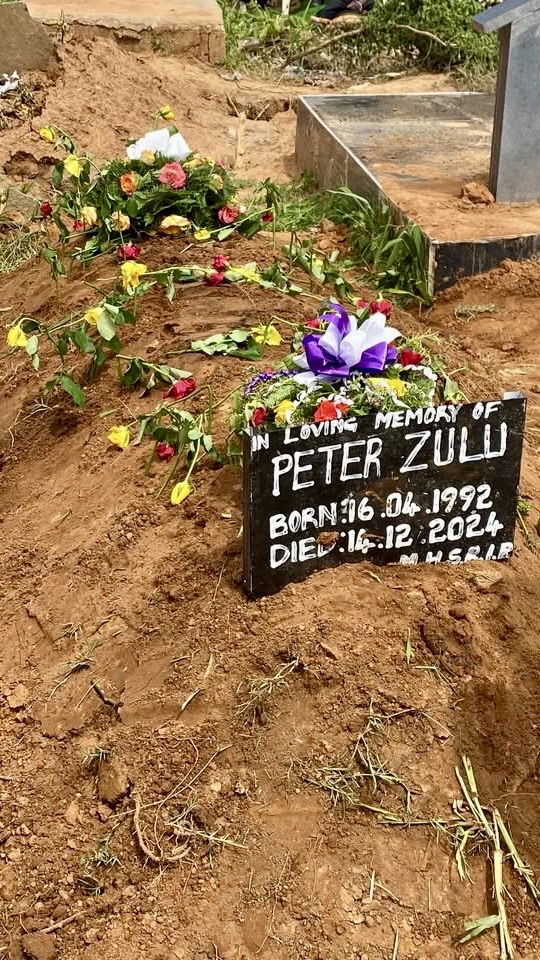
The headstone over my Grandfather's grave, and the marker on my friend's grave. A contrast in cultures.
INTRODUCTION
Consider the story of a monkey who visited the ocean for the first time. Upon seeing a fish swimming in the water, the monkey, thinking the fish was drowning, heroically pulled it out to save it. The fish, of course, died on the beach.
A fish doesn’t know what being wet is because water is its environment—it’s all the fish has ever known.
If we are to make a difference in our world, and fulfill our mission of representing Christ in our generation, we will soon find ourselves in conflict with our culture. I am not an authority on culture, but I am a student of it. For over thirty years, I have lived in a very different culture from the one in which I was born—Zambia, Africa.
For years, Lori and I labored to understand Zambia’s culture, both its good and bad. We went through what missiologists call “culture shock”—a feeling of disorientation, almost overwhelmed by the changes in everything in our lives. Things that we knew to be fact and could be relied upon were suddenly unreliable. We came to a place where we were not sure how to respond to any given situation because we did not understand the cultural mindset. We had to learn how to buy groceries, pay our bills, hand something to someone with our right hand, and drive on the other side of the road.
Funerals: A Case Study in Cultural Differences
In the West, you might wear a dark suit or dress—in Zambia, women wear a chitenge. In the West, you take food to the family—in Zambia, some traditions keep food from the widow. In the West, you give people space—in Zambia, you descend upon the funeral house for an unending vigil until burial. In the West, you hire a funeral service—in Zambia, you often wash the body and bury it yourself. In the West, you are quiet when you view the body to show respect—in Zambia, you are loud and wailing to show respect. In the West, you are generous to the widow and help her through the tough time—frequently in Zambia, the family of the deceased husband comes and divides up the properties among themselves, leaving the widow and children destitute.
Culture has been defined simply as the attitudes and behaviors characteristic of a particular social group. It includes the customs, arts, and social institutions of a particular people.
Robert P. Dugan, Jr. offers this expanded definition: “What is culture? It is the ways of thinking, living, and behaving that define a people and underlie its achievements. It is a nation’s collective mind, its sense of right and wrong, the way it perceives reality, and its definition of self. Culture is the morals and habits a mother strives to instill in her children. It is the obligations we acknowledge toward our neighbors, our community, and our government. It is the worker’s dedication to craftsmanship and the owner’s acceptance of the responsibilities of stewardship. It is the standards we set and enforce for ourselves and for others: our definitions of duty, honor, and character. It is our collective conscience” (Winning the New Civil War, p. 169).
As the people of God, the final basis upon which we judge any culture—the actions and attitudes of any people group—is the unchanging nature of Jesus Christ as revealed in His Word. We are all influenced by our culture.
THE INFLUENCE OF CULTURE
Jesus spoke about this danger in His comments on leaven (yeast). He warned His disciples to “beware of the leaven of the Pharisees and Sadducees” (Matthew 16:6) and “the leaven of Herod” (Mark 8:15). Leaven symbolizes human imperfection (see Exodus 12:15-20; 13:3-8; Leviticus 2:11; 1 Corinthians 5:6-8). Jesus was warning against mixing imperfect human ideas with God’s truth. The Pharisees had mixed their own religious traditions with the teaching of the Scriptures; the Sadducees were the philosophers of Jewish society; and Herod represented the world system. These three influences—tradition, philosophy, and society—seem inevitably to work their way into and become part of the value system of any Christian community to such an extent that it is possible to be a Christian, yet live almost entirely within a pagan value system, and not even perceive it.
Jim Peterson writes: “This possibility began to dawn on me when we moved to Brazil and changed cultures. Culture is hardly perceived as long as we do not leave the only one we really know. A fish doesn’t perceive the water in which it swims, and neither are we aware of our culture, or the influence it exerts on our thoughts and actions. Often we must step outside of it to understand it—and to understand ourselves!” (Living Proof, NavPress, 1989, p. 100).
The Biblical Context
In Deuteronomy chapter eight, a new generation of Israel stands at the border of the Promised Land of Canaan. They are about to cross over and possess the land, but before they do, Moses issues an admonition and a warning. For forty years, God has led them and given them His law—moral, civil, and ceremonial. They have developed a new culture—a God-culture, where God Himself is the Sovereign ruler of His people. These Hebrews are about to enter a new land and encounter very different cultures. The generation immersed in Egyptian culture has now died. Another generation of people, raised in the wilderness under the rule of God and Moses, has arrived on the biblical scene. There is a need to admonish, encourage, and warn them as they prepare to advance the cause of Yahweh in this land of Canaan.
Verses 1-10 describe the blessings. Verses 11-20 contain the warning.
WHEN CONFRONTING CULTURE, REMEMBER GOD
Yahweh – The Self-Existent, Eternal One
The phrase “LORD your God” is used seven times in this chapter (verses 2, 5, 6, 11, 14, 18, 20) and 279 times in Deuteronomy. One key to understanding this book is to realize that it deals with the relationship between the new generation and God Himself.
Self-existent means that God needs nothing and no one outside of Himself. Nothing and no one can add anything to God nor take anything away from Him. He is forever.
It is safe to say that God does not need any of us. However, we hasten to add that we need Him! We are not self-existent. We need air with the right mixture of gases, food, heat (but not too much), water, and the earth itself.
Elohim – The Powerful Creator and Preserver
This name of God is used thirty-two times in Genesis 1 and refers to the power and might of God.
Personal God
This emphasizes the personal nature of their relationship. “Your” indicates something possessed, belonging to you. It conveys a sense of ownership, relationship, and identity.
WHEN CONFRONTING CULTURE, REMEMBER GOD’S WORK
Deliverance – He Brought Us Out (verse 14b)
God brought them out of the land of Egypt, out of bondage. In the same way, God has delivered us from the bondage of Satan.
Guidance – He Led Us Through (verses 2, 15)
God faithfully led them all the way through the wilderness—by a cloud by day and a pillar of fire by night (verses 2, 15). He led them into trying situations and tested them to reveal their hearts—not because God did not know their hearts, but because they did not know their own hearts (verse 2b). This process humbled them as they realized they needed God; without Him, they were doomed.
Why did God lead them out of bondage, but through the impossible journey in the wilderness? To prepare His people for the blessings to come—to purify them, to mature them, to teach them, and to prepare them for the victorious life.
Trials do not produce sin in your heart; they merely expose what is already there. Throughout the forty years, God systematically purged from the congregation those who would not follow and obey. Consider the missionary who, under pressure, becomes angry, bitter, fearful, complaining, or proud. The trial didn’t create these attitudes; it revealed them.
Provision – He Fed You (verses 3b, 16)
God allowed them to experience hunger and then fed them with manna “to teach them that man shall not live by bread alone, but by every word that proceeds from the mouth of God” (verse 3b). Note carefully: Why does God allow urgent need? The testing keep us dependent.
God also provided clothes that did not wear out and maintained their physical health—their feet did not swell during the long journey.
Instruction – He Taught You (verses 3, 5)
God taught them about His person. There are not many gods but one true God and Father of all—”all” speaking of His paternal relationship through creation (verse 3).
God taught them about His nature. They learned that God chastens His children as a loving father disciplines his beloved son (verse 5).
WHEN CONFRONTING CULTURE, BEWARE OF FORGETTING GOD
When Are We in Most Danger of Forgetting God?
In a time of personal comfort. The greatest danger comes not when we are required to trust God for every meal, but when we have eaten and are full (verse 12). When we have beautiful houses to live in, we are vulnerable to spiritual amnesia.
In a time of corporate achievement. Danger arrives when herds and flocks multiply. It is not when we are trusting God for just the next day’s survival (verse 13a).
In a time of collective affluence. When silver and gold and all that we have is multiplied (verse 13b), we are most susceptible to forgetting the source of our blessing.
What Are the Signs That We Have Forgotten God?
I have forgotten God when I fail to keep all His commandments (Matthew 28:20).
I have forgotten God when I take credit for what God alone has done (verse 17). This manifests when we make economic decisions with no thought of God, take confidence or comfort in what we have rather than in who we know, or boast in our accomplishments.
I have forgotten God when I serve other gods. J.R. Miller writes, “Anything which we keep in our hearts in the place which God ought to have is an idol, whether it be an image of wood or stone or gold, or whether it be money or desire for fame, or love of pleasure, or some secret sin which we will not give up. If God does not really occupy the highest place in our hearts, controlling all, something else does. And that something else is an idol.”
There are a number of potential idols that can serve as substitutes for the love and worship we should give God. Worldly culture offers us a plethora of other gods: job, food, people, television, political candidates, sports, family, spouse, money, house, knowledge, music, children, self, even church and ministry.
No man can live beyond his concept of God. J.B. Phillips wrote a book entitled Your God Is Too Small. His thesis was that your understanding of God would directly affect what you do and how you live your life.
THE SUPREMACY OF GOD
A.W. Pink writes: “Thus saith the Lord, Let not the wise man glory in his wisdom, neither let the mighty glory in his might, let not the rich glory in his riches: But let him that glorieth glory in this, that he understandeth, and KNOWETH ME, THAT I AM THE LORD” (Jeremiah 9:23-24).
“The ‘god’ of this twentieth century no more resembles the Supreme Sovereign of Holy Writ than does the dim flickering of a candle the glory of the midday sun. The ‘god’ who is now talked about in the average pulpit, spoken of in the ordinary Sunday School, mentioned in much of the religious literature of the day, and preached in most of the so-called Bible conferences is the figment of human imagination, an invention of maudlin sentimentality. The heathen outside of the pale of Christendom form ‘gods’ out of wood and stone, while millions of heathen inside Christendom manufacture a ‘god’ out of their own carnal mind. A ‘god’ whose will is resisted, whose designs are frustrated, whose purpose is checkmated, possesses no title to Deity, and so far from being a fit object of worship, merits nought but contempt.”
What Are the Steps to Forgetting God?
Forgetfulness is caused by pride. “My power and the might of my hand have gained me these blessings” (verses 14, 17).
Pride leads to self-centeredness. The issue is one of authority. It becomes all about me (verse 17).
Self-centeredness leads to disobedience of God. We stop doing what we used to do (verse 11).
Disobedience of God leads to idolatry (verse 19).
Idolatry leads to God’s destruction (verses 19b-20). The sad reality is that in just a few hundred years, it would be said of God’s people that “every man did that which was right in his own eyes.” God reversed His blessings and brought judgment.
CONCLUSION
If we are not on guard, we will be the monkey who rescued the fish from the water. The world “rescues us” from the ocean, and we lie powerless and dying on the beach. We don’t impact a culture by crawling out of our environment and trying to be like the monkeys. We point them to Someone who can miraculously make them what we are. Or worse yet, we so long to be like the monkeys that we crawl out of the water and make for the tree.
Anthropologist David Murray, quoted by Bennett, observes: “We (Western Christianity) have now become the kind of society that in the nineteenth century almost every Christian denomination felt compelled to missionize.”
We live in a self-centered, me-first society—an abandonment culture. I am my own god. It is I who deserves happiness and satisfaction, even at the expense of everything and anyone else.
What we need is not a culture of Americanism or a culture of Africanism but a God-culture—a culture where God is the center, where His commands, precepts, and judgments are the basis upon which we live our lives.
Are you obeying every command of God that you know? What is the Spirit saying to your heart right now? Are you serving something—anything—more than you are serving God?




 Zambia Hunt
Leave a comment