
The Crisis of African Christianity
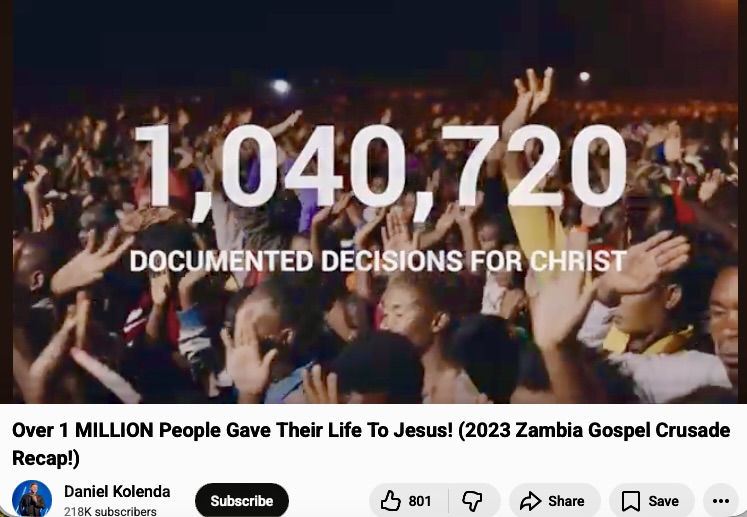
There are times in evangelism when circumstances limit the amount of biblical truth we can share. However, we must seize every opportunity to share the gospel. Sometimes, God uses incomplete gospel presentations as part of the full body of truth. Some sow the seed, some water, but God gives the increase. Through the gospel, God works a miracle for the person who understands and, by faith, receives Christ.
In many regions of Africa, the gospel has been proclaimed for many years, and the name of Jesus is on the lips of people, and churches of all denominations and beliefs are filled with worshippers each week. However, there is a deep fundamental chasm within African Christianity. Many claim Christ yet evidence the unreality of that claim. Men and women who profess to be Christian engage in sexual immorality, corrupt business practices, drunkenness, and traditional activities clearly prohibited in Scripture.
African nations that claim a history of Christianity are guilty of some of the greatest acts of brutality in recent history. A million people were slaughtered in the “Christian” nations of Rwanda and Burundi during the ethnic violence of 1994.1 In Kenya, a nation long claiming a healthy dose of Christianity, election violence claimed the lives of 1,300 people and left another 300,000 homeless. In many instances, this vicious tribal violence was propagated by the very people who filled Kenyan churches on Sundays.2 Nigeria is known for its mega-Christian churches and massive crusades where 800,000 people attend one event, yet Nigeria leads Africa in being famous for massive corruption.3
What kind of Christianity is this? Where have we gone wrong in Africa?
The answer to this question was vividly illustrated in a conversation I had with a young man in Zambia. I have known “Mumba” since 1995, when he began attending Faith Baptist Church as an 11-year-old boy. Mumba faithfully attended Junior Church and then the teen group. As an older teen, he wandered away; he would often be seen in the community but never in church.
Mumba came to see me with the scars of a sinful life evident in his eyes and demeanor. His girlfriend gave birth to his son two weeks ago, and the baby is in the hospital with a high temperature. Mumba’s eyes betray the distant, glassy look of a person who spends a lot of time with alcohol. He is at the end of his rope, and the problems and consequences of sinful choices have become a wave that threatens to swallow him up.
I asked Mumba what he felt was his greatest need. After mentioning a job, he transitioned with the statement, “I’m backslidden, and I need to come back to church.”
“Backslidden?” I asked him. “What does that mean to you?” He responded, “I just need to get my life right.” Turning quickly in Scripture, I read to Mumba from Galatians 5, where the fruits of the flesh and the Spirit are listed. Based upon his life, I then asked Mumba to identify which group he belonged to. He said the first. I then turned to Romans 1–2 and laid out God’s righteous judgment upon all who live in rebellion toward God. I pressed home to Mumba the reality that God was angry with him (Psalm 7:11), that, in holy justice, God would pour out His wrath upon him, and that the only reason he was not already dead and in hell was the mystery of God’s mercy.
Romans 1:18 For the wrath of God is revealed from heaven against all ungodliness and unrighteousness of men, who by their unrighteousness suppress the truth.
After spending much time emphasizing the horror of sin and the righteous judgment of God, I asked Mumba, “What is the solution to this problem?”
Without hesitation, Mumba gave the response I am sure he learned in junior church. “I need to ask God to forgive me and receive Christ as my Savior.”
I asked Mumba what he thought repentance meant. After a short pause, he responded, “To turn from my sin to Christ.”
Herein lies Mumba’s problem! He can parrot all the right answers without a flicker of reality in his conscience or in his heart. He is not overcome with guilt; he does not see the horror of his sin before God.
His understanding is orthodox; however, his answer does not start from the right place. He, like so many across Africa, believes he can approach God, ask forgiveness, and invite Jesus to be his Savior, yet there is no repentance for sin. Mumba’s view of salvation is deficient. Unfortunately, here is a young man who, for years, has engaged in every kind of wickedness, yet is not broken over his sin. He wrongly assumes that if he simply says the right things, God will make it all better.
I asked Mumba to imagine walking the path behind the college to Copperbelt University at 9:00 p.m. and coming across the dead body of a person who had been dead for a couple of weeks, half-decayed with skull and teeth exposed, the stench of rotting flesh hitting him in the face. I asked how he thought he would respond. Mumba said he would scream and run away as fast as he could; it would be horrible; it would make him sick and afraid. I replied, “Exactly, and that is how a repentant heart responds to sin.”
After much discussion and prayer, I sent Mumba away with this challenge: “Go, get alone, and cry out to God until He grants you a repentant heart, for until you see the horror of your sin and your guilt before God, you cannot exercise faith and be saved”
Romans 2:4 Or do you presume on the riches of his kindness and forbearance and patience, not knowing that God’s kindness is meant to lead you to repentance?
A Incomplete Gospel
Mumba’s thinking is not an isolated phenomenon. A deficient gospel has far too often been proclaimed throughout Africa. This is a gospel in which Jesus is presented as the Savior from the consequences of sin, poor health, financial problems, and a host of other things (Luke 24:47). Many have responded to this deficient gospel, but there is no repentance for sin and no brokenness of heart over rebellion against a holy God.
I fear our gospel has produced a generation of Africans for whom Christianity has no effect in their everyday lives. They lifted their hands during an invitation and prayed with a pastor or Christian worker; however, they were presented with a formula for escaping hell while manipulating God in this life. They made an intellectual “decision” based on human reasoning, with no corresponding deep, penetrating horror of sin.
2 Corinthians 7:10 For godly grief produces a repentance that leads to salvation without regret, whereas worldly grief produces death.
C.H. Spurgeon said, “Repentance is a blessed grace of God the Holy Spirit, and it is absolutely necessary unto salvation.” 4
We must proclaim the whole gospel, and that gospel includes the doctrine of repentance (Mark 1:15). Believing in Christ without repentance is not saving faith.
Acts 20:21 testifying both to Jews and to Greeks of repentance toward God and of faith in our Lord Jesus Christ.
The crisis of African Christianity will not be resolved through sponsoring more revival crusades, church growth strategies, or implementing better programs. The remedy lies in a return to the apostolic gospel—a gospel that includes both the grace of God and the necessity of repentance.
As pastors, missionaries, and Christian workers, we must examine our gospel presentations. Are we offering people a Savior without demanding they turn from their sin? Are we promising forgiveness without calling for brokenness before a holy God? The task before us is clear: we must preach Christ crucified for sinners, and we must also call sinners to repent and believe.
The hope for Africa does not lie in the cultural Christianity or the nominal faith that we see all around, but in men and women who come face to face with the horror of their sin, cry out to God for mercy, and by His grace receive both a repentant heart and saving faith in Jesus Christ.

 Zambia Hunt
Leave a comment