
Balancing Western Support with Indigenous Development in African Missions
Western missionaries and mission organizations often regard financial support for national pastors as an efficient means of advancing world evangelization. While this impulse is usually well intended, it can unintentionally undermine the biblical goal of establishing self-supporting, indigenous churches. Instead of strengthening local ministry, external support may foster dependency—weakening congregational ownership and diminishing pastoral accountability.
Africa should not be viewed solely as a mission field. It is also a vital potential sending base. Missions must therefore be framed within the vision of 2 Timothy 2:2, where faithful men are equipped to teach others in turn. Western missionaries serving in Africa must recognize that missions do not culminate with their arrival. Rather, their role is to advance God’s broader purpose of multiplication through local leadership.
Too often, missionaries from the West arrive with limited understanding of missions—both historically and philosophically. Methods that have proven effective in Western contexts are adopted and applied among church networks. Yet if faithfulness to God’s call and the establishment of reproducing, indigenous churches serve as the true measures of success, it becomes clear that much of modern missions has fallen short of this standard.
Many missionaries arrive with a sincere desire to “plant a church.” They employ strategies that appear effective, at least at first. Over time, however, it may become evident that attendance is driven less by transformation through the gospel and more by material benefit or proximity to a perceived benefactor.
Eventually, the missionary moves on to another assignment or leaves the field altogether—often after four to eight years. Back home, the work is celebrated as a success, and the missionary enjoys a season of affirmation. Yet when someone revisits that ministry a year or two later, the lasting fruit is often difficult to find, despite the substantial investment of time, finances, and effort.
Faced with these realities, mission organizations understandably look for alternative models. If Western missionaries struggle to establish durable, indigenous churches, some ask whether they should be removed from the process altogether. This has led to increased emphasis on directly supporting national missionaries, pastors, and evangelists—men and women who already understand their language and cultural context.
At first glance, this approach appears compelling. It promises efficiency, affordability, and cultural appropriateness, while affirming local leadership. Yet experience suggests that although this model addresses certain surface concerns, it often reproduces the deeper problems that challenged earlier Western-led efforts.
At this point, careful and honest questions must be asked.
- Is it ever wise to use international resources to provide direct financial support to local ministries?
- If so, how can such support be structured in a way that honors biblical principles and encourages self-sustaining ministry?
A growing mindset within modern missions assumes that supporting national missionaries is the solution for reaching the world in the twenty-first century. We would suggest that this conclusion often arises from the same underlying assumptions that contributed to earlier missionary shortcomings. Western perspectives still shape how problems are defined and solutions proposed—and these perspectives are frequently assumed to be universal. In practice, they rarely are.
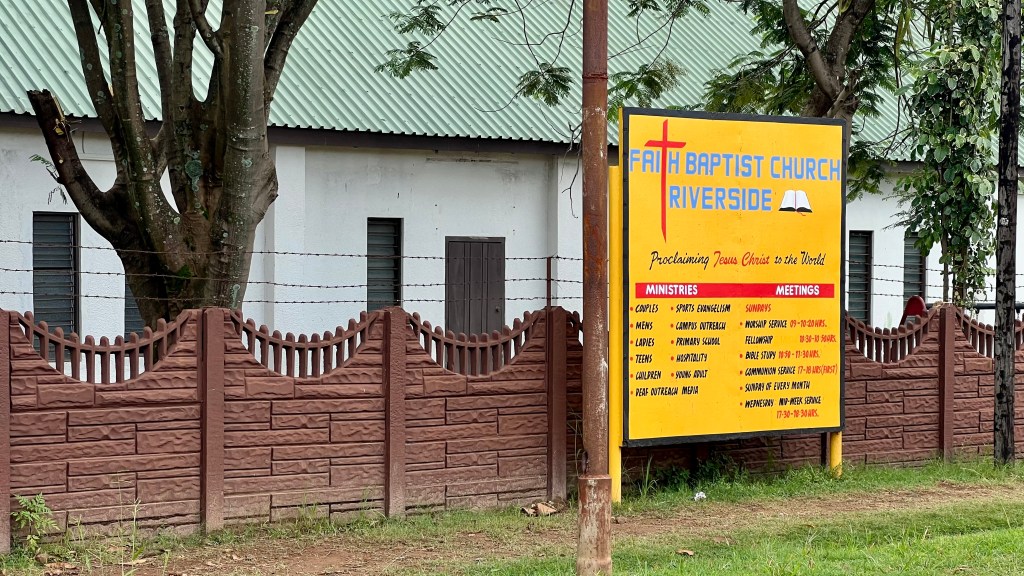
Consider one example from ministry in Zambia. A Western missionary planted a church and developed basic infrastructure, including a church building and a pastor’s home. He trained a national pastor, transferred leadership, and moved on to another ministry. The local pastor later applied to a mission organization in the United States. After being accepted as a national missionary, he began receiving regular financial support.
The mission organization also raised funds for the purchase of a vehicle. The pastor did not buy the car, choosing instead to use the funds for personal purposes. When a mission representative later visited, the pastor borrowed a friend’s vehicle and presented it as his own. As the deception unraveled, the national missionary attempted suicide.
This example highlights several serious concerns.
First, one central aim of missions is the formation of indigenous, self-supporting churches. In this case, the local congregation possessed the ability to sustain its own ministry. When a mission agency placed the pastor on foreign support, however, it disrupted that development and weakened local responsibility.
Second, the congregation’s sense of obligation to support its pastor and ministry gradually diminished. Dependency replaced ownership. Though offerings continued, they often reflected little sacrifice or shared responsibility. Over time, expectations shifted. If the pastor is funded externally, he is perceived as a professional whose role relieves the congregation of its calling.
This arrangement also alters authority structures. The supported pastor increasingly answers to a foreign agency rather than to his local church. As a result, meaningful local accountability is eroded.
In practice, such patterns weaken the foundations of indigenous church planting in the developing world. Given prevailing economic realities, even modest monthly support can become a powerful incentive. In some cases, financial backing alone is sufficient to motivate a perceived “call” to ministry. Moreover, when support is extended to evangelists but not pastors, ministry roles become distorted. Even faithful pastors may begin to resent or envy the imbalance.
These are not merely theoretical concerns. They are real missiological issues that affect the long-term health and maturity of the church in Africa. In future articles, I will argue for healthier partnership models—ones grounded in relationships, clarity, and systems that promote trust, responsibility, and lasting fruit.



 Zambia Hunt
Leave a comment