
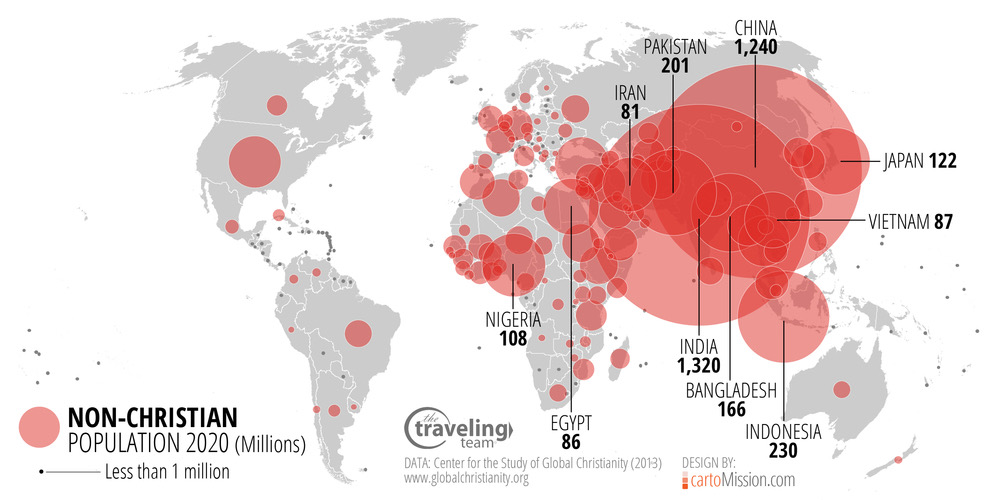
When we talk about missions today, we must widen the lens. The word missions is still useful, but cross-cultural ministry better describes the reality we are facing. Our world has become so globalized that the nations are no longer far away; they are living next door.
Thousands of Chinese nationals live in major cities across Zambia. Lusaka is home to significant Muslim communities. Asian Hindu communities thrive in nearly every town in the country, with their headquarters in Kabwe. And on the Copperbelt, many Spanish-speaking families from Central and South America have settled into our communities.
If churches want to reach their own neighborhoods with the gospel, they must learn how to do cross-cultural ministry. There is no way around it. The question is simple: Can your church reach these people? It cannot be done without crossing cultures in some way. That is the challenge before us.
What Cross-Cultural Ministry Is Not
It’s helpful to clear away a few misconceptions so we can think clearly about the task.
1. Cross-cultural ministry is not about pressuring you to become a missionary.
If God sends you, praise Him—but that is not the primary issue. The goal is far bigger: to get believers thinking seriously about cross-cultural ministry wherever they live.
We naturally remain within our own cultural groups, but we cannot reach the world for Christ by keeping only to “our kind” of people. The world has come to us. If your vision broadens for the thousands of Chinese, Saudis, Turks, Indians, and others who enter our universities each year, then this shift in thinking is happening.
If you are stirred to start an ESL (English as a Second Language) program in your church, that is cross-cultural ministry.
If your heart becomes burdened for the Muslim world, that is cross-cultural ministry.
If you begin thinking about Deaf outreach in your community, that too is cross-cultural ministry.
2. Cross-cultural ministry is not about the “nuts and bolts” of evangelizing and discipling across cultures.
There are practical skills to learn, but those belong in a different discussion. What we need first is a broader vision. We need our thinking to be shaped by the Word of God, so that our hearts and priorities reflect God’s heart for the nations around us.
3. Cross-cultural ministry is not simply about becoming a better supporter of missions.
Every believer should support global gospel work, but that alone is not the focus here. We will touch on ways to support global outreach, some traditional, some innovative, but there is a misconception that financial limitations in the African church make missionary work impossible.
I do not believe that. We have plenty of money to do what God has called us to do. We simply are not allocating those resources to what matters most. People are not giving like they could. We like to assume everyone tithes, but the facts say otherwise. Even evangelicals, who give more than Catholics and liberal Protestants, still give less than three percent of their income to their churches.
A Needed Shift in Perspective
Cross-cultural ministry is not a specialized task reserved for a few. It is essential for every church that wants to be faithful to Christ’s Great Commission in a globalized world. The nations are already around us. God is moving people into our cities, our neighborhoods, our workplaces, and our schools.
If we allow Scripture to shape our thinking and expand our vision, we will begin to see the opportunities God has set right in front of us.
The world has come to our doorstep. The question now is: Will we step across the threshold and meet them with the gospel?



 Zambia Hunt
Leave a comment