
“But because of your hard and impenitent heart, you are storing up wrath for yourself on the day of wrath when God’s righteous judgment will be revealed.” (Romans 2:5)
This brings us to the second major principle in Romans chapter two: God sees your heart.
The Source of the Problem
The root problem God has with man lies deeper than external behavior—it stems from the heart itself. The phrase “hard heart” describes something calloused and unfeeling.
I remember visiting a market where a charcoal vendor demonstrated this principle perfectly. After delivering his charcoal, he sat with a machete and began literally carving thick layers of callused skin from the bottom of his feet. What remained wasn’t even pink flesh—it was like he had permanent shoes made of his own hardened skin. Such feet could step on the thickest thorn or drive a splinter deep into the sole without him even noticing, because the calluses were so thick.
This illustrates what Paul means by a “hard and impenitent heart”—a calloused heart. “Impenitent” means without remorse, unrepentant. This describes the heart referenced in chapter one, verse 32—arrogant, self-serving, and rebellious.
Storing Up Wrath
The verse concludes with this sobering reality: “you are storing up wrath for yourself on the day of wrath when God’s righteous judgment will be revealed.”
Paul is no longer addressing the Gentiles from chapter one, but the self-righteous religious people of chapter two. He declares that they are accumulating wrath for the day of divine judgment.
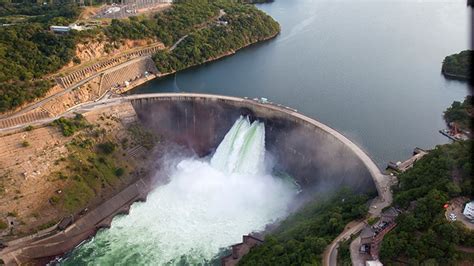
Lake Kariba, on the border between Zambia and Zimbabwe provides a powerful illustration of Paul’s idea. As one of the largest man-made reservoirs in the world, at flood stage it holds back 180 trillion liters of water. To put this in perspective: if you could seal National Heroes Stadium in Lusaka with plastic and fill it to the top with water, it would hold approximately one million liters. The water held back by Kariba Dam could fill 180 million such stadiums.
Paul employs this metaphor when he writes, “You are storing up wrath.” Like the massive floodwaters restrained by Kariba Dam, those with hard, impenitent hearts are accumulating an overwhelming flood of wrath that will be unleashed upon them on the day of judgment.
On that day of judgment, no one will stand defiantly as the torrents of God’s wrath rush toward them. His overwhelming wrath will consume and judge for all eternity. This is Paul’s urgent warning.
The Fatal Misunderstanding
We must not assume that God’s current kindness—blessing us with loving families, successful businesses, comfortable homes, and material provision—indicates approval of moral compromise. God’s kindness is not permission to engage in illegalities, cheating, lying, and other sins of the heart under the assumption that “it’s no big deal.”
This represents a fundamental misunderstanding of divine grace. God’s kindness does not provide license to sin as long as we “keep it below a certain mark.” The reasoning that says, “As long as I’m only watching pornography privately, I’m fine—after all, my business is growing, so obviously God doesn’t consider this serious,” completely misses the point of God’s patience.
Paul’s warning reveals the fundamental error in assumptions about escaping judgment. These stem from an even deeper problem—a fundamental misunderstanding of what God’s kindness truly means.
God Will Judge the Works of Your Heart (Verses 6-8)
This leads to the heart of the matter. Paul now reveals the true basis of God’s judgment—contrary to what religious people assume.
Verse six states: “He will render to each one according to his works”—not based on ethnicity (whether Jew or Greek), family religious heritage, or self-righteous good works.
The Righteous Escape Wrath
Verse seven describes those who escape God’s wrath: “to those who by patience in well-doing seek for glory and honor and immortality, he will give eternal life.”
These people escape God’s wrath because their wrath has been removed, their guilt has been removed, and their sins have been removed and placed on Jesus, who paid for it all on the cross. He drank the full measure of God’s wrath when he hung upon the cross for our sins. All of the judgment behind that Kariba Dam wall was poured out in all of its horror upon the person of Jesus.
Jesus paid it all. All to him I owe. Sin had left its crimson stain. He washed me white as snow.
This is the truth of verse seven: “There is therefore now no condemnation for those who are in Christ Jesus.” No condemnation. No wrath. No judgment.
The Fruit of Righteousness
What kind of people who’ve experienced that forgiveness—what do their works look like? “By patience in well-doing, they seek for glory and honor and immortality.” And what does God do? He gives them eternal life.
In the weeks ahead, we will see in Romans that we are justified by faith alone (Romans 3:28): “For we hold that one is justified by faith apart from works of the law.” This point cannot be overemphasized: Our works do not make us righteous. They are the fruit of a righteous heart.
Our works do not justify us before the Father. We are justified by faith alone in Jesus Christ alone. The righteous—those who have been justified by faith—seek God’s honor in their life choices. This represents the fruit of their genuine faith.
Out of gratitude for his kindness, his forbearance, and his patience, they strive to understand what God wants for them and to do it. They seek God’s glory. They recognize that they are glory bearers because the person of God in the presence of his Holy Spirit dwells within them and that they are called to reflect the image of God in a corrupt and perverse world. Read chapter one again.
They seek God’s eternal life, living ultimately for the life to come and investing their time, energy, and resources accordingly.
The Self-Seeking Face Judgment
Verse eight presents the contrast: “but for those who are self-seeking and do not obey the truth, but obey unrighteousness, there will be wrath and fury.”
These individuals do not obey the truth. Like the religious Jews of Paul’s day, they say the right things but do something else. Jesus spoke of them in Matthew 23:2-3: “The scribes and the Pharisees sit on Moses’ seat, so practice and observe whatever they tell you—but not what they do. For they preach, but do not practice.”
Verse eight reveals that they obey unrighteousness. Every sinful passion finds embrace in their hearts, and when opportunity arises, they act upon it. They live like beasts, driven by base passions.
These will receive from God the full measure of his wrath and fury according to verse eight.
We are called to reflect God’s image and character in the world. To do less constitutes evil, and God will judge every person according to their works.
The Heart of the Matter
The difference between the righteous and the self-seeking is not ultimately found in external behavior but in the condition of the heart. Both groups may appear similar on the surface—both may attend church, read their Bibles, and maintain moral behavior. But God sees the heart.
One group seeks God’s glory out of gratitude for salvation already received. The other seeks their own glory while using religious language and activity to mask their true motives. One group obeys the truth; the other obeys unrighteousness while maintaining a religious facade.
The sobering reality is that God’s judgment will be based on the works that flow from the heart, not on external religious performance. Those whose hearts have been transformed by grace will produce fruit that reflects that transformation. Those whose hearts remain hard and impenitent will ultimately reveal their true nature through works that serve self rather than God.
In our next post, we’ll discover Paul’s stunning conclusion: God shows no partiality in his judgment, and we’ll explore what this means for how we should respond to this sobering truth.
This is the fourth post in a 5-part series examining Romans 2:1-11. Next week: “Your Response To God’s Final Judgment” – examining the final contrast between those who seek God’s glory and those who seek their own.




 Zambia Hunt
Leave a comment