
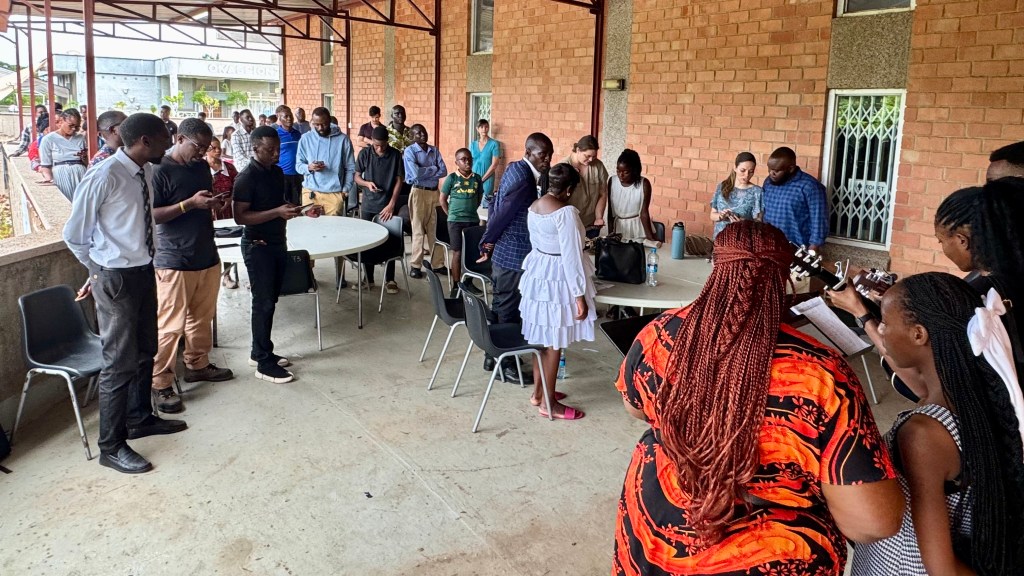
Here are three things I have shared with the Elders at Kitwe Church that will help shape our approach to ministry:
- The criterion by which we will measure ministry success is the development of leaders for the church. Developing leaders takes intentional effort and a long-term vision. It involves identifying men who possess a love for Jesus, exemplify the character of Jesus, and have the gifts and callings for ministry. Nurturing leaders requires deliberate effort and a significant investment of time.
- Numbers or budgets cannot measure the success of a ministry. Instead, it is determined by the number of men and women who are equipped and empowered to become leaders for the sake of Christ. We must cultivate a culture that provides people with opportunities to grow in their faith, obey Christ, and use the gifts and skills God has bestowed upon them.
- Healthy churches and ministries must have a vision for identifying and developing leaders within the congregation. Some of these leaders may eventually move on to serve Christ’s church in other locations. However, this should not be viewed as a failure or loss, as they further God’s mission.
I jotted down these three statements some years back. They are likely the amalgamation of things that I have experienced and read, and the outcome of a process of clarifying and defining the ethos by which Kitwe Church will operate. They also reflect the values that we seek to instill in the men being trained for missions and pastoral work at Central Africa Baptist University. These principles appear straightforward when read, but implementing them requires a fundamental shift in how we approach ministry in a practical sense. Living by them means we must be prepared for a journey counter to conventional measures of success and will require sustained faith through seasons of uncertainty.
When we are called to this mission of gospel proclamation, teaching everyone who believes to obey, and forming them into healthy reproducing congregations, the missionary church planter must recognize that he is in this for the long haul. We acknowledge that a sovereign God is free to do with us whatever he wishes, whenever he wishes; there is a settled determination that we are here to stay. By God’s grace, we will trust him, put our heads down, and march forward.
Paul said, after listing the problems and challenges he had faced in ministry, “none of these things move me, neither count I my life dear unto myself” (Acts 20:24). That does not mean that we do not grieve the loss of friends who God moves to other ministry positions, or sometimes wonder if someone you are investing in will ever become the leader you sense God could make of them.
When it comes to money, there is never enough. If we are going to reach Africa and our world with the gospel, we must move by faith and trust God to provide the resources when the time comes. Count the cost, pay the price, trust the Lord, and forward – ever forward for the sake of His name (3 John 7).
How can we, who live in such a time of world affluence and ease, ever refuse to attempt great things for God simply because we don’t know how we can afford it? We want men who are committed to the cause of Christ on earth, who believe in God and in His mission. Men who crave to see God do “great and mighty things when we do not know” (Jeremiah 33:3) in our day, in our generation!
We will not win great victories unless we muster the spiritual courage to march forward by faith in the Commander who leads us “with banners” (Song of Solomon 6:10).
This counter-cultural approach to measuring success finds its perfect model in Jesus himself. Jesus, in his earthly ministry, performed some amazing things and, for a time, created a significant following. He became famous for a season, a short season—but eventually, the crowds melted away, and Jesus turned to the twelve and said, “Will you also go away?” (John 6:67).
Then came the opposition, the attacks from without! The religious establishment set itself firmly as his antagonist and collaborated on how to get rid of him permanently (John 11:53). They were willing to use their power as Jewish leaders and their influence with Rome to dispose of this miracle worker who preached the “gospel of the kingdom” (Matthew 9:35).
Ultimately, a worldly observer would conclude that Jesus’ ministry was a failure, marked by a handful of followers, one who betrayed him, and a few die-hard believers who adhered to his teachings. In all, not more than 120 could be identified (Acts 1:15). Yet from these few leaders, the gospel spread to the ends of the earth. It is not the number of people in the crowd but rather the prepared leaders who determine the lasting impact.
We who understand the gospel know that the greatest work Jesus accomplished was His death for the redemption of mankind, but for that redemption to be known and received, it must be proclaimed – that was up to those twelve. Never underestimate the impact of disciple-making when the Holy Spirit comes to empower those disciples to carry out God’s mission.
God most often chooses and uses those persons who seem to me to be unfit in one way or another. Perhaps they lack the academic background, or maybe they don’t have outgoing leadership personalities, or possibly they are physically frail.
King Saul was selected and admired by the people because he stood head and shoulders above everyone – a specimen of the Hebrew race (1 Samuel 9:2). However, we learn later on that the man after God’s own heart (Acts 13:22) was a small shepherd boy with a ruddy complexion, a young man named David (1 Samuel 17:42).
Beware of choosing leaders based on outward human qualities – being good-looking, tall, and talented. Samuel reminded Jesse, David’s dad, that God does not look at things the way we do. Man looks on the outward appearance, but God looks on the heart (1 Samuel 16:7)! When developing leaders, we must look beyond impressive résumés and charismatic personalities, to value what God values – the heart!
This brings us full circle back to where we began. When we measure ministry success by the leaders we develop rather than the numbers we can count, we align ourselves with God’s priorities. Christ invested three years in twelve men, knowing that eleven faithful leaders would change the world more than tens of thousands of casual followers ever could (John 6:22-66).
When we refuse to let budgets and attendance figures define our success, we free ourselves to do the patient, unseen work of seeing hearts transformed by truth. We can invest deeply in the Davids hidden among Jesse’s sons. We can weather the seasons when crowds thin and critics multiply because we understand that true gospel impact often looks like failure in the world’s eyes.
And when we embrace the reality that many of our best-developed leaders will leave to serve elsewhere, we discover the joy of multiplication rather than the pain of loss. Like Jesus, we can say to those we’ve poured our lives into, “Go, and make disciples of all nations.” Their departure becomes our greatest success, proof that we’ve raised up leaders who carry the mission forward.
This is the long view of ministry. This is what it means to labor for eternity rather than applause. By God’s grace, we will continue to choose the narrow path of developing leaders over the wide road of crowd-pleasing, and we will trust that He who began this good work in us will see it through to completion (Philippians 1:6). The harvest may seem small now, but when the Holy Spirit empowers these prepared disciples, who can measure their eternal impact?
Forward—ever forward—for the sake of His name and the advance of His kingdom.




 Zambia Hunt
Leave a comment