
(Part 2)
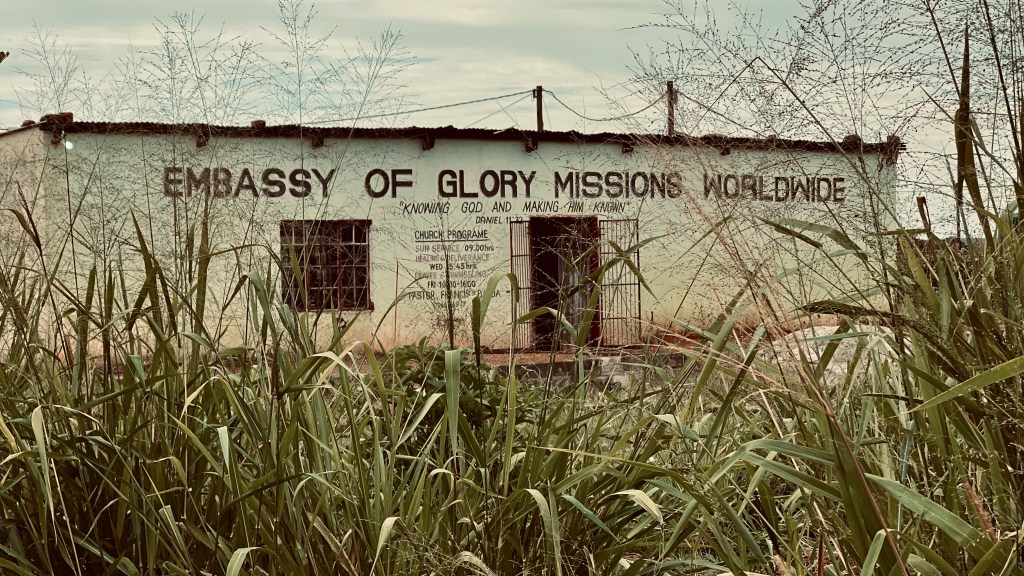
Missionary Growth of Pentacostalism in Africa
The Azusa Street Revival catalyzed a worldwide missionary movement distinguished by several key characteristics. Ordinary laypeople who had experienced the “baptism of the Holy Spirit,” evidenced by speaking in tongues, were commissioned as missionaries. In the first two years alone, fifty missionaries were sent out, many responding to what they perceived as divine calls confirmed through their experiences with speaking in tongues, which they often interpreted as miraculous endowments of foreign languages for evangelistic purposes.
Unlike earlier missionary movements, the first North American Pentecostal missionaries were largely self-supporting. Alfred and Lilian Garr exemplify this approach. Believing they had miraculously received the Bengali language when they experienced Spirit baptism at Azusa Street, they departed for India in 1907, arriving in Calcutta to begin their missionary work.[^1]
Early Pentecostal missions were driven by the belief that Christ’s imminent return necessitated rapid global evangelization. This motivation prioritized evangelism over education and discipleship.
Notably, early Pentecostal mission philosophy adopted the “three-self model,” which would later become a standard in missiological thinking: self-supporting, self-governing, and self-propagating churches. As Pentecostal missiologist Melvin Hodges articulated in his influential work “The Indigenous Church”:
“There is no place on earth where, if the gospel seed is properly planted, it will not produce an indigenous church. The Holy Spirit can work in one country as well as another. To proceed on the assumption that the infant church in any land must always be cared for and provided for by the mother mission is an unconscious insult to the people that we endeavor to serve and is evidence of a lack of faith in God and in the power of the gospel.” [^2]
This indigenous approach, coupled with flexible and pragmatic evangelistic methods, enabled many African Pentecostal movements to achieve the three-self ideal more rapidly and naturally than churches established by older Western missionary organizations.
Indigenous Propagation of Pentecostalism in Africa
As Pentecostalism entered the African context, it underwent a process of indigenization and adaptation. The core message, emphasizing the direct experience of the Holy Spirit , was enthusiastically embraced by Africans and spread rapidly across national and ethnic boundaries. Rather than being defined by rigid theological dogma, African Pentecostalism coalesced around shared spiritual experiences, particularly supernatural manifestations believed to evidence the Holy Spirit’s presence.
The leadership landscape was transformed as charismatic African personalities emerged to guide established Pentecostal churches. In a pattern that would become characteristic of the movement, dynamic young leaders frequently broke away to establish independent churches in new locations, further accelerating the movement’s expansion.
The 1970s saw the emergence of a new wave of Pentecostal and Charismatic churches across Africa, particularly in West Africa. Though influenced by Pentecostal movements originating in North America and Europe, these churches were largely independent of foreign control and represented distinctly African expressions of Christianity. Many adopted the designation “Ministries” rather than traditional church titles. Their leadership typically consisted of younger, more formally educated individuals, giving these churches a more Westernized appearance in certain respects. Services featured emotional and enthusiastic worship, often incorporating modern musical instruments, most notably the electric keyboard. These organizations developed their literature, established radio and television programs, and created Bible training centers that prepared both men and women for ministry roles.[^3]
The statistical evidence of this growth is remarkable. By 1991, in South Africa, 46% of the black population belonged to indigenous Charismatic churches. Between 1960 and 1991, the percentage of South Africans affiliated with historic mission-established churches declined precipitously, from 70% to 33%.[^4]
In the century since the Azusa Street Revival, the global Pentecostal Charismatic movement has grown to an estimated 497 million adherents, accounting for approximately 27% of the worldwide Christian population. At current growth rates, this proportion is projected to increase to 44% by 2025. Notably, two-thirds of contemporary Pentecostalism is now concentrated in the Global South, with only one-fourth of its members being of European descent. The most rapidly growing Christian communities in developing nations are predominantly Pentecostal, indigenous, and operate independently of Western Pentecostal organizations. Within this relatively brief historical span, the Pentecostal Charismatic movement has transformed from an obscure religious minority to become perhaps the predominant religious force across Africa, surpassing Islam, Catholicism, and historic Protestant denominations in many regions.[^5]
Conclusion:
From the self-supporting missionaries who departed Azusa Street with hearts aflame for global evangelization to local African leaders who have made Pentecostalism their own, we witness a movement that has fundamentally reshaped the religious landscape of an entire continent. The indigenous Charismatic movements claim millions of adherents across Africa. Yet beneath these numbers lies a deeper phenomenon: the successful planting of a spiritual movement that prioritized experience over doctrine, indigenous leadership over foreign control, and immediate supernatural encounter over Word-centered theological formation.
As we continue to examine this movement, we turn next to the theological foundations that enabled such rapid growth, exploring how Pentecostal doctrine found such fertile ground in African soil and why its emphasis on spiritual power resonated so deeply with traditional African religious sensibilities.
[^1]: The Garrs’ experience illustrates the early Pentecostal belief that glossolalia represented miraculous endowment with foreign languages for missionary purposes, a belief that was largely abandoned as most missionaries discovered they still needed conventional language learning.
[^2]: Melvin Hodges, The Indigenous Church (Springfield, MO: Gospel Publishing House, 1953), 14-15.
[^3]: These newer African Pentecostal ministries often combined traditional Pentecostal theology with a distinctive African focus and organizational structures.
[^4]: These statistical shifts represent one of the most significant religious demographic changes in modern African history.
[^5]: Statistical projections from various missiological sources consistently indicate the continued growth of Pentecostal/Charismatic Christianity across the Global South.




 Zambia Hunt
Leave a comment