
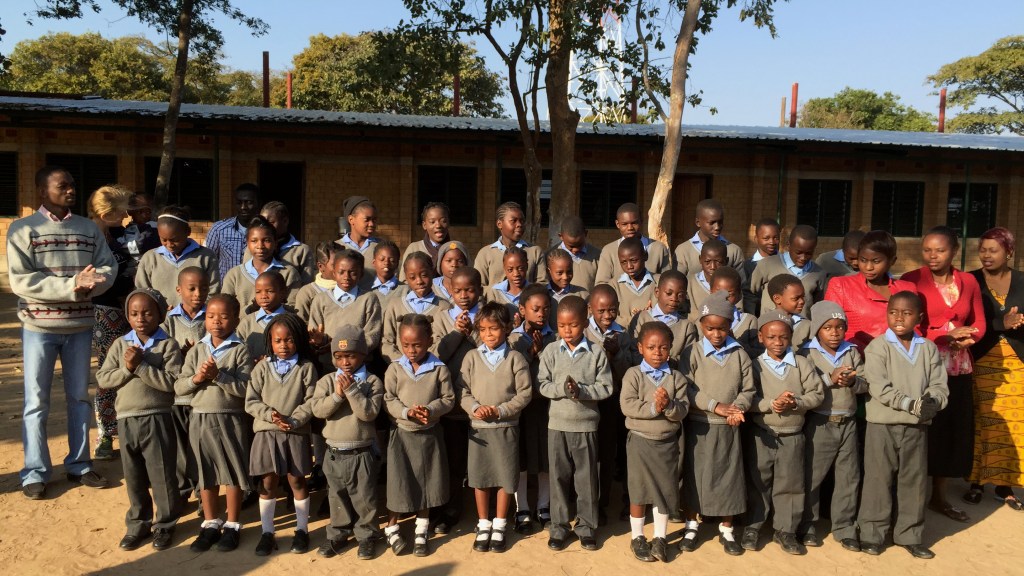
What is the percentage of Zambian Children aged 10 who cannot read or write a simple text or do basic math in 2025
98.5.
That is the percentage of Zambian children aged 10 who cannot read, write a simple text, or do basic math. They form just part of the vast number of children across Africa and globally who are impacted by what is called learning poverty—a term based on the idea that every child should be in school and able to read an age-appropriate text by age ten.
Without the appropriate level of skills in foundational literacy and numeracy, as well as socio-emotional skills, children miss the essential building blocks for all other learning, knowledge, and higher-order skills. What’s more, without foundational learning, they cannot contribute effectively to Zambia’s social and economic development later in life.
Mulenga Kangwa – Linkedin. 22 April 2025. Parliamentary Committee on Education at the launch of the Policy Briefing on Foundational Learning
The Future of the Zambian Church
What is the future of the Zambian church if the majority of people in those churches lack basic and foundational literacy and educational skills? One of Satan’s great tactics in the dark ages was to hide knowledge, reading, writing, and the critical thinking skill required for mathematics behind a wall of illiteracy and ignorance.
When people are uneducated, they are unable and uninterested in the things of God. God is the God of a Book – He has chosen to reveal Himself through the written scriptures, which are to equip us for every good work. Missionaries in the 19th century recognized this as a crucial aspect of their work. While embracing the fact that the mission of God is the proclamation of the gospel and the teaching of those who believe to obey Jesus, resulting in the establishment of communities of believers in the local church, one of the necessary tools to see healthy, reproducing churches is the literacy and education of the people. In language groups where there is no written language, great efforts are made to reduce the spoken language to the written alphabet, words, a dictionary, and eventually the translation of the Word of God so that the people can read it and study it for themselves.
The reformers faced persecution and death for attempting to bring the Scriptures to the people in a language that they could understand. William Tyndale is one example – he wanted to put a copy of the Scriptures in the hand of every “plowboy” so that they would know the Sciptures and their lives would be transformed by them.
Priority of Literacy In Church Planting
There are churches that rightfully give priority to church-planting missionaries, but perhaps have not thought through what is needed for a healthy, reproducing church. That initial gathering of believers must be taught the Scriptures, and where people are not able to read with comprehension, they may need to start there.
This means we need teachers and translators of Scripture who are missionaries. They must be so oriented that the proclamation of the gospel and teaching obedience drives everything else they focus on. Their goal isn’t just to produce a generation of Christians in a particular area. Instead, they should lay the foundation and groundwork for a healthy church that will plant other churches, raise up leaders, and repeat the whole process.
Appreciate Orality and Learn To Read
“Readers are leaders” is a truism. If we want to see healthy leaders in the African church, we need to develop, encourage, and provide opportunities for reading books. The traditional culture in much of our continent works against the written page. We have historically been a culture that values oral traditions. While there are great benefits of orality, we must acknowledge that the Christian faith is a reading faith. We should preserve the great benefits of orality as we labor for an interest in writing and reading.
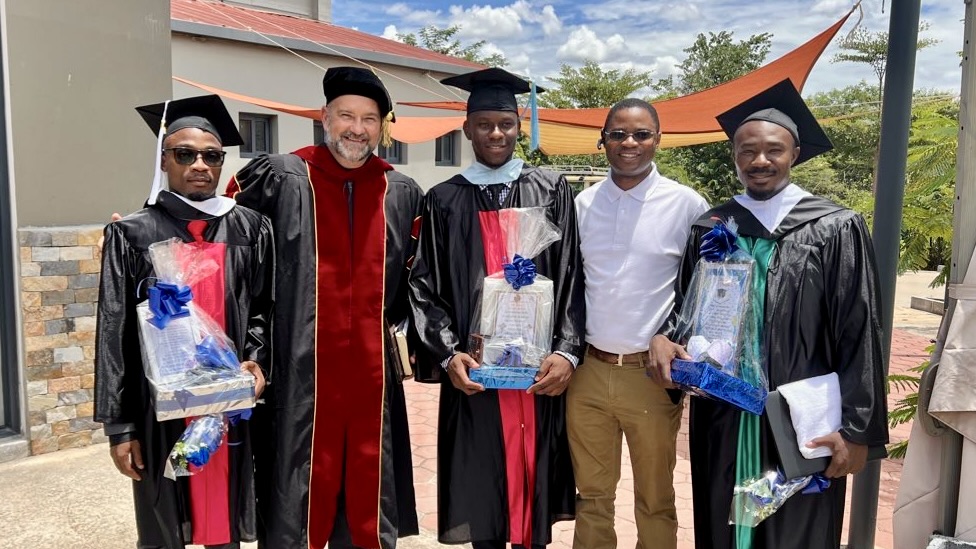
This is why we are committed to training educators at Central Africa Baptist University through our School of Education. The future of indigenous gospel reproduction is tied to a literate people who are able to learn the Scriptures and declare “thus saith the LORD.”

 Zambia Hunt
Leave a comment