
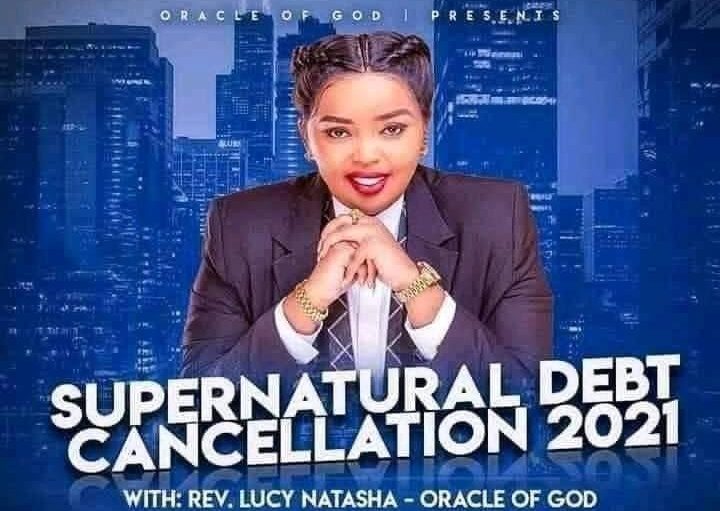
In recent years, teaching known as the “prosperity gospel” has gained significant traction, particularly in certain Christian circles in Africa. This doctrine asserts that God promises every believer financial prosperity and perfect health, arguing that anything less is not God’s will. At its core, this teaching focuses on how believers can obtain what they want from God, essentially positioning God as a servant to human desires rather than the other way around.
This movement, which goes by various names such as the Word Faith Movement, Faith Movement, Word of Faith, Positive Confession, Name It Claim It, and Health & Wealth Prosperity Teaching, has been propagated by several prominent figures. In the west these include Kenneth Hagin, Kenneth & Gloria Copeland, Robert Tilton, Fred Price, Charles Capps, Norvel Hayes, and Joyce Meyer, among others. In Africa these include
The appeal of this teaching is particularly strong in regions facing economic hardship. In Africa, for instance, the grinding poverty in many areas provides fertile ground for a message that declares financial prosperity as God’s desire for every Christian. This ideology resonates with many young, educated, and professional Africans, as it links poverty to spiritual causes and promotes the idea that a “spirit of poverty” must be cast out.
However, it’s crucial to understand that the Word Faith teaching fundamentally contradicts the core tenets of New Testament Christianity. It shifts the believer’s focus away from sound doctrine, worship, service, sacrifice, and ministry, instead emphasizing promised physical, financial, and material “blessings.” This deviation from traditional Christian teachings has led many to classify it as heresy.
Let’s examine some of the key aspects of Word Faith teaching:
1. The Western Influence of Word Faith Teaching Concerning God
Word Faith doctrine significantly alters the traditional Christian understanding of God’s nature and relationship with believers. It denies God’s sovereignty, suggesting that God is unable to act until believers “release” Him to do so. Charles Capps, a proponent of this teaching, has stated, “It is in your power to release the ability of God.”
This teaching also purports to give believers dominion and creative power akin to God’s. Charles Capps has written about receiving a message from God, saying, “My creative power is given to man in Word form… Man must rise up and have dominion over the power of evil by my Words.”
Furthermore, Word Faith teaching removes the need to pray to God for relief from burdens or needs. Instead, it encourages believers to speak directly to their problems. As Norvel Hayes has said, “You aren’t supposed to talk to Jesus about it. You’re supposed to talk directly to the mountain in Jesus’ name—whatever the mountain is in your life.”
Perhaps most controversially, this doctrine teaches that God created mankind to be a race of “little gods.” Kenneth Copeland, for instance, has taught that Adam was “created in the god class” and that believers are “in the ‘god class.’”
2. Word Faith Teaching Concerning Jesus
Word Faith teachers have made claims about Jesus that deviate significantly from traditional Christian theology. Some teach that Jesus gave up His deity and even took on Satan’s nature to die for our sins. They also assert that Jesus was “born-again” in Hell as a sinner.
3. Word Faith Teaching Concerning Faith
In the Word Faith movement, faith is redefined as an impersonal law that rules the universe, similar to gravity. Pat Robertson has stated, “The laws of God work for anybody who will follow them. The principles of the Kingdom apply to all of creation.”
This teaching emphasizes “positive confession,” asserting that words have creative power. Believers are encouraged to state their demands from God positively and without wavering, with the expectation that God is then required to answer.
Kenneth Hagin, in his work “How to Write Your Own Ticket,” claims to have received an inspired four-point message from Jesus: “Say it, Do it, Receive it, Tell it.” Hagin asserts that Jesus told him, “If anybody, anywhere, will take these four steps or put these four principles into operation, he will always have whatever he wants from Me or God the Father.”
Conclusion
While the prosperity gospel may seem appealing, especially to those facing financial hardship, it’s important to recognize that it deviates significantly from traditional Christian teachings. The Bible does promise that God will meet our needs, but it doesn’t guarantee wealth. Instead, Scripture encourages us to work hard, make wise decisions, and trust God to provide and bless according to His will.
Our promise as believers is not that we will be rich, but that God will never forsake the righteous and will meet all of our needs according to His glorious purposes. As the Psalmist David testified, “I have never seen the righteous forsaken or his offspring begging bread” (Psalm 37:25).
Ultimately, our life should be spent in pursuit of God’s will, not in devising strategies to bend God’s will to our desires. The prosperity gospel, despite its allure, risks distorting the fundamental relationship between God and His followers, and should be approached with careful discernment.




 Zambia Hunt
Leave a comment