
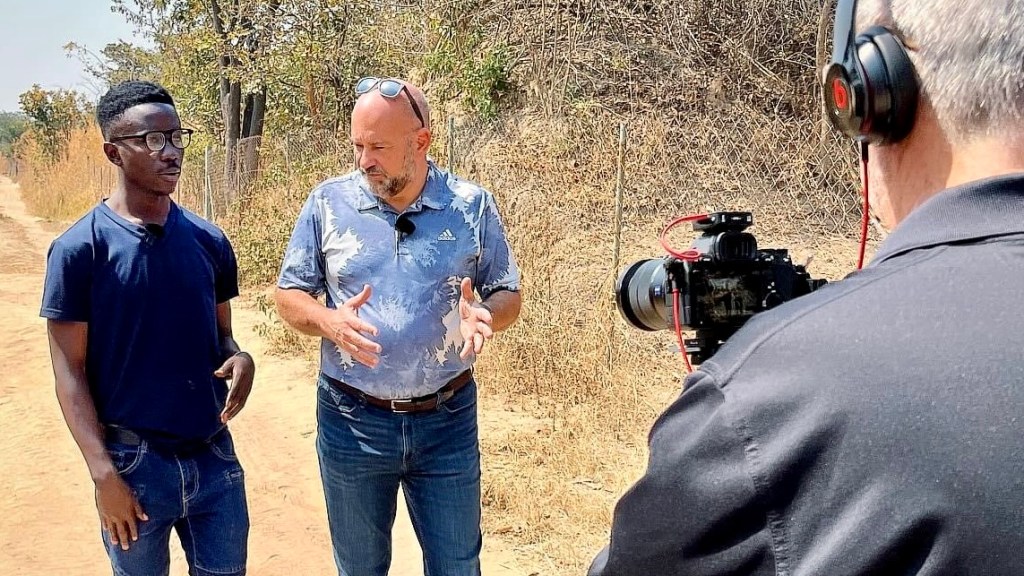
Everyone lives by faith, whether they realize it or not. When I first traveled to Africa in 1992, I had never been there before, but I believed it existed. I presented my ticket and boarded the plane, trusting it would take me to my destination. My faith became sight when I touched down at Jomo Kenyatta International Airport in Kenya. We exercise this kind of practical faith daily – working jobs before receiving payment, buying groceries without seeing their contents, sitting in chairs without testing their strength first.
But there’s a profound difference between everyday faith and transformative faith in God. The writer of Hebrews tells us that “faith is the substance of things hoped for, the evidence of things not seen” (Hebrews 11:1). This isn’t blind optimism or wishful thinking – it’s a concrete reality that shapes how we live.
Faith That Sees Reality
True faith gives substance to our hopes and makes unseen realities feel tangible. Though we cannot physically see God, heaven, Jesus, or the choirs of angels, faith compels us to act as if we’ve witnessed them with our own eyes.
I saw this kind of faith embodied in my friend Agnes, a dear disciple of Jesus. In her final hours on earth at Kitwe Central Hospital, her unwavering confidence in God’s existence and goodness showed everyone at her bedside what genuine faith looks like. She didn’t just believe in heaven – she lived as though it were as real as the medical equipment surrounding her.
Faith That Testifies
Genuine faith bears witness to what we believe, both in life and in death. I’m reminded of the story of the death of Louise Grings Champlin’s mother deep in the jungles of the Congo. The community in the village to whom Herbert Grings had been preaching the gospel watched as the missionary and his little children stood around a freshly dug grave of their wife and mother, singing praises to Jesus.
The people came after the burial and said, “We knew Jesus was good enough for living, now we know He is good enough for dying!” Their testimony was so powerful that six men accepted Christ as their Savior after witnessing their faith. This is what Hebrews 11:2 means when it says that by faith, the elders obtained a good testimony.
Faith That Understands God’s Power
Through faith, we understand that God created the world by His command (Hebrews 11:3). This same faith helps us grasp that He continues to control it according to His purpose. When we truly believe this, we can trust that He knows best, even when circumstances seem chaotic. We understand that His ultimate plan includes Christ’s return, the resurrection of the saints, and our eternal dwelling with Him.
Faith That Pleases God
Scripture is clear: “Without faith it is impossible to please Him, for he who comes to God must believe that He is, and that He is a rewarder of those who diligently seek Him” (Hebrews 11:6). This isn’t just intellectual assent to God’s existence – it’s a deep conviction that shapes our actions.
Agnes demonstrated this kind of faith throughout her life, but it shone brightest in her deepest crisis. Those who don’t truly believe often draw back in times of crisis (Hebrews 10:39), but genuine faith stands firm.
Faith That Saves
Noah’s story provides a powerful illustration of saving faith (Hebrews 11:7). His faith involved his whole person:
- His intellect: He understood God’s warning about the coming flood
- His emotions: He was moved by reverent fear
- His will: He acted by building the ark and entering it
Like the ark that kept Noah safe from judgment, Christ is our ark of salvation. But just as Noah had to make the decision to enter the ark, we must make a personal decision to trust in Christ. I think of Agnes, one of the early converts at Faith Baptist Church in Riverside, Kitwe, who believed in Jesus for salvation in May 1994, and her faith carried her to heaven.
The Three Elements of Saving Faith
True saving faith, as demonstrated throughout Scripture, involves three essential elements:
- The mind must hear and understand the truth
- The emotions must be moved to believe
- The will must surrender to God in obedience
As Acts 17:30 reminds us, God “commands all men everywhere to repent.” Repentance is an integral part of saving faith. Those who refuse this faith remain under condemnation (John 3:18), while those who embrace it become heirs of righteousness through faith (Romans 4:5).
A Personal Challenge
Faith isn’t just a theological concept – it’s a life-transforming reality. The question isn’t whether you have faith (we all do), but what you’re putting your faith in. Is your faith the kind that sees unseen realities? Does it testify to others? Does it please God? Most importantly, is it the kind of faith that saves?
In a world that often demands empirical evidence for everything, the challenge of faith remains the same as it was in Enoch’s day, in Paul’s day, and in our day: Will you trust God enough to walk with Him, even when you can’t see the path ahead? The rewards of such faith are eternal, and as Hebrews assures us, God rewards those who earnestly seek Him.
What are you trusting in today? Will you, like Agnes, Noah, and countless others, place your complete faith in Jesus Christ? The invitation stands, and the decision is yours.


 Zambia Hunt
Leave a comment