
Acts 2:37

What must I do to be saved? It’s the most crucial question anyone can ask, and its answer holds eternal consequences.
Leighton was a business man whose family attended the church I pastored many years ago. He was into the fast life, big money, and had little interest in the things of God, though he attended once or twice with his wife and children. After not seeing him for more than a year, He showed up to church one Sunday morning to ask for prayer as he had been ill for some time. I prayed with him after the service and once again shared the gospel with him – urging him to believe in Jesus. Later that evening, he passed away.
The importance of this question, “What must I do to be saved” – and its correct answer – couldn’t be more urgent.
The Danger of Wrong Answers
Throughout history, people have proposed various answers to this vital question, most of which lead to eternal tragedy.
The legalist claims salvation comes through a works-righteousness system. While they might point to James 2:21 – “Was not Abraham our father justified by works when he offered Isaac his son on the altar?” – they miss Paul’s clear statement in Romans 3:20: “Therefore by the deeds of the law no flesh will be justified in His sight, for by the law is the knowledge of sin.”
The moralist believes salvation is assured if good works outweigh bad on God’s scales. They might reference John 5:28-29 about those who “have done good” rising to life, but they overlook Ephesians 2:8-9: “For by grace you have been saved through faith, and that not of yourselves; it is the gift of God, not of works, lest anyone should boast.”
The culturalist assumes salvation comes through racial or cultural heritage. Jesus addressed this directly when John the Baptist warned, “Do not think to say to yourselves, ‘We have Abraham as our father.’ For I say to you that God is able to raise up children to Abraham from these stones” (Matthew 3:9-10). Paul reinforces this: “They are not all Israel who are of Israel” (Romans 9:6).
The ritualist believes salvation comes from observing certain ceremonies. While rituals like baptism are important (Acts 2:38), they must be understood in light of Romans 10:10: “For with the heart one believes unto righteousness, and with the mouth confession is made unto salvation.”
The First Gospel Response
When Peter first preached the gospel in Jerusalem, he confronted his audience with a shocking truth: they had rejected and executed their own Messiah (Acts 2:36). Their response provides a timeless pattern of genuine conversion.
Deep Conviction
The text tells us they were “cut to the heart” – a phrase indicating something sudden and unexpected, like being pierced or stabbed. This wasn’t mere emotional distress. They were overcome with grief and remorse as they realized they had executed their Messiah. The weight of their personal responsibility crashed down upon them, along with the terrifying awareness of the Messiah’s righteous wrath.
As Albert Barnes noted, “False repentance dreads the consequences of sin, true repentance dreads sin itself.” It’s like the difference between dreading the consequence of the Black Mamba’s bite and dreading the snake itself. True repentance hates sin for what it is – an affront to God.
The Pattern of Genuine Response
Their response unfolded in several powerful ways. First came reception of the Word. With desperate urgency, they cried out “What shall we do?” Their eagerness to remove their guilt was matched by a profound gladness at finding forgiveness, as would later be seen in Samaria (Acts 8:8) and among the Gentiles (Acts 13:48).
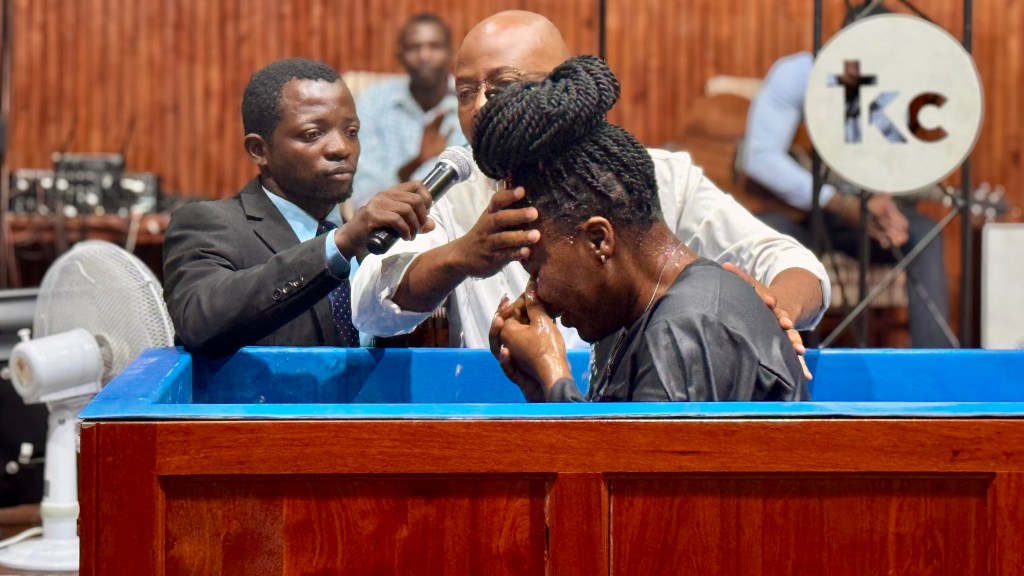
This led to genuine obedience. Their repentance wasn’t merely feeling sorry; it was a complete turning from sin to God. They demonstrated this through baptism, knowingly marking a public break with their past. This wasn’t an easy step – it meant facing persecution and potential rejection from family. Yet they didn’t hesitate.
It’s important to note that baptism isn’t part of salvation – a truth supported throughout Scripture. In Acts 8:13 and 21-23, we see that Simon was baptized yet remained “in the gall of bitterness.” Paul said in 1 Corinthians 1:17 that Christ didn’t send him to baptize but to preach the gospel. Forgiveness is linked to repentance, with baptism following as an act of obedience.
Finally, they realigned themselves with other believers. Their experience of forgiveness and reception of the Spirit – a gift both free and unmerited, requiring only repentance – led naturally to joining together with other believers. The text tells us three thousand souls were added that day, creating the local church at Jerusalem, a new community of faith.
The Gift Still Offered
Just as Peter declared this promise was “for you and your children, and for all who are far off” (Acts 2:39), the same opportunity exists today. As John 1:12 declares, “But as many as received Him, to them He gave the right to become children of God, to those who believe in His name.”
Not everyone who heard Peter’s message received it. The same is true today. But for those who do receive Christ, the transformation is just as real now as it was then. The question isn’t whether salvation is available – it’s whether we’ll respond as those first believers did, with genuine repentance, immediate obedience, and wholehearted commitment to Christ and His people.
The clock is ticking. Like Leighton, none of us knows if we have another day. How will you respond to the greatest question ever asked?


 Zambia Hunt
Leave a comment