
Guest Contributor: Sandala Mwanje. smwanje@cabuniversity.com
As we train men for ministry and as we seek to biblically instruct our churches, these ten things must be deliberately addressed by the church in Africa and theological institutions. In this short write-up, we tackle two of those problems:
1. The Issue of Founders: It’s hard to count the number of times the media has reported fracases centered around the “founder(s)” of a church. Whence does this difficulty come from? I submit that this difficulty comes from a worldview of entitlement and faulty ecclesiology. In our setting, “founders” feel they have two votes in the governance of the church and are entitled to a front seat for life. Sometimes, “founders” demand these privileges, and sometimes, these privileges are given by the community that feels they owe the “founders.” By the way, this debt is for life!
Ecclesiology in Africa must address this issue in deliberate ways, starting with the use of helpful terminology. Church is not a human innovation—it’s God’s project from A to Z. Jesus said he would build his church (Matthew 16:18), and thus, Jesus is the founder. Perhaps it may be helpful to use the term “church planters”? Human instruments are used to plant churches because God commanded. Planting churches is a matter of obedience (Matthew 28:18-20), and no Christian should seek human rewards for obeying God. Church planters are one among many human instruments in the process: “I planted, Apollos watered.” We have the planters, the senders, and the waterers, and the apostle Paul’s point in that passage is that none is more important than another—they just did their duty! Clarifying this theology may help rescue some churches that are being held hostage by “founders.” The church was purchased with God’s own blood (Acts 20:28-29), and the church is the body of Christ (Colossians 1:24). Every church planted is owned by Christ, for Christ, and to God’s glory alone!
2. Pastor-centric Churches: I don’t know how to describe the following traits:
- All ministries revolve around the pastor and his family
- In the notices: “pastor said…, pastor wants, pastor will shed more light”
- Pastor is always right and has holy cadres
- Members have something to say, but pastor’s voice, presence, and demeanor is overpowering
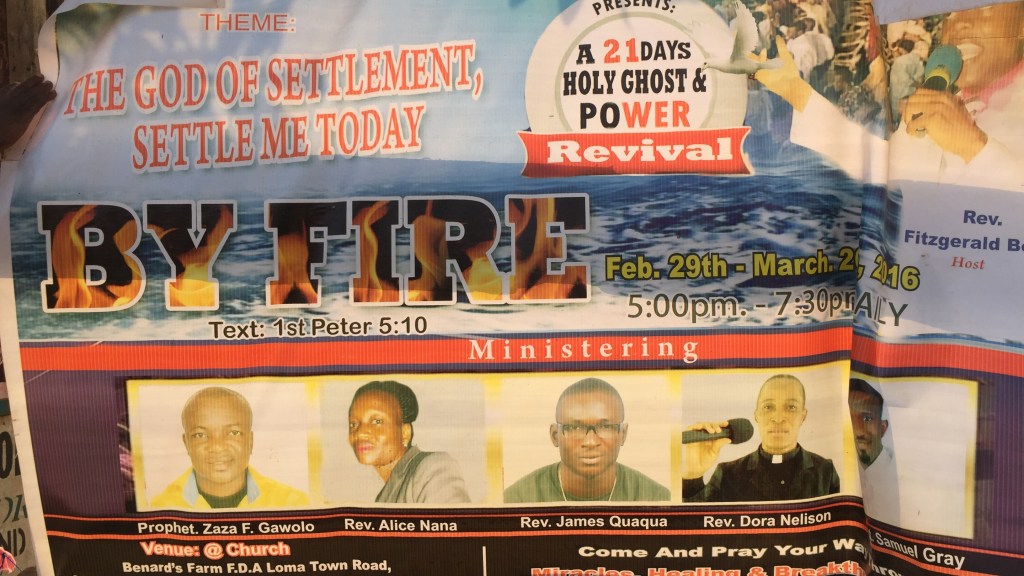
- Worse case scenario? The church is advertised by the banner of pastor and his wife! This one is a sure red flag, while the others are more subtle manifestations of the same problem
The above traits may spring from either the contemporary celebrity culture or the traditional big-man syndrome.
Pastor-centric churches create an environment whereby the church feels like every member exists for the pastor, and the church gathers around the pastor. The ecclesiological issue to be fixed here is the fact that the New Testament teaches body responsibility and equal participation—”each part doing its work” (Ephesians 4:16). We must build God-centered churches and family-dynamics kind of atmosphere.



 Zambia Hunt
Leave a comment