
Colossians 1:24-29
Building Something Greater Than Ourselves
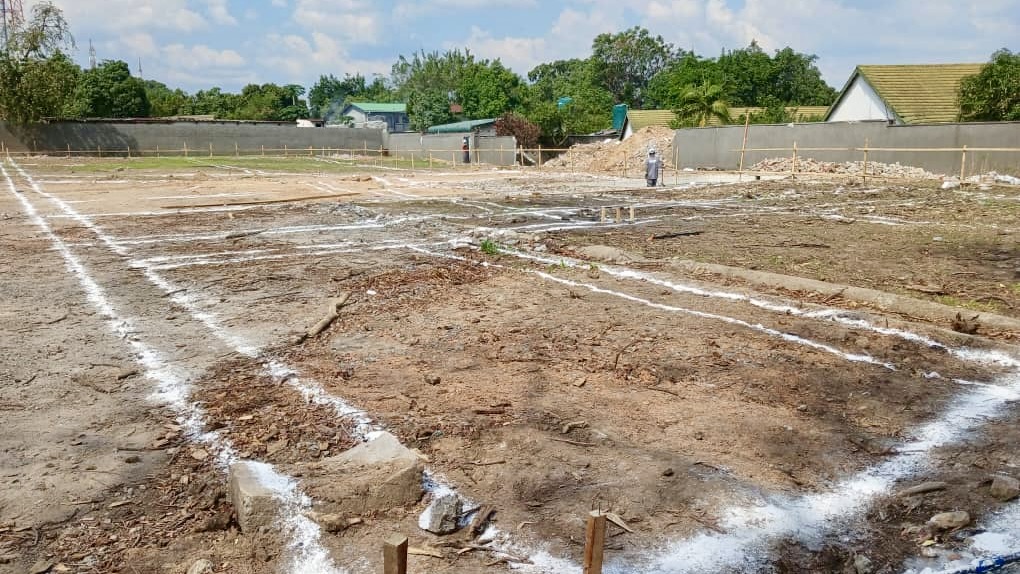
Last week, I stood at the edge of our church’s new property on Freedom Avenue in Kitwe watching the sun rise over what will soon become a bustling construction site. The empty plot before me held so much promise – not just as a future building, but as a powerful metaphor for what the church truly is. As I stood there, a vivid image formed in my mind: What if, instead of hiring a traditional construction crew, we saw people from every walk of life working together to build this church?
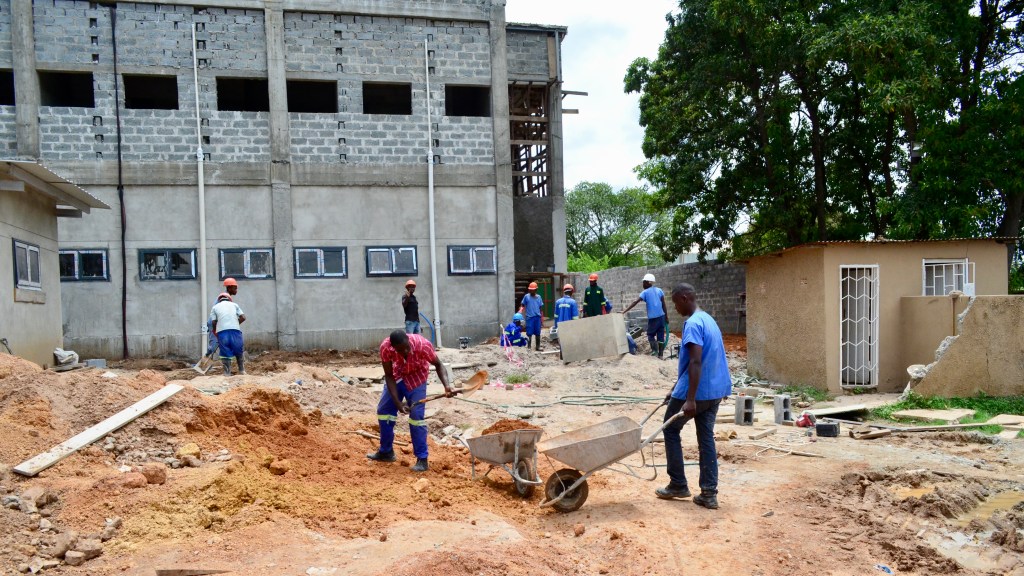
Picture this scene: A schoolteacher, who’s never laid a brick in her life, carefully placing each one with meticulous attention to detail – the same attention she gives her students. Next to her, a grandmother who’s spent decades praying for her family pores over blueprints, her wisdom finding new expression in structural planning. A teenager, usually absorbed in social media, is now mixing cement with the same enthusiasm he brings to his latest TikTok dance. A busy executive has traded her boardroom for a tool belt, measuring timber with the precision she usually reserves for quarterly reports.
At first glance, this scene might seem chaotic, even inefficient. Traditional wisdom would say, “Leave it to the professionals.” But there’s something profoundly beautiful about this picture – something that perfectly captures what the Apostle Paul was trying to tell the Colossian church about ministry. It’s a picture of unity in diversity, of common purpose transcending individual differences, of every person contributing their unique gifts to build something greater than themselves.
The Divine Blueprint
In his letter to the Colossians, Paul shares a revolutionary perspective on ministry that shatters our conventional understanding. “Now I rejoice in my sufferings for your sake,” he writes, “and in my flesh I am filling up what is lacking in Christ’s afflictions for the sake of his body, that is, the church” (Colossians 1:24). These words, penned from a Roman prison cell, reveal a vision of ministry that’s far more expansive and inclusive than most of us imagine.
This isn’t just ancient church history gathering dust in our Bibles – it’s a living template for how we should approach ministry today. Paul reveals that ministry isn’t confined to pulpits or limited to those with formal theological training. It’s not reserved for Sunday mornings or restricted to church buildings. Instead, it’s a calling that belongs to every believer, a truth that should fundamentally reshape how we think about our role in God’s kingdom.
Consider how radical this idea was in Paul’s time. In the ancient world, religious duties were typically reserved for a specialized priestly class. Yet here was Paul, declaring that every believer has a vital role in building God’s church. This democratization of ministry wasn’t just revolutionary then – it’s transformative now.
The Cost and Joy of Preparing a People for His Kingdom
Let’s be honest – ministry isn’t always comfortable. Just as construction work involves sweat, strain, and sometimes even injury, meaningful ministry often comes with its share of challenges. I think of my friend Mohammed in Sudan, whose faith has been tested by civil war and persecution. Despite losing his home and facing daily threats, he continues to serve his community with joy, embodying Paul’s words about rejoicing in sufferings for the sake of the church.
This suffering isn’t meaningless – it’s purposeful, building something far more lasting than any physical structure. When Paul writes about “filling up what is lacking in Christ’s afflictions,” he’s not suggesting that Christ’s sacrifice was incomplete. Rather, he’s pointing to the privilege we have of participating in Christ’s ongoing work through our own sacrificial service.
Consider the early church’s response to persecution in Acts. Each wave of opposition, instead of crushing the church, served to spread the gospel further. As believers were scattered, they carried the message of Christ with them, planting new churches and expanding God’s kingdom. Today, we see the same pattern in places where the church faces opposition – suffering often becomes the soil in which ministry grows deepest.
But this suffering isn’t just about enduring hardship – it’s about finding joy in the process. As Peter reminds us, we can “rejoice insofar as you share Christ’s sufferings” (1 Peter 4:13). This joy comes not from the pain itself, but from knowing we’re participating in something eternal, something that transcends our temporary discomfort.
The Ultimate Building Material: Christ in You
At the heart of our ministry lies what Paul calls a “mystery hidden for ages and generations but now revealed” (Colossians 1:26). This mystery isn’t some esoteric secret reserved for spiritual elites – it’s the transformative reality of “Christ in you, the hope of glory” (Colossians 1:27).
Think about that for a moment. The creator of the universe, the one who spoke galaxies into existence, choosing to dwell within us! This truth changes everything about how we approach ministry. It means that:
- Your identity is fundamentally transformed (Galatians 2:20) – You’re no longer defined by your past, your failures, or your limitations, but by Christ’s life in you.
- You have supernatural power for holy living (Romans 8:10-11) – The same power that raised Jesus from the dead is at work within you.
- You’re united with believers across all barriers (1 Corinthians 12:12-13) – Cultural, social, and ethnic divisions dissolve in the reality of our shared life in Christ.
- You’re empowered for service (Philippians 4:13) – Your ministry isn’t dependent on your own strength or abilities, but on Christ’s power working through you.
- You have access to divine wisdom (1 Corinthians 2:16) – Through Christ’s indwelling, you have “the mind of Christ” to guide your ministry.
- You’re being transformed into Christ’s image (2 Corinthians 3:18) – Ministry becomes not just what you do, but part of who you’re becoming.
- You have assurance of salvation (Romans 8:9-10) – Your service flows from security, not insecurity.
This indwelling presence of Christ isn’t just a theological concept – it’s the dynamic reality that makes meaningful ministry possible. It means that whether you’re teaching a Sunday School class, serving at a soup kitchen, or sharing your faith with a coworker, you’re not doing it alone. Christ Himself is working through you.
Building Together: The Goal of Spiritual Maturity
Our goal isn’t just to build a physical structure or run church programs – it’s to see every believer grow to spiritual maturity in Christ. Paul makes this clear when he writes about “warning everyone and teaching everyone with all wisdom, that we may present everyone mature in Christ” (Colossians 1:28).
This maturity isn’t reserved for a special few; it’s God’s desire for everyone who believes in Him. It’s about developing:
- Deep roots in God’s Word
- Authentic prayer lives
- Christ-like character
- Spiritual discernment
- Faithful service
- Loving relationships
- Biblical worldview
- Kingdom priorities
The process of growing to maturity involves both individual responsibility and community support. We need personal disciplines like Bible study and prayer, but we also need each other. That’s why Paul emphasizes “everyone” three times in verse 28 – this is a community project.
Your Place in the Divine Construction Project
As I look forward to our church’s new building rising from the ground, I’m even more excited about seeing each of you step into your calling as ministers of the gospel. Whether you’re a student, professional, parent, or retiree, you have a unique role to play in God’s kingdom work.
Your life experiences, even the painful ones, can become tools in God’s hands. That past failure? It might give you compassion for others who are struggling. That professional expertise? It could be exactly what’s needed to help the church navigate a challenge. That personality trait you’ve always seen as a weakness? In God’s economy, it might be your greatest ministry asset.
Remember, you’re not just building for today. Every act of service, every word of encouragement, every sacrifice made in love becomes part of something eternal. As Paul writes in 1 Corinthians 3:12-13, we’re building on the foundation of Christ, and what we build will last into eternity.
Your Next Steps
- Discover Your Ministry Identity
- Take time this week to prayerfully inventory your gifts, experiences, and passions
- Ask trusted friends what strengths they see in you
- Consider how your daily work might become a platform for ministry
- Write down areas where you’ve seen God work through you in the past
2. Develop Your Ministry Skills
- Find a mentor who can guide your spiritual growth
- Join a Bible study or discipleship group
- Attend training sessions or workshops in your area of ministry interest
- Start serving in small ways to gain experience
3. Deploy Your Ministry Gifts
- Connect with a ministry team at church where you can serve regularly
- Look for needs in your community that match your abilities
- Start a small group or ministry initiative that fills a gap
- Be willing to step out of your comfort zone
4. Deepen Your Ministry Impact
- Invest in mentoring others
- Share your ministry experiences to encourage others
- Build collaborative relationships with other believers
- Keep learning and growing in your understanding of God’s Word
5. Depend on Divine Power
- Start each day acknowledging your dependence on Christ’s strength
- Maintain a consistent prayer life
- Stay connected to the body of Christ
- Remember that results come from God, not your efforts alone
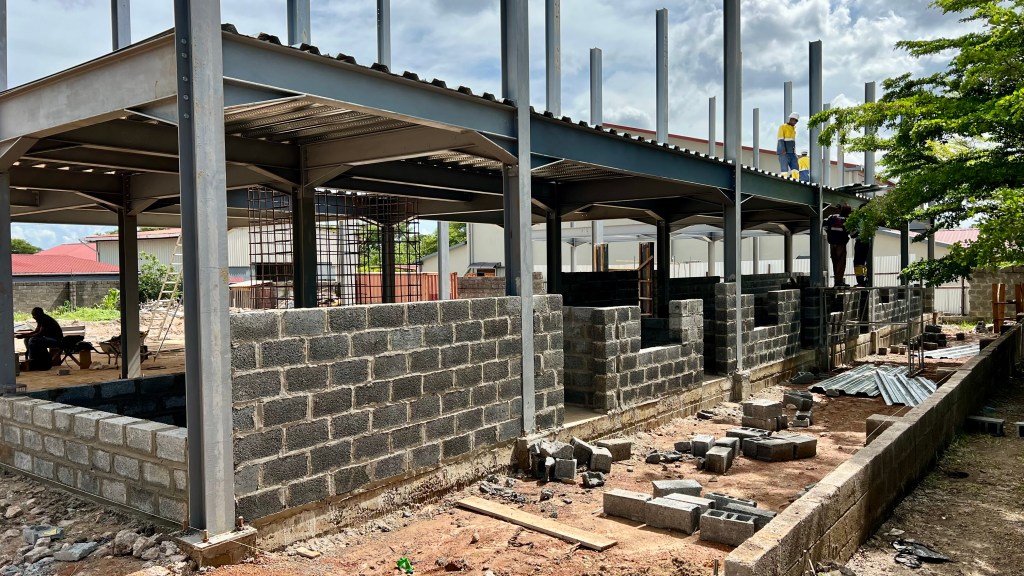
Remember, just as every brick and beam is essential in our new church building, your contribution to God’s kingdom work is irreplaceable. The world needs the hope that only Christ can bring, and He’s chosen to work through you. This isn’t about adding more activities to your already busy life – it’s about seeing every aspect of your life as an opportunity for ministry.
As Paul concludes, “For this I toil, struggling with all his energy that he powerfully works within me” (Colossians 1:29). Your ministry may involve struggle, but it’s empowered by Christ Himself. The question isn’t whether you’re called to ministry – it’s how will you respond to that call today?
Will you step forward and take your place in building God’s kingdom? The construction site is waiting, the Divine Architect has the plans, and your co-workers in Christ are ready to build alongside you. The only question that remains is: Will you answer His call today?
“Therefore, my beloved brothers, be steadfast, immovable, always abounding in the work of the Lord, knowing that in the Lord your labor is not in vain.” – 1 Corinthians 15:58

 Zambia Hunt
Leave a comment