

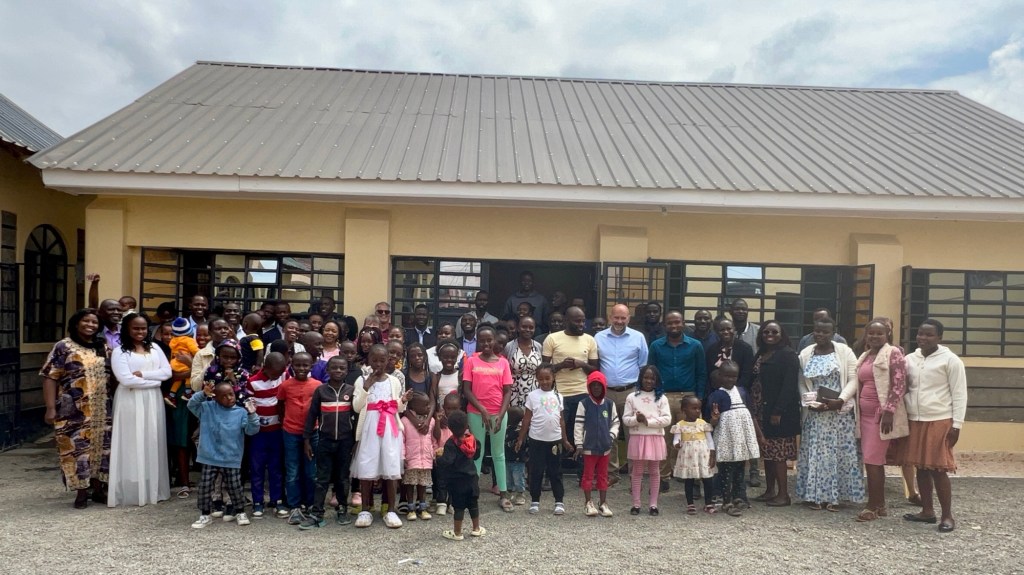
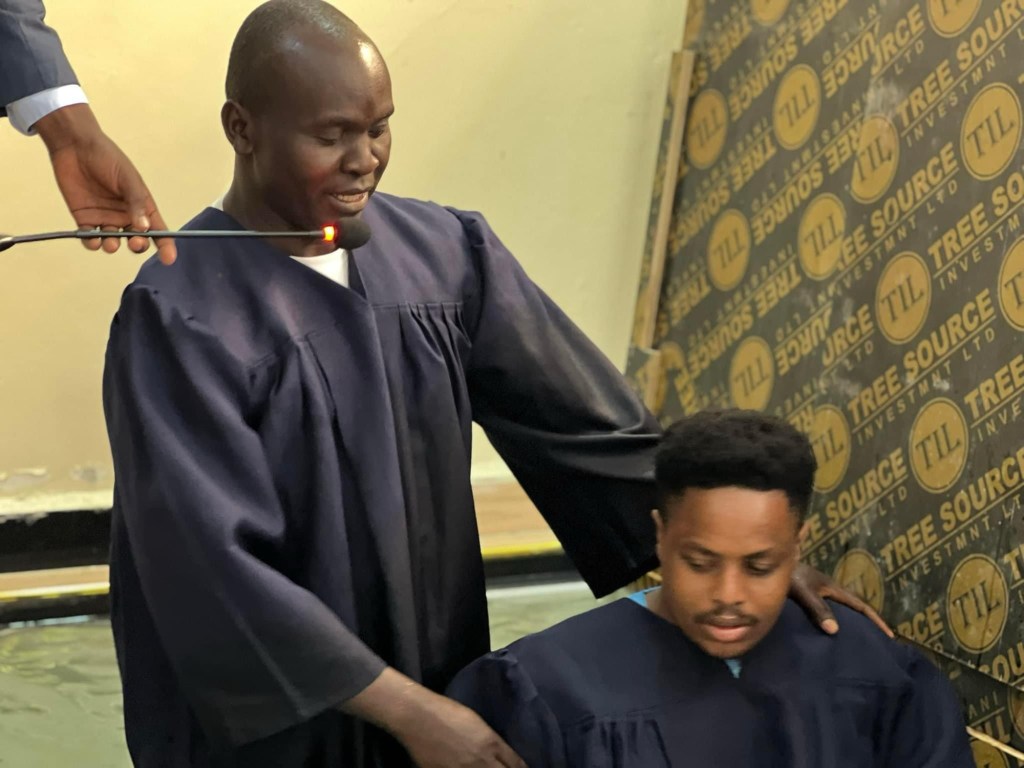
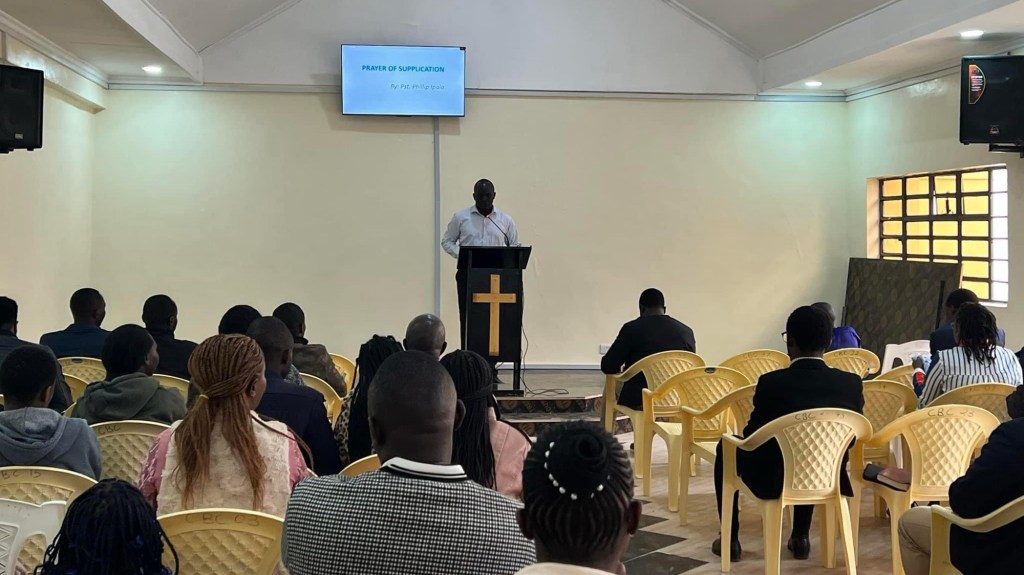
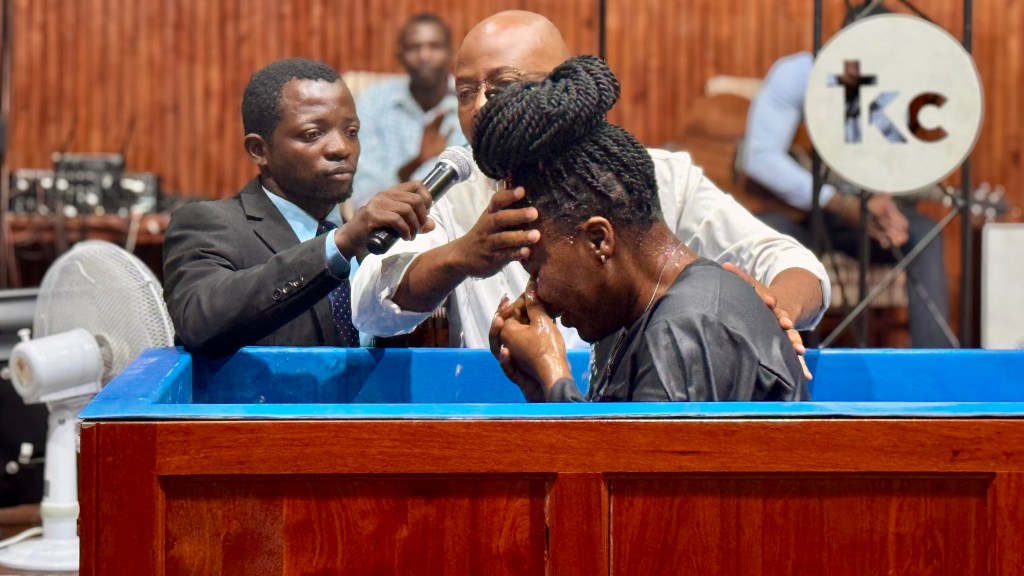
On Sunday, 18th of August 2024, I was privileged to preach at Cornerstone Baptist Church in Obama Estate, Nairobi at the invitation of Pastor Philip Ipala, a CABU Alumni. For the past five years Philip has been laboring in this community to plant a gospel-preaching church among people who are enslaved to traditional beliefs about spirits and ancestors, and loyal to traditional churches that preach a prosperty gospel. There are incredibly few gospel preaching works in this area. We had the privilege to hear the testimony and witness the baptism of five new converts, and to officially dedicate the new church facility that was recently completed.
During the morning service I shared the goal of a mature church, and the criteria for evaluating the spiritual growth of the local assembly. This is urgent, not just for this new church plant in Obama Estate, but for every single church that proclaims the gospel!
How Do We Recognize the Signs of Maturity?
As believers, we often find ourselves peering into the mirror of our faith, looking for signs of growth and maturity. Just as a young man might eagerly search for the first whisker on his chin, we too should be looking for signs of spiritual maturity in our churches. But what exactly does a mature church look like? How can we recognize one when we see it?
The Apostle Paul gives us a clear picture in Ephesians 4:11-13: “And He Himself gave some to be apostles, some prophets, some evangelists, and some pastors and teachers, for the equipping of the saints for the work of ministry, for the edifying of the body of Christ, till we all come to the unity of the faith and of the knowledge of the Son of God, to a perfect man, to the measure of the stature of the fullness of Christ.” Our goal, then, is to see churches grow to spiritual maturity – unified in faith, growing in knowledge of Christ, and becoming more like Him. But what does this look like in practice?
In this post, we’ll explore three clear marks of a mature church, drawing insights from the early church in Antioch as described in Acts 11:19-26 and Acts 13:1-12. These characteristics serve both as goals to aim for and criteria by which we can measure the maturity of our congregations.
A Body of Biblically Evangelized People
The first mark of a mature church is that it consists of people who have been biblically evangelized. This means everyday Christians are spreading the Gospel. In Acts 11:19, we see ordinary believers, scattered by persecution, sharing the Gospel wherever they went: “Now those who were scattered after the persecution that arose over Stephen traveled as far as Phoenicia, Cyprus, and Antioch, preaching the word to no one but the Jews only.” This reminds us that the work of ministry isn’t just for pastors or missionaries – it’s for every Christian.
A mature church also preaches a biblical Gospel. Acts 11:20 tells us they were “preaching the Lord Jesus.” It’s not a health and wealth message, nor is it an easy-believism that requires no real commitment. The true Gospel, as outlined in Romans 1:1-18, includes the preacher, the prophecies, the person of Christ, the power of the resurrection, the perimeters of its reach, its purpose in demonstrating God’s righteousness, and the problem of God’s wrath against sin.
When the true Gospel is preached, it results in genuine conversion. Acts 11:21 tells us, “And the hand of the Lord was with them, and a great number believed and turned to the Lord.” True conversion involves receiving Jesus as both Savior and Lord, leading to a radical transformation of life.
A Body of Biblically Discipled People
The second mark of a mature church is that its members are being biblically discipled. This involves intentional discipleship. In Acts 11:25-26, we see Barnabas intentionally seeking out Paul to help teach the new believers in Antioch: “Then Barnabas departed for Tarsus to seek Saul. And when he had found him, he brought him to Antioch.” This reminds us that discipleship doesn’t happen by accident – it requires deliberate effort.
Biblical discipleship involves thorough instruction (the Greek word “didactos” is used), significant time investment (“a whole year”), and a focus on God’s nature and attributes. The result of this discipleship was so profound that the believers in Antioch were first called “Christians” – literally, “little Christs” (Acts 11:26). Their lives had been so transformed that they stood out dramatically from the surrounding culture.
A Body of Biblically Mature People
The third mark of a mature church is that it consists of biblically mature people. This maturity is evidenced in several ways. First, it produces spiritual leaders. Acts 13:1 shows us a diverse group of leaders that had been raised up within the Antioch church: “Now in the church that was at Antioch there were certain prophets and teachers: Barnabas, Simeon who was called Niger, Lucius of Cyrene, Manaen who had been brought up with Herod the tetrarch, and Saul.”
Worship-Centered
A mature church is also preoccupied with God in worship. The believers in Antioch were focused on ministering to the Lord, not just on what God could do for them. Acts 13:2 begins, “As they ministered to the Lord and fasted…” Their worship was sacrificial and God-centered.
Spirit-Led
Furthermore, a mature church is sensitive to the Spirit’s leading. They were attentive to the Holy Spirit’s guidance: “the Holy Spirit said, ‘Now separate to Me Barnabas and Saul for the work to which I have called them.‘” (Acts 13:2b) This sensitivity led them to send out missionaries. The church at Antioch didn’t just keep their resources for themselves – they sent out missionaries to spread the Gospel: “Then, having fasted and prayed, and laid hands on them, they sent them away.” (Acts 13:3)
Bold in Proclamation
These mature believers proclaimed the Gospel boldly. Paul and Barnabas, sent out from Antioch, shared the good news with courage and conviction, even in the face of opposition (Acts 13:6-11). Finally, a mature church produces converts and plants new churches. Their ministry bore fruit in both individual conversions and the establishment of new congregations: “Then the proconsul believed, when he saw what had been done, being astonished at the teaching of the Lord.” (Acts 13:12)
Striving for Maturity
These marks of maturity are not about the age of your church, the size of your congregation, or the amount in your bank account. They’re about the spiritual depth, missional focus, and Christ-like character of your people. As we reflect on these characteristics, let’s ask ourselves: How mature is our church? Where do we need to grow? Remember, maturity is a process, not an instant achievement. The important thing is to keep moving in the right direction.
Let’s not be content with immature Christianity. Let’s press on towards maturity, for the glory of God and the advancement of His kingdom. May our churches truly be mature bodies of Christ, shining as lights in this dark world, and may we see a new generation of believers rising up, passionate for God and His mission.


 Zambia Hunt
Leave a comment