Guest Post by Cherith Hunt
Imagine being cut off from language and meaningful relationships from birth – destined to live in isolation, never knowing your name, or having the ability to communicate beyond basic gestures for food or water. Imagine living this life sentence of solitary confinement within prison walls of the mind, watching the world from your cell but unable to actively participate in it. No one sees. No one hears. No one knows you’re there watching, waiting, hoping a key will one day turn the lock of your prison door. Such is the plight of nearly 90 million people across Africa.
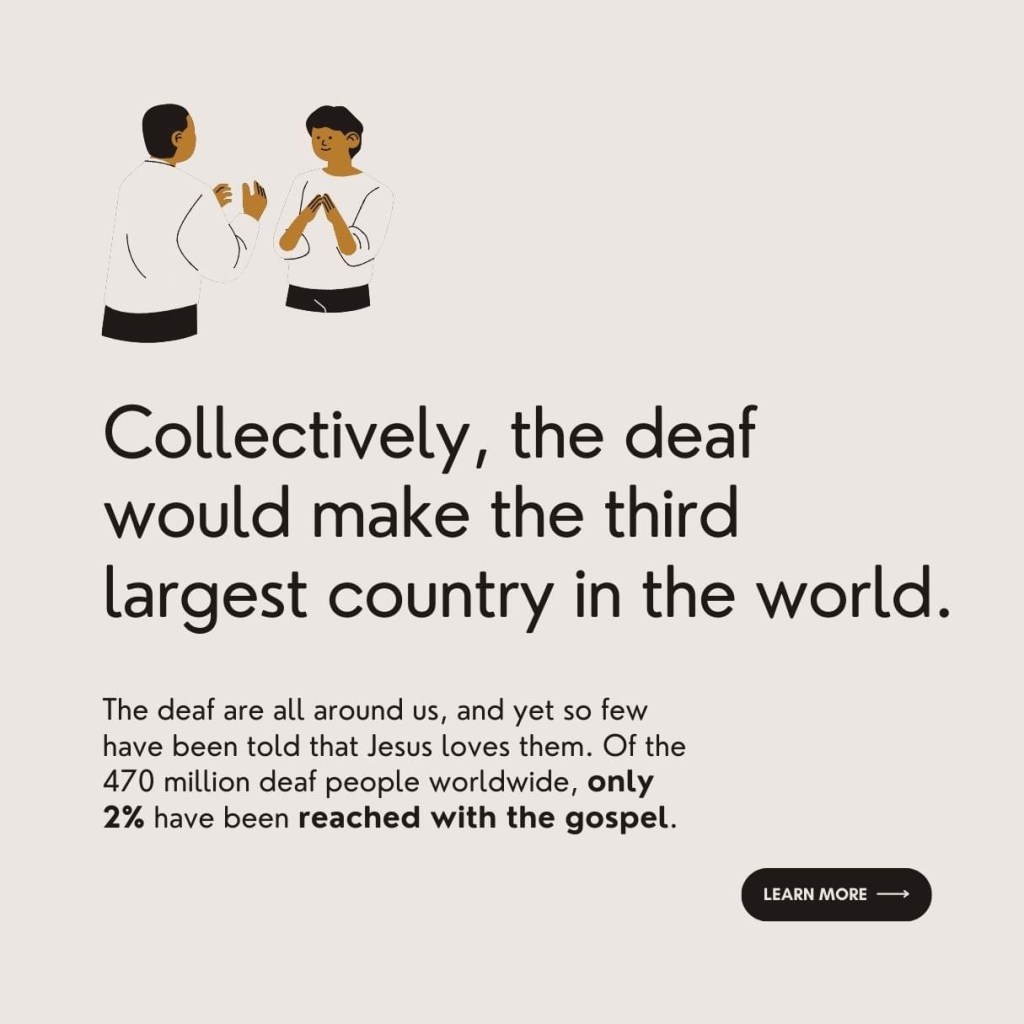
The World Health Organization estimates that nearly half a billion people worldwide have moderate to severe hearing loss. This figure equates to the world’s third-largest country by population. The vast majority of these people live in third-world communities across Asia and Africa, where cultural stigmas and poverty further compound the complexity of their situation.
The few percent of the deaf who attend school face staggering educational inequities due to a lack of resources and qualified teachers fluent in sign language. Within this broken system, few will reach high school, let alone graduate, limiting an already bleak future. Ultimately, lack of language, relationships, and education leaves the vast majority of deaf isolated, dependent, and vulnerable to abuse.
But far more sobering is the reality that 98% of these half-billion people will enter a Christless eternity dammed to eternal suffering far outweighing their current physical plight! Isolated by lack of access to language, education, and the Word of God, millions of deaf across Africa have yet to hear the good news that Jesus died for their sins. The church has not just forgotten them; we’ve never even noticed their existence.
This grave reality demands urgent action. The Great Commission calls us to “go and make disciples of all nations” (Matthew 28:19), leaving no ethnic or linguistic group untouched by the gospel’s transformative power. Yet, we have neglected the largest unreached community in our world, a community that desperately needs the truth that sets souls free.
How, then, do we address such an immense task? The solution is twofold: we must equip hearing and Deaf leaders to take the gospel to the deaf.
Deaf Culture Immersion

First, we need trained hearing leaders to bridge the cultural and communication gap. These ambassadors for Christ must become fluent in the beautiful visual languages of the Deaf, immersing themselves in Deaf culture with humility and respect. Only then can they faithfully interpret the depths of Scripture into native sign languages, making the Word of God accessible. However, we must not be content with mere accessibility, for that does not intrinsically satisfy the demands of Christ’s command. We must ensure that the deaf are discipled into healthy, serving, and reproducing members of our churches.
Identify, Disciple, Deploy Deaf Leaders
Secondly, we must intentionally identify, disciple, and deploy Deaf men to serve as pastors and missionaries capable of faithfully and accurately communicating God’s word. Who better to share the gospel than those who intimately understand the unique joys, struggles, and perspectives of the deaf? Deaf leaders, unhindered by cultural barriers, should be strategic ministry partners in planting healthy indigenous, reproducing deaf churches in the vast regions bereft of any evangelical witness to the deaf.
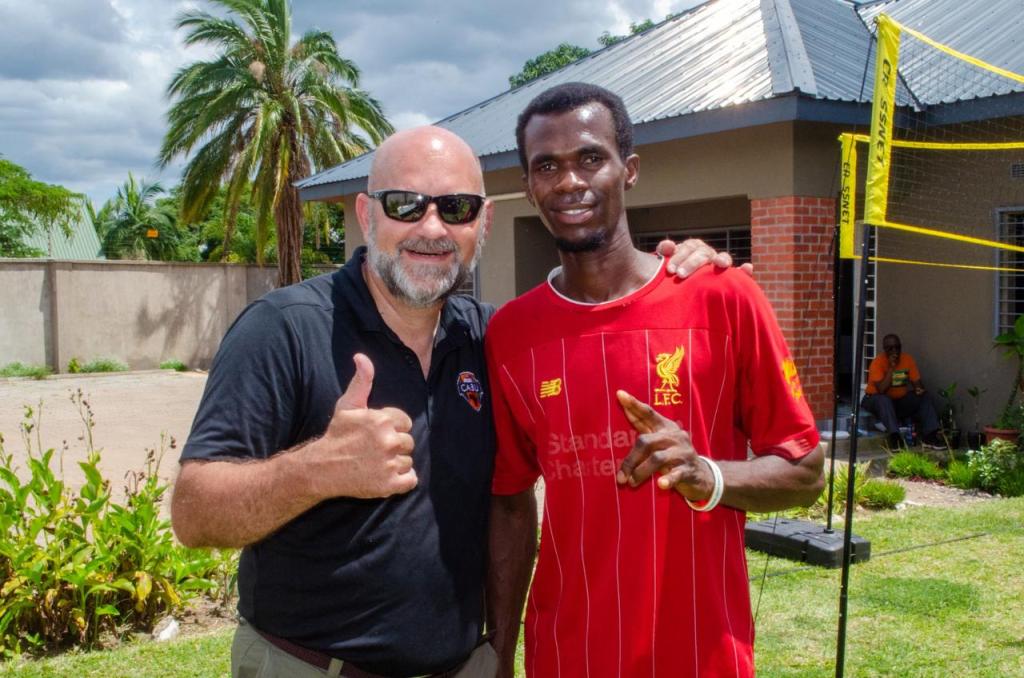
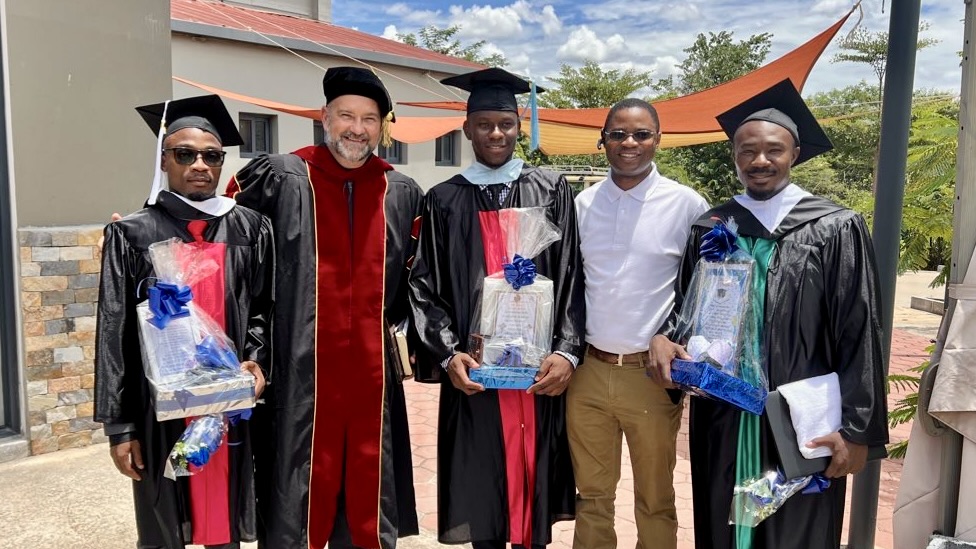
Ignorance is no longer an option. We cannot ignore the silent yet deafening Macedonian call for help. Now is the time for Christ’s body to strategically focus on making deaf disciples in Africa. No “opt-out” option exists. Raise leaders. Partner with gospel-centered churches to send laborers. Support through prayer, time, and resources ministries such as Central Africa Baptist University, who serve local churches by equipping hearing and Deaf leaders to take the gospel to the Deaf across the continent. Ninety million souls hang in the balance – the need has never been more urgent.
References:
DOOR International. (2022, February 4). Why deaf ministry. https://doorinternational.org/why-deaf
Dube, W. (2011, January 18). Study: Abuse rates higher among deaf and Hard-of-Hearing children compared with hearing youth. Rochester Institute of Technology. https://www.rit.edu/news/study-abuse-rates-higher-among-deaf-and-hard-hearing-children-compared-hearing-youth
Joshua Project. (n.d.). Unreached people groups-100 largest. Joshua Project. Retrieved September 5, 2023, from https://joshuaproject.net/unreached/1?s=Population&o=desc
NIDCD. (2021, March 25). Quick statistics about hearing. National Institute on Deafness and Other Communication Disorders (NIDCD). https://www.nidcd.nih.gov/health/statistics/quick-statistics-hearing#2
WFD. (2017, August 11). Human rights of the deaf. World Federation of the Deaf (WFD). https://wfdeaf.org/our-work/human-rights-of-the-deaf/
WHO. (2018). Addressing the rising prevalence of hearing loss. In World Health Organization. World Health Organization. https://www.who.int/publications/i/item/addressing-the-rising-prevalence-of-hearing-loss
WHO. (2021, March 2). WHO: 1 in 4 people projected to have hearing problems by 2050. World Health Organization. https://www.who.int/news/item/02-03-2021-who-1-in-4-people-projected-to-have-hearing-problems-by-2050
WHO. (2023, February 27). Deafness and hearing loss. World Health Organization. https://www.who.int/news-room/fact-sheets/detail/deafness-and-hearing-loss

 Zambia Hunt
Leave a comment