
Establishing a clear set of biblical goals and a well-defined philosophy of ministry is essential for any church-planting missionary embarking on the journey of planting a new congregation. This document will serve as a guiding north star through the dark valleys and glorious mountain peaks of ministry, keeping the church planter focused on the biblical priorities and principles that should undergird their work. By articulating these foundational elements upfront, the church planter can ensure that the new church being planted is firmly rooted in scriptural truth and aligned with God’s purposes rather than simply reflecting the planter’s own preferences or traditions.
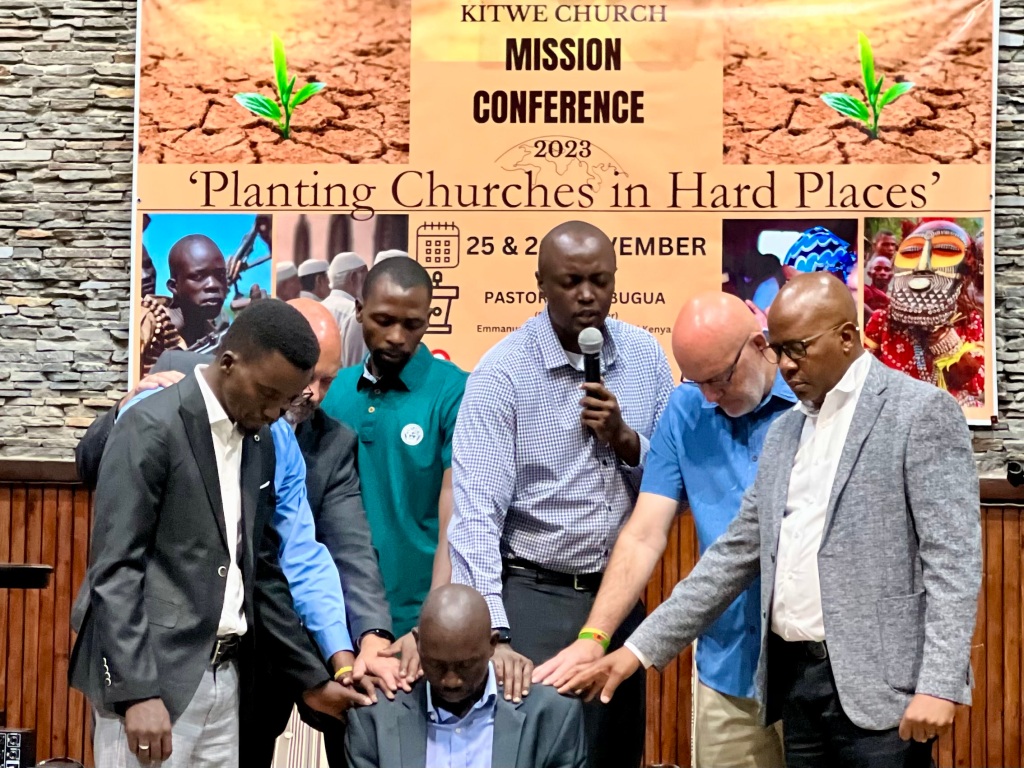
Outlining this framework also helps the church planter communicate a cohesive vision to the team of missionaries, local leaders, and congregation members who will be integral to the church’s development. It also serves as a template for evaluation with the elders of the sending church. With well-crafted goals and philosophy in place, the church planter can proceed with confidence, knowing their efforts are grounded in a framework that will foster a healthy, indigenous, and self-sustaining body of believers.
The following goals and philosophy of ministry were initially written during the first year of our church planting mission in Zambia. Over the years, we have made a few revisions to the document, mainly to make it more specific and comprehensible. If you were to ask me what has been one of the major driving forces behind what God has accomplished here in Kitwe, and beyond, this document would be a significant part of my response.
Church Planting Goals & Philosophy of Ministry
INTRODUCTION:
Missionary church planters must always remember that the work is not ours, but God’s. He will build His church according to His plan. Jesus said in Matthew 16:18, “I will build my church, and the gates of hell shall not prevail against it.” We are simply instruments in His sovereign hand. Being aware of this fact will encourage us during difficult times in our ministry and humble us when we are blessed with good times. (I Cor. 3:6-23)
As God calls men to plant New Testament churches on the mission field, we must have clear goals. The biblically-based goals of all true New Testament church planting work are as follows:
OUR OVERALL GOAL IN MINISTRY:
Our goal is to fulfill the Great Commission by preaching the Gospel and baptizing converts into the local church, which is the “Pillar and Ground of the Truth” (1 Timothy 3:15). This is a focus on evangelism, enlistment, and edification.
OUR GOAL FOR THE CHURCH PLANT: AN INDIGENOUS CHURCH
Indigenous means ministering to the people in the means, manner, and methods that communicate truth within the context of their culture (I Co. 9:19-23), resulting in true worship and bringing glory to God. (I Co. 10:31)
The parameters of the indigenous church are the precepts of Scripture. We are bound to walk within the boundaries set forward in God’s Word (Is. 8:20). However, we must recognize that we bring many traditions from our culture. This must not be mistaken for “thus saith the Lord.” We must be flexible.
An indigenous ministry is native to or originates naturally in a particular place. We do not seek to “transplant” churches from one culture into another. Instead, we aim to plant the seed of God’s Word into the local soil of whatever culture our missionaries serve so that the resulting church is both firm in Biblical truth and principle and culturally distinct in its expression of worship and gospel witness.
An indigenous church must be self-supporting, self-governing, self-reproducing, and self-theologizing. Each local church planted will be an autonomous church when it fully matures. Christ has promised that He will build His church. We must do our part to initiate work in new places but not micro-manage the work as God brings it to maturity.
Self-supporting Church
The missionary’s role is pivotal in guiding the church toward long-term self-sufficiency with a clear vision that the church will ultimately sustain itself. This approach is anchored in faith-based goals, recognizing that we are called to “trust in the Lord, and do good” Psalms 37:3-7. The “good” is not determined by our opinions or emotions, rather it is the “good” of His perfect will being accomplished in and for this body of believers.
Our trust is in God and we recognize the importance of obedience and commitment. A critical milestone in this journey to self-supporting is the church’s transition to financial independence. Once achieved, the church must continue to demonstrate a reliance on God. This principle aligns with biblical counsel from I Timothy 5:8 and II Thessalonians 3:8-10, which advocates for taking responsibility and not depending on external support.
Therefore a missionary must take great care that the development of the ministry be within the scope of what the local mature assembly can financially and competently manage. Introducing programs and equipment that surpass the mature church’s capacity will hinder the ultimate goal of achieving a self-supporting church, creating dependencies that necessitate ongoing missionary involvement.
Self-governing Church
As the church grows and spiritual leadership is nurtured, it is vital to involve the congregation in the decision-making process, seeking their counsel and input on relevant matters as exemplified in Acts 6:1-6. It is the pastor’s role to guide decisions regarding doctrine, practice, and the spiritual direction of the church, with the congregation’s approval essential for doctrinal matters.
Financial decisions, particularly those concerning the allocation of funds contributed by the church body, are to be approved by the membership (I Corinthians 16:3). Leadership under the pastors includes the congregational responsibility of appointing deacons who are genuinely committed to serving (Acts 6:1-6). Moreover, the church is tasked with managing discipline within its body, adhering to biblical guidelines and mandates such as those found in Matthew 18:15-18.
Upon the establishment of the church and its handover to national leadership, the missionary’s role shifts to one of advisory capacity only, without imposing decisions (I Corinthians 5, II Corinthians 2, II Corinthians 6:11-13). Ownership of facilities and equipment marks the self-governed church’s responsibility and privilege, underscoring the church’s autonomy (I Corinthians 16:3, Acts 2:44).
Self-propagating Church
Every living organism will, by its very nature, reproduce itself. This principle extends to the growth and multiplication of churches. In the context of missionary work, this reproductive process necessitates a careful balance, particularly while missionaries are actively engaged. It’s crucial to empower the trained and competent leadership within the growing church, enabling them to take on ministerial roles, participate in decision-making, and assume financial responsibility for the burgeoning congregation.
The missionary church planter must give special attention to avoid overstepping by performing tasks that the fledgling church is capable of handling on its own. Over-involvement can thwart the ultimate goal of developing a self-sustaining church, dampen the enthusiasm for active participation among the congregation, and mistakenly portray the initiative as merely a missionary’s effort rather than a legitimate outgrowth of an established ministry (I Thessalonians 2:1-13). Hence, the missionary walks a delicate balance between providing necessary assistance, direction, and organization and leveraging the new work as a platform for fostering leadership development, offering training, and facilitating ministry experience. This nuanced approach ensures the healthy growth of the church, akin to a living organism, nurturing its capacity to thrive independently and reproduce itself.
Self-theologizing Church
In the context where a church operates, the application of biblical theology to address the unique cultural challenges it faces is paramount. These applications are not rooted in the perspectives of the 16th, 18th, or even 20th century Christianity but are rather contemporary, biblically relevant, and correct interpretations of Scripture tailored to meet the specific needs and questions confronting the church in its current environment. This ability to provide answers to the unique issues faced by the community where the church is being established stems from a clear understanding of the Scriptures. It underscores the importance of applying biblical teachings to address modern-day challenges effectively, ensuring that the church faithfully proclaims the gospel and makes disciples within the society it serves.
A BIBLICAL PHILOSOPHY OF MINISTRY:
To achieve biblical goals, we need to have a united idea of the best means to achieve them. Our approach to ministry to reach the above purposes is as follows.
Everyday Evangelism (Matthew 28:19; Acts 1:8)
All believers bearing witness to Christ daily through their words and actions among those in their circle of influence.
Expository Preaching (Matthew 28:20; II Timothy 4:2)
Expository preaching provides the vehicle for obedience to the Pauline instruction to “preach the word.” Our goal is to boldly declare the “whole counsel of God” (Acts. 20:27). The Word of God is our only rule and only authority (II Timothy 3:15-16). This method involves preaching the Bible in a way that is relevant to people’s lives (Nehemiah 8:8-13), by presenting clear exposition, explanation, and application of the biblical text.
Biblical Balance (Col. 1:28)
We must never violate one truth of Scripture for the benefit of another. To understand and live out the teachings of Scripture, one must avoid extremes in interpretation, practice, or lifestyle and seek to be faithful to the scriptural text. This means interpreting Scripture in a way that avoids extreme unbiblical positions or one-sided views that can arise from focusing on one particular passage at the expense of others.
Dedicated Discipleship (Mt. 28:20; II Tim. 2:2)
Discipleship is the rubbing of one life off on another. It is a core principle of the New Testament and yields a life transformed into the image of God. At its heart, it necessitates a disciple to be open and transparent in all aspects of their life, willing to welcome guidance and insight into their personal growth. Such openness paves the way for spiritual growth. Through this process, a disciple is strengthened in their faith and grows in virtue and knowledge (II Peter 1:4-11). The discipleship relationship provides a living example of what it means to live a life of faith and obedience (James 2:17). Encouragement plays a critical role (Ephesians 4:29). In this relationship, disciples are exposed to the practical application of God’s truths and His Word in everyday life (I Corinthians 4:16). This hands-on approach ensures that the teachings of the Scripture are not just theoretical concepts but are actively lived out, offering a tangible connection between the faith they profess and the lives they lead.
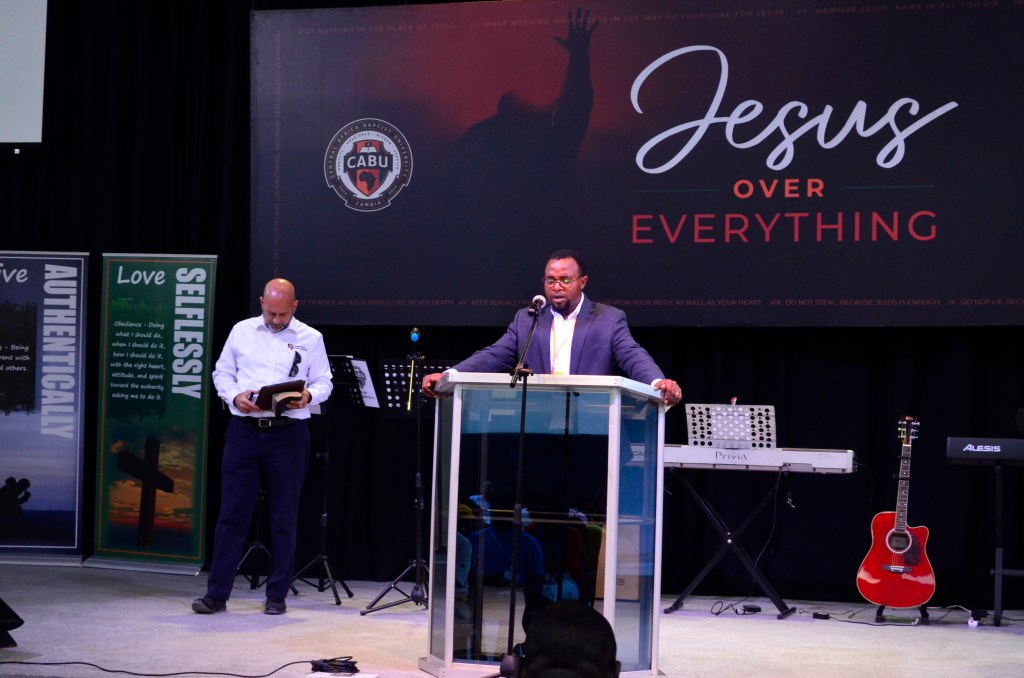
Training Others For The Work Of Ministry (Eph. 4:11,12)
Leadership development within the church is founded on a discipling relationship that exists between the trainer and the trainee. This approach fosters an environment where, as godly and competent leadership begins to manifest, individuals are recognized for their divine gifts and are progressively entrusted with greater responsibilities. It’s essential that these emerging leaders are given opportunities to exercise their talents within the body of the church (1 Corinthians 12). By encouraging and facilitating emerging leaders to exercise their God-given gifts within the congregation, the church not only supports their personal growth but also strengthens its overall ministry and gospel outreach.
CONCLUSION:
In our pursuit of planting and nurturing New Testament churches in Africa, we are anchored in the realization that this mission belongs to God, who graciously invites us to partake in His work. Guided by Scripture and motivated by the Great Commission, our ministry philosophy and goals are designed to fuel the growth of indigenous, self-sufficient, self-governing, self-propagating, and self-theologizing churches that are deeply rooted in their cultural context yet unwavering in their commitment to biblical truth.
Our philosophy of ministry—emphasizing everyday evangelism, expository preaching, biblical balance, dedicated discipleship, and training others for the work of ministry—serves as our roadmap. It reminds us that our ultimate aim is to plant churches that see lives changed by the Gospel, communities transformed by the love of Christ, and leaders equipped to carry forth Christ’s mission to future generations.
May our ministry in Africa and beyond always reflect the heart of God, bringing glory to His name and drawing many into a saving knowledge of Jesus Christ. As we labor in the fields that are ripe for harvest, let us keep our eyes fixed on Jesus, the author and finisher of our faith, and complete the mission God has given us to do. – END
A Final Encouragement
The thoughtful articulation of church planting goals and a guiding philosophy of ministry is an essential exercise for any missionary church planter. By clearly defining the biblical objectives and the overarching principles that will shape their approach, the church planter can ensure their efforts remain tethered to God’s design for the local church rather than personal preferences or cultural biases. This framework serves as a steady anchor, keeping the church plant focused on fulfilling the Great Commission, developing indigenous and self-sustaining congregations, and raising up local leaders equipped to carry on the work. As the church planter diligently labors to establish new bodies of believers, these goals and philosophy will provide much-needed direction, maintain unity of purpose, and ultimately result in churches that bring glory to Christ’s name in their unique cultural contexts.



 Zambia Hunt
Leave a comment